Havana's Best Kept Secret
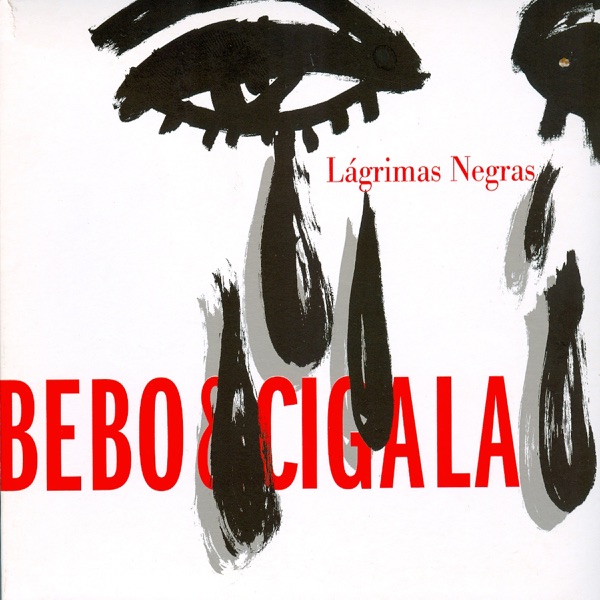
If you only know Bebo Valdés through Lágrimas Negras (2003), the duo album he recorded with Spanish flamenco singer Diego El Cigala, that's a perfectly good place to start — but it gives you a slightly skewed picture. That record is beautiful and melancholy and it made Bebo famous again, but Bebo in his prime, back in Havana in the 1940s and 50s, was a different proposition entirely: a working bandleader and arranger cooking in a city where the music never stopped, blending Cuban rhythms with American bebop in a way that felt completely natural rather than forced.
He led the house band at the Tropicana in Havana for years and arranged for some of the biggest names in Cuban popular music. More interesting to jazz listeners is what he was doing harmonically — absorbing Dizzy Gillespie and Charlie Parker and folding their vocabulary into Afro-Cuban structures at a time when that synthesis was genuinely fresh. He also developed his own rhythmic concept called batanga, a hybrid rhythm that never quite took off commercially but shows you how restlessly inventive he was.
Then came 1960. Bebo left Cuba shortly after the revolution, eventually settling in Sweden, where he spent decades working in relative obscurity — playing hotel gigs, doing session work, raising his son Chucho Valdés, who would go on to lead Irakere and become one of the most celebrated pianists in Cuban jazz history. The father-son dynamic there is worth sitting with: Chucho became famous partly by building on foundations Bebo had laid, while Bebo himself was essentially unknown outside a small circle.
The rediscovery happened because of Paquito D'Rivera and a documentary filmmaker named Calle 54 — and then the Lágrimas Negras (2003) album landed and suddenly everyone wanted to know who this old Cuban pianist was. Bebo was in his mid-eighties by then and handled the attention with a kind of relaxed dignity. The solo and duo recordings he made in his final decade show a pianist who thinks in long, patient phrases, who never clutters the space, who has complete command of dynamics. There's nothing frantic about his playing even when the tempo picks up.
The easiest comparison point is Rubén González, the pianist Ry Cooder brought to international attention through Buena Vista Social Club around the same time — both were elderly Cuban masters who had been largely invisible for decades. But Bebo was a more harmonically sophisticated player with a stronger connection to bebop, and his arranging background meant he heard everything in terms of how the parts fit together. If you want to understand how Cuban music and jazz actually influenced each other at a deep structural level rather than just on the surface, Bebo's recordings are one of the most direct routes there.