Fire From the Southern Coast
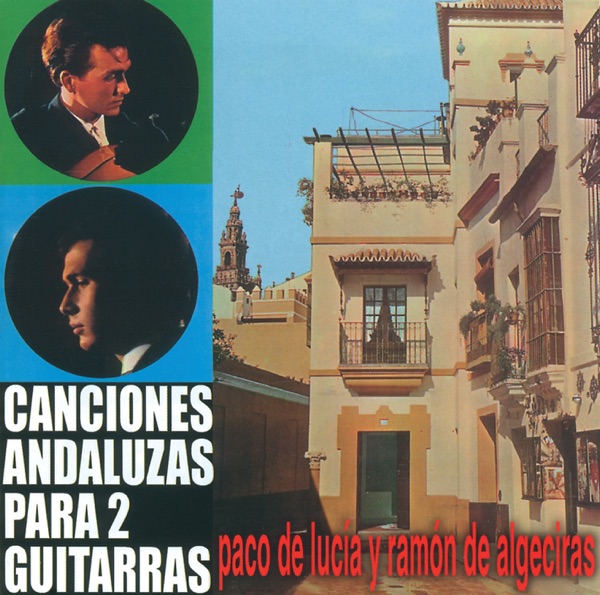
Paco grew up in Algeciras, a port city in the south of Spain where flamenco was not a performance art but a household language. His father was a guitarist, his brothers were musicians, and the family drilled him hard from childhood. That upbringing gave him something most virtuosos lack: an absolute command of the traditional forms — soleá, bulería, fandango — so deep that he could treat them as a foundation rather than a cage.
What he did with that foundation is where the story gets interesting. In the 1970s he started incorporating elements that purists found alarming: Peruvian cajón, jazz harmony, modes from outside the Moorish-Andalusian lineage. He brought in musicians like Al Di Meola and John McLaughlin for the famous acoustic guitar trio recordings, and those sessions — particularly Friday Night in San Francisco (1981) — introduced his playing to an enormous international audience who had no prior relationship with flamenco at all. That album, recorded live, still sounds like three people trying to outrun each other on instruments that technically cannot go that fast.
But the collaboration with Camarón de la Isla is where you hear Paco at his most rooted. Those records from the late 1960s and 1970s capture a partnership that genuinely changed the course of modern flamenco — Camarón's raw, aching voice over Paco's increasingly sophisticated accompaniment, pushing cante jondo into new harmonic territory without ever losing its emotional weight. If you want to understand what flamenco actually feels like from the inside, start with La leyenda del tiempo (1979), where they went furthest out on a limb.
As a solo artist, Paco de Lucía – Solo (1996) shows his range most clearly: it moves between intimate studio recordings and the full ensemble sound he developed with his sextet, which added bass, flute, and second guitar to the traditional flamenco format. His right hand alone — the speed of the picado runs, the control of the rasgueado — was studied by every serious guitarist of the next generation. But the technique was always in service of something. There is a particular quality to his rhythm, a push and pull inside the compás, that sounds inevitable even when it is surprising.
He died in 2014 in Mexico, and the responses from jazz musicians, classical guitarists, and rock players were as telling as those from the flamenco world. That breadth of mourning says something accurate about who he was: someone who spoke a specific, demanding language so well that people who spoke entirely different languages understood every word.