Speed, Fire, and Restraint
Di Meola was nineteen when Chick Corea called him to join Return to Forever, replacing Bill Connors on guitar. That alone would be enough to secure a footnote in jazz history, but what he did with that opportunity was something else. On Romantic Warrior (1976) and especially Musicmagic (1977), he played with a ferocity and cleanliness that sounded almost mechanical in the best sense — every note intentional, every run executed at a tempo that seemed to defy what fingers could physically do. His pick attack was unlike anyone else's: percussive, hard, and locked in so tightly with the rhythm that the guitar sometimes felt like a drum kit that happened to have pitch.
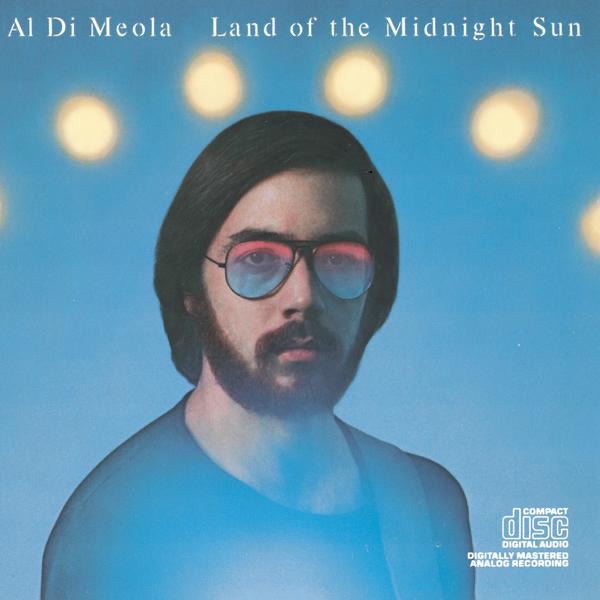
His solo debut Land of the Midnight Sun (1976) announced that he wasn't just a sideman with good chops. It showed compositional ambition — complex time signatures, Latin percussion, a clear obsession with Mediterranean and South American music that would define everything he did afterward. Elegant Gypsy (1977) is probably the record most people should start with. The title track hits you immediately, a whirlwind of electric guitar over hand percussion that sounds like it was recorded at twice the speed of normal thought. But the album also has slower, more textured moments that show he understood space, even if he didn't always choose to use it.
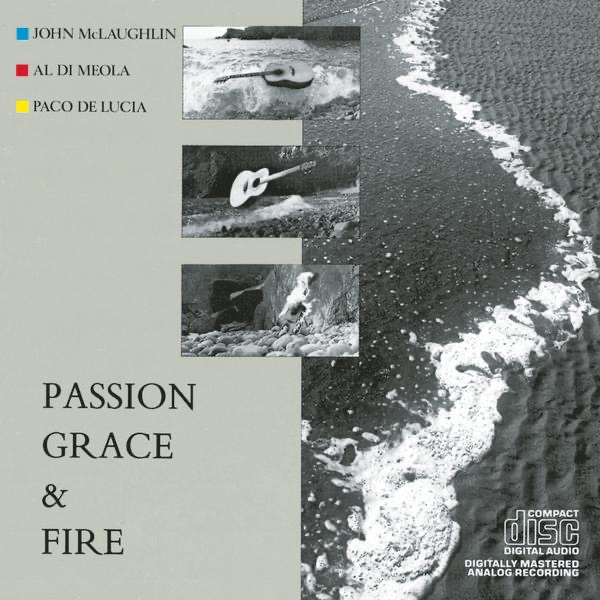
The acoustic chapter of his career opened wide with Friday Night in San Francisco (1981), a live album recorded with Paco de Lucía and John McLaughlin. That record is one of the genuinely great live guitar documents — three very different players finding common ground in flamenco-influenced improvisation, each one pushing the others. Di Meola's contribution is less fiery than McLaughlin's and less rooted than de Lucía's, sitting somewhere in between: technically precise, emotionally direct, and hungry. The crowd response on that recording tells you everything about what it felt like to be in the room.
His relationship with the music of Astor Piazzolla became a defining late-career thread. Di Meola recorded the tango composer's work with real seriousness, treating it not as a novelty crossover but as a genuine area of study. Those records are quieter and more interior than his fusion work, and listeners who came to him through Return to Forever sometimes find them surprising. They shouldn't — the interest in Argentina and Spain was always there, even when it was wrapped in electric fireworks.
The honest assessment is that Di Meola has made more records than he strictly needed to, and not all of them are essential. His early 1980s electric work sometimes tips into slick production choices that date poorly. But his best music — the late-seventies fusion records, the acoustic trio, the Piazzolla projects — represents a guitarist with a singular voice and a genuine curiosity about where that voice could take him. He never became a jazz experimentalist in the avant-garde sense, and he never became a pure classical player either. He carved out his own corner, and it's a corner worth visiting.