1981 · Album
Friday Night in San Francisco
Recorded 1981 · Columbia Records · Produced by Al Di Meola, John McLaughlin, Paco de Lucía

Three Guitars, One Unforgettable Night
A live acoustic guitar album so influential it drew comparisons to Benny Goodman's 1938 Carnegie Hall concert.
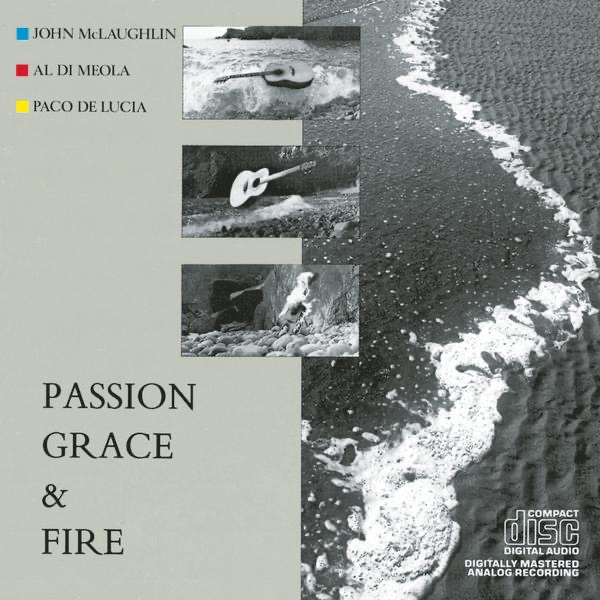
Friday Night in San Francisco (1981) captures something that almost never happens on record: three elite musicians at the absolute peak of their powers, playing together in front of an audience, and every single moment landing. Al Di Meola, John McLaughlin, and Paco de Lucía had each built formidable solo careers by the time this concert was recorded, but together they created something none of them could have made alone. The album runs just over 40 minutes, and it moves fast — intricate, nylon-string acoustic guitar runs trading off and overlapping, tempos that would be difficult for a single player and seem almost unreasonable for three playing simultaneously without a rhythm section beneath them.
The playing style across the album leans heavily on flamenco technique and jazz-inflected improvisation. Tracks like 'Mediterranean Sundance / Rio Ancho' show all three guitarists working in tight conversation — someone leads, someone comps, someone ornaments, and then the roles shift in real time. Di Meola brings a percussive, precise attack. McLaughlin plays with a kind of controlled intensity that keeps the energy high without tipping into chaos. De Lucía grounds everything in flamenco tradition while being completely fluent in the jazz idiom the other two bring. None of them is showing off at the expense of the music, which is rarer than it sounds for an album of this kind.
Jazz critic Walter Kolosky described this recording as comparable in historical significance to the Benny Goodman Band's 1938 Carnegie Hall performance, and called it possibly the most influential of all live acoustic guitar albums. That is a large claim, but the album earns serious consideration of it. If you have any interest in acoustic guitar at all — classical, jazz, flamenco — this is essential listening.
Who's playing
Al Di Meolaacoustic guitar
Paco de Lucíaacoustic guitar
Where next?
More by Al Di Meola
All 32 albums →
The musicians on this record
Their own records, close in time


