1982 · Album
Electric Rendezvous
Released: 1982 · Studio Album Number: Fifth studio album · Notable Collaboration: Features Paco de Lucía on "Passion, Grace & Fire"
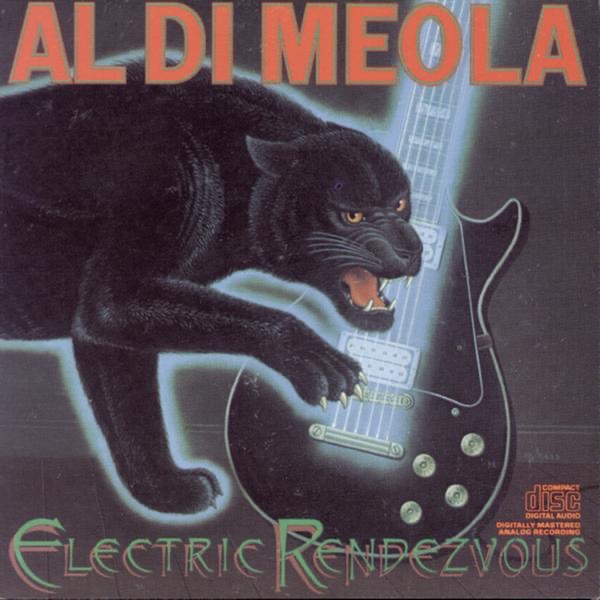
When Guitar Meets Fire and Grace
Electric Rendezvous caught listeners between two worlds—Di Meola's synthesizer-driven fusion and flamenco's ancient intensity.
Electric Rendezvous arrived in 1982 as Di Meola's fifth studio album, a record that split the difference between his electric jazz fusion experiments and something rawer, more rooted in traditional Spanish music. The album's centerpiece, "Passion, Grace & Fire," brought together Di Meola and flamenco guitarist Paco de Lucía in a meeting that sounded inevitable in hindsight but was genuinely striking at the time. Two virtuosos from completely different worlds—one schooled in bebop and electric fusion, the other in centuries of flamenco tradition—finding common ground on the same track was a genuine event for fans paying attention.
The album didn't explode onto the scene the way some releases do. It wasn't a commercial blockbuster, and it didn't immediately reshape how people thought about fusion or flamenco crossovers. What it did was reach the listeners who were already following Di Meola closely and give them something that felt both like him and unlike anything he'd done before. The addition of Paco de Lucía gave the record a legitimacy it wouldn't have had otherwise—this wasn't dilettante dabbling in flamenco, it was a serious conversation between two masters.
By this point in his career, Di Meola had already established himself as a formidable electric player with real compositional ideas. Electric Rendezvous showed he could step outside his own world without losing his voice. The album found its audience gradually—the kind of record that people discovered through recommendations, then added to their collections because it offered something genuine. It remains primarily a destination for committed Di Meola fans rather than a starting point, but it's the kind of side road worth taking if you're already interested in where he was headed.
Who's playing
Anthony Jacksonbass guitar
Al Di Meolaguitar
Paco de Lucíaguitar
Steve Gadddrums
James Mingo Lewispercussion
Jan Hammerkeyboard
Philippe Saissekeyboard
Where next?
More by Al Di Meola

Friday Night in San Francisco 1981

Elegant Gypsy 1977
Passion, Grace & Fire 1983
Land of the Midnight Sun 1976
The musicians on this record
Their own records, close in time


