Where do you listen?
Choose your streaming service
inside the sleeve
Loading…
inside the sleeveITS
⌕
Read About
Piano, Vocals - USA - Soul Jazz

Les
McCann

1935 - 2018, USA

Les McCann played piano like he was preaching and singing like he had somewhere urgent to be. He came up through gospel and blues before jazz got hold of him, and that mix never left his music — funky, direct, built for people who wanted to feel something, not just admire it.

Soul JazzHard BopVocal Jazz
Les McCann

The Preacher Who Played Piano

If you only know one Les McCann record, it's probably Swiss Movement (1969), the live album he cut at Montreux with saxophonist Eddie Harris. "Compared to What" is on there, and it's one of those songs that just barrels through you — funky, angry, funny, and completely alive. That track alone made McCann's name, and honestly it's a fair introduction, because it captures what he did best: turning jazz into something you could dance to and shout along with.

McCann grew up in Lexington, Kentucky, singing in church, and you can hear that background in everything he played. He wasn't interested in being cool or cerebral. His piano style was rooted in gospel chords and blues phrasing, closer to Ray Charles than to bebop pianists chasing Bud Powell. He sang plenty too, in a rough, warm voice that sounded like it belonged more to a soul singer than a jazz musician, which was kind of the point.

He recorded for Pacific Jazz through the late fifties and sixties, building a catalog of soul jazz that leaned hard into groove — records like Les McCann Ltd. in New York (1961) show him working a trio format with real swagger, comfortable being both entertainer and serious musician at the same time. That combination didn't always earn him respect from jazz critics who wanted their artists a little more austere, but audiences loved him, and he kept packing rooms for decades.

What people sometimes forget is that McCann had a good ear for talent beyond his own playing. He's the one who got Atlantic Records to listen to a young singer named Roberta Flack, which changed her career and, honestly, did a service to everybody who's ever heard "Killing Me Softly." That's the kind of thing that doesn't show up on his own records but tells you something about the guy — generous, plugged in, paying attention. He kept performing into his later years despite health problems, still leading with that same gospel-fired energy that made "Compared to What" hit as hard as it did.

Facts
BornSeptember 23, 1935, Lexington, Kentucky
DiedDecember 29, 2018, Los Angeles, California
InstrumentPiano, Vocals
Active1950s - 2010s
Known forSoul jazz piano and vocals; 'Compared to What' from Swiss Movement (1969)
Connections
Eddie HarrisFrequent collaborator, Montreux/Chicago
→
Roberta FlackArtist he helped discover, Washington D.C.
→
Ray CharlesKey influence, Georgia/Florida
→
Read more

Discography

32 records
Les McCann Sings
Les McCann Sings
1961
Soul Hits
Soul Hits
1963
Jazz Waltz
Jazz Waltz
1963
♫
McCann / Wilson
1964
♫
Spanish Onions
1966
♫
Live At Bohemian Caverns - Washington, D.C.
1967
Swiss Movement
Swiss Movement
1969
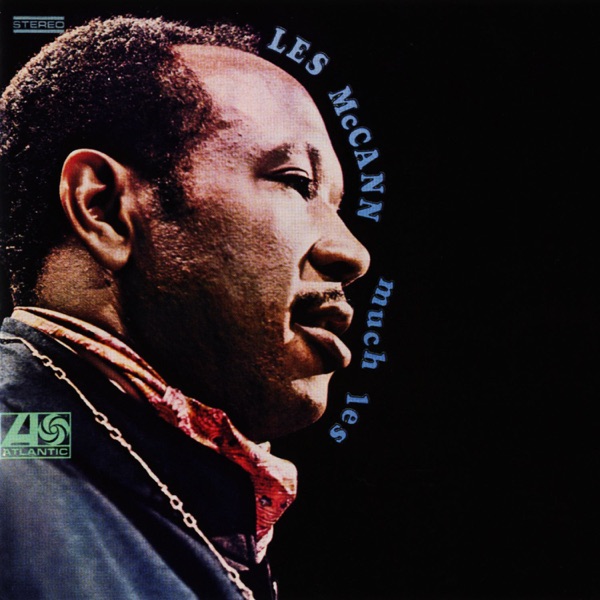
Much Les
Much Les
1969
More or Les McCann
More or Les McCann
1969
Comment
Comment
1970
Second Movement
Second Movement
1971
Invitation to Openness
1971
Layers
Layers
1972
Talk to the People
Talk to the People
1972
Another Beginning
Another Beginning
1974
Hustle to Survive
Hustle to Survive
1975
River High, River Low
1976
Pump It Up
Pump It Up
1977
♫
Change Change Change: Live at the Roxy
1977
♫
Music Lets Me Be
1977
The Man
The Man
1978
♫
Tall, Dark & Handsome
1979
On the Soul Side
On the Soul Side
1994
♫
Listen Up! 1995
1996
♫
Marian McPartland's Piano Jazz With Guest Les McCann
1996
♫
Pacifique
1997
♫
How's Your Mother?
1998
The Shout
The Shout
2011
Sings
Sings
2013
Live At The Village Vanguard 1967
2017
Les McCann, Live At The Village Vanguard
2017
♫
A Time Les Christmas
2018

Collaborations

Live on Youtube

Explore Further

Selected connections
Saxophonist, USA
Eddie Harris
McCann's Swiss Movement partner, whose electric sax added grit to the same soul jazz vocabulary.
Explore →
Album, 1969
Swiss Movement
The live Montreux recording that made McCann's name and gave the world 'Compared to What.'
Explore →
Vocalist, USA
Roberta Flack
The singer McCann's recommendation helped launch, worth hearing to trace his influence beyond his own records.
Explore →

Who's playing
Listen next
Recording Info
Track listing
Musicians
Further Reading
Read more

Where next?

More by this artist

Albums with the same musicians

From the same era

Similar artists

inside the sleeve
Growing
Jazz, explained without pretension.
Read · Follow the connections · Press play
Right now: 7,100+ albums · 440+ artists
Start here
New to jazz? These artists are good places to start.
Loading…
Explore
Nine records worth getting lost in.
Born today
Album of the day
A landmark record, every day.
Read
  • Loading…
Article archive →
Recently added
Purpose
Inside the Sleeve is your companion on a journey through jazz — not a textbook, but something closer to a knowledgeable friend sitting next to you while you listen. Read about an artist, press play, follow a connection, discover an album you didn't know you needed.
Suggestions
Read

Articles

Essays, guides, and lists about jazz and the records that matter.

Loading…

Genre

Key Artists
Further Reading

Essential Albums

Related Genres

In This Genre

About

Inside the Sleeve

Work in progress

Inside the Sleeve grows continuously — new artists and albums are added, essays refined, as visitors explore and our editors follow up on what they find. Content, features, and design are still evolving; use the Report error button on any page to flag something that seems off.

Content

Every artist, album, and release date on Inside the Sleeve is real — verified against trusted sources including MusicBrainz and Wikipedia. We don't invent discographies or fabricate records. AI compiles that verified information into readable prose — essays on artists, albums, and the music itself. We can't manually review every essay before publishing, but every reported error is checked by a human editor.

Inside the Sleeve is not a review site. We're not here to rate or rank — we're here to guide you in. Where an album stands out, we'll say so. Where an artist changed everything, you'll know why. But we won't tear anything down. Jazz history is complex and sources sometimes disagree — if you spot something that seems off, please report it.

Streaming

Inside the Sleeve links to Spotify and Apple Music so you can listen while you read. These are not affiliate links. For Spotify, links open a search on open.spotify.com — we do not have direct links to specific recordings. For Apple Music, direct links are used where available, otherwise a search is opened.

Your choice of streaming service is stored locally in your browser only. It is never sent to our servers.

We're working on deeper Spotify integration, including direct links to specific recordings.

Privacy

Inside the Sleeve does not collect personal data and does not use cookies. We count page visits anonymously using a self-hosted analytics tool — no personal identifiers are stored, and the data never leaves our own server. The only preference stored on your device is your streaming service choice, saved locally in your browser and never transmitted.

When you submit a suggestion or error report, the text you write is stored in our database. No name or email is required or collected unless you choose to provide one.

Third-party services

Spotify and Apple Music are independent services with their own terms of use and privacy policies. Inside the Sleeve is not affiliated with or endorsed by either company.

Support

Inside the Sleeve is free and ad-free. If you enjoy it, a coffee helps cover server costs and keeps the project going.

Amazon

Some book recommendations on Inside the Sleeve link to Amazon. Buying through these links costs you nothing extra — but Amazon pays us a small commission, which goes directly towards keeping the site running. It's a simple way to support the project if you were going to buy the book anyway.

As an Amazon Associate, Inside the Sleeve earns from qualifying purchases.

Questions or feedback? Use the suggestion box on the front page.

Inside the Sleeve — A guide for those who want to go beyond the obvious About & Privacy