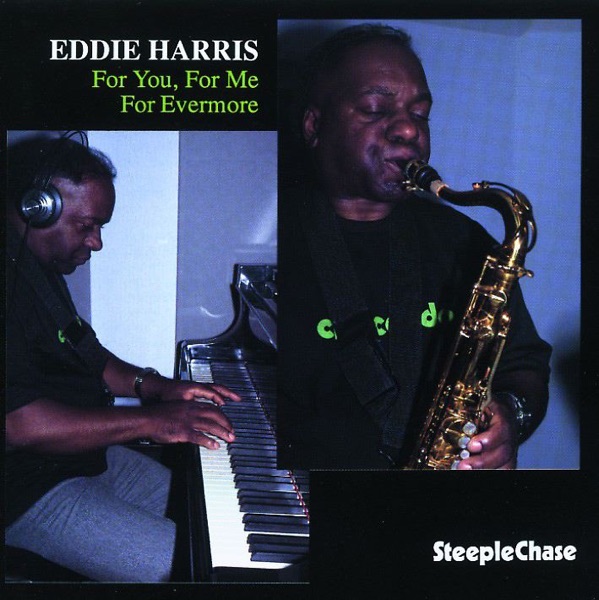
The Saxophonist Who Plugged In
Eddie Harris came out of Chicago with a sound built on clean, crackling tone and an ear for melody that most hard-bop players considered beneath them. His first big splash was an instrumental version of the theme from the movie Exodus, released on Exodus to Jazz (1961), which became one of the best-selling jazz singles of its era. That kind of commercial success made some critics suspicious of him right away, as if liking a good tune automatically meant you weren't serious.
Harris didn't care much what the critics thought. By the mid-sixties he was experimenting with electric saxophone, running his horn through a Varitone pickup to get a buzzing, almost vocal distortion, years before fusion made that kind of thing fashionable. He also invented and played a reed trumpet, basically a trumpet mouthpiece grafted onto a clarinet body, because he liked the way it sounded and didn't see why he should stick to one instrument. You hear all of this restlessness on Listen Here! (1967), a record that's funkier and weirder than its reputation as a soul-jazz classic might suggest.
The record most people know him for is Swiss Movement (1969), cut live with pianist Les McCann at the Montreux Jazz Festival. McCann's vocal on "Compared to What" turned into an anthem, and Harris's tenor solo on it is one of those moments where a player just locks into a groove and rides it without showing off. The album sold enormously well for a jazz record, crossed over to soul and pop audiences, and cemented the Harris-McCann partnership as one of the great accidental pairings in the music.
What made Harris interesting wasn't just the gadgets or the hits, though. He had a genuine sense of humor about music, cracking jokes between songs on his live records, singing through his horn, messing with electronics just to see what would happen. He never fit neatly into hard bop or soul jazz or fusion, which is probably why he doesn't get talked about as much as contemporaries who stuck to one lane. But if you want to hear a tenor player who treated the whole instrument, electronics included, as fair game, Harris is the one to put on.