Where do you listen?
Choose your streaming service
inside the sleeve
Loading…
inside the sleeveITS
⌕
Read About
Trumpet & Vocals - United States - Cool Jazz & West Coast Jazz

Chet
Baker

1929 - 1988, Yale, Oklahoma, USA

Chet Baker was the reluctant poster boy of cool jazz, a trumpeter whose lyrical tone and vulnerable vocals made him one of the most distinctive voices in modern jazz. Born in Oklahoma and raised in California, his ethereal sound and boyish charm captivated audiences in the 1950s, even as personal demons threatened to derail a meteoric rise. By turns innovative and heartbreaking, Baker embodied both the promise and tragedy of the jazz life.

Cool JazzVocal Jazz
Chet Baker

The Angel With the Broken Wing

When Chet Baker showed up on the Los Angeles jazz scene in the late 1940s, he did something nobody expected: he played quiet. While everyone else was running up and down the horn showing off how fast they could play, Baker was doing the opposite. He'd play four notes instead of forty, and somehow that four notes would stick with you all day. His trumpet sounded like a person singing—warm, a little sad, beautiful without trying too hard. That fit perfectly with what cool jazz was becoming, and people noticed immediately.

Joining the Gerry Mulligan Quartet and then playing with Russ Freeman on piano made Baker's name. But the thing that really made him different was his voice. When he sang, he sounded like he was talking to you alone in a room somewhere—breathy, tired in a way that felt honest, like he'd seen things. "My Funny Valentine" and "Let's Get Lost" became the versions people remembered. He wasn't the best singer technically, but you believed what he was saying, and that matters more than perfect technique.

The 1950s were Baker's time completely. He was young, good-looking, could play anything, and seemed like he'd never make a mistake. Every record label wanted him, every club wanted him. But this is also when he started using heroin, and it never stopped. Listening to those records now, you hear the weariness in his voice—and it stops being just how he chose to sing and becomes something real he was living through.

By the 1960s, everything fell apart and came back together over and over. He got his teeth knocked out—drug debt, probably—and most trumpet players would've quit for good. Baker didn't. He came back and kept playing, but the records weren't perfect anymore. They were better in a way, actually—like they meant something because he'd had to fight to make them. When he died falling from a window in Amsterdam in 1988, nobody really knew what happened. Dutch authorities ruled it an accident, but because drugs were found in his system and there were no witnesses, the exact circumstances have never been conclusively established. Jazz lost a great player that day, but also a hard lesson about what this life can do to you.

Facts
BornDecember 23, 1929, Yale, Oklahoma
DiedMay 13, 1988, Amsterdam, Netherlands
InstrumentTrumpet, Vocals
Active1946 - 1988
Known forCool jazz trumpet sound, lyrical vocals, West Coast jazz innovator
Connections
Gerry MulliganQuartet collaborator, Los Angeles
→
Russ FreemanPianist and early mentor, Los Angeles
→
Miles DavisContemporary and stylistic peer, New York
→
Bill EvansPianist collaborator in later years, New York
→
Read more
GuideStan Getz at 100: making complicated music sound easyGuideJohn Scofield at 75: he knows what he is, and does it better than almost anyoneListLate night jazz: 7 albums for when the room goes quiet

Discography

14 records
Chet Baker Sings
Chet Baker Sings
1954
The Trumpet Artistry of Chet Baker
1955
Chet In Paris: Everything Happens To Me - The Complete Barclay Recording Vol. 2
1957
Embraceable You
Embraceable You
1957
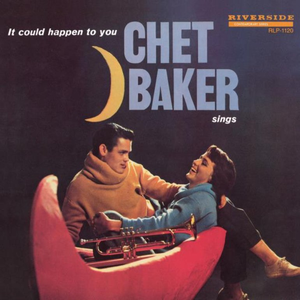
It Could Happen to You
1958
Jazz Moods - Cool
Jazz Moods - Cool
1959
Chet Baker Sings: It Could Happen To You [Original Jazz Classics Remasters] (OJC Remaster)
1959
Baker's Holiday
Baker's Holiday
1965
The Touch of Your Lips
1980
The Art Of The Ballad
1988
Chet Baker Sings And Plays (Remastered 2004)
2004
Chet (Mono)
Chet (Mono)
Baby Breeze (Expanded Edition)
Polka Dots And Moonbeams

Collaborations

Live on Youtube

Explore Further

Selected connections
Album, 1953
Chet Baker Sings
Baker's first vocal showcase, showcasing his breathy intimacy and redefining how a jazz instrumentalist could sing.
Explore →
Album, 1955
The Gerry Mulligan Quartet
Essential cool jazz document featuring Baker's most lyrical trumpet work in pianoless quartet setting.
Explore →
Album, 1979
She Was Too Good to Me
Later period Baker revealing deeper emotional maturity and the bittersweet wisdom of survival and loss.
Explore →

Who's playing
Listen next
Recording Info
Track listing
Musicians
Further Reading
Read more

Where next?

More by this artist

Albums with the same musicians

From the same era

Similar artists

inside the sleeve
Growing
Jazz, explained without pretension.
Read · Follow the connections · Press play
Right now: 7,100+ albums · 440+ artists
Start here
New to jazz? These artists are good places to start.
Loading…
Explore
Nine records worth getting lost in.
Born today
Album of the day
A landmark record, every day.
Read
  • Loading…
Article archive →
Recently added
Purpose
Inside the Sleeve is your companion on a journey through jazz — not a textbook, but something closer to a knowledgeable friend sitting next to you while you listen. Read about an artist, press play, follow a connection, discover an album you didn't know you needed.
Suggestions
Read

Articles

Essays, guides, and lists about jazz and the records that matter.

Loading…

Genre

Key Artists
Further Reading

Essential Albums

Related Genres

In This Genre

About

Inside the Sleeve

Work in progress

Inside the Sleeve grows continuously — new artists and albums are added, essays refined, as visitors explore and our editors follow up on what they find. Content, features, and design are still evolving; use the Report error button on any page to flag something that seems off.

Content

Every artist, album, and release date on Inside the Sleeve is real — verified against trusted sources including MusicBrainz and Wikipedia. We don't invent discographies or fabricate records. AI compiles that verified information into readable prose — essays on artists, albums, and the music itself. We can't manually review every essay before publishing, but every reported error is checked by a human editor.

Inside the Sleeve is not a review site. We're not here to rate or rank — we're here to guide you in. Where an album stands out, we'll say so. Where an artist changed everything, you'll know why. But we won't tear anything down. Jazz history is complex and sources sometimes disagree — if you spot something that seems off, please report it.

Streaming

Inside the Sleeve links to Spotify and Apple Music so you can listen while you read. These are not affiliate links. For Spotify, links open a search on open.spotify.com — we do not have direct links to specific recordings. For Apple Music, direct links are used where available, otherwise a search is opened.

Your choice of streaming service is stored locally in your browser only. It is never sent to our servers.

We're working on deeper Spotify integration, including direct links to specific recordings.

Privacy

Inside the Sleeve does not collect personal data and does not use cookies. We count page visits anonymously using a self-hosted analytics tool — no personal identifiers are stored, and the data never leaves our own server. The only preference stored on your device is your streaming service choice, saved locally in your browser and never transmitted.

When you submit a suggestion or error report, the text you write is stored in our database. No name or email is required or collected unless you choose to provide one.

Third-party services

Spotify and Apple Music are independent services with their own terms of use and privacy policies. Inside the Sleeve is not affiliated with or endorsed by either company.

Support

Inside the Sleeve is free and ad-free. If you enjoy it, a coffee helps cover server costs and keeps the project going.

Amazon

Some book recommendations on Inside the Sleeve link to Amazon. Buying through these links costs you nothing extra — but Amazon pays us a small commission, which goes directly towards keeping the site running. It's a simple way to support the project if you were going to buy the book anyway.

As an Amazon Associate, Inside the Sleeve earns from qualifying purchases.

Questions or feedback? Use the suggestion box on the front page.

Inside the Sleeve — A guide for those who want to go beyond the obvious About & Privacy