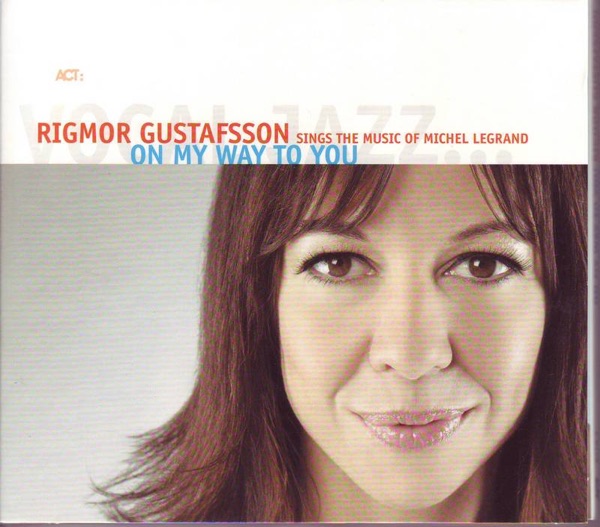
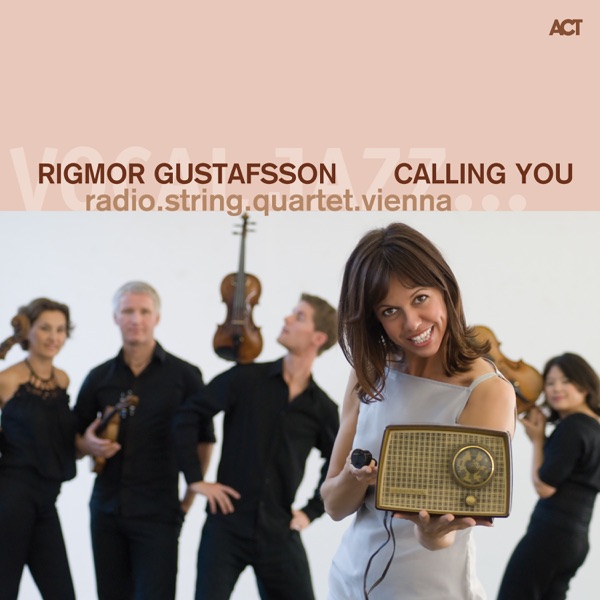
The Quiet Confidence of Restraint
If you grew up on American jazz singers who belt and scat and chase the back row, Rigmor Gustafsson will throw you off at first. She doesn't reach for the big moment. She sits inside a phrase, lets a note hang a beat longer than you expect, and somehow that restraint ends up hitting harder than a big finish would have. It's a Swedish thing in some ways — there's a whole lineage of Nordic musicians who figured out that space and silence can carry as much weight as volume — and she's one of its clearest voices.
She came up through Sweden's jazz scene in the 1990s, studying at the Royal College of Music in Stockholm, and found her footing early with a sound built around standards reimagined with unusual patience. Her version of a familiar song rarely sounds like a cover in the karaoke sense; she tends to slow things down, strip the arrangement back to piano, bass, maybe brushes, and trust the melody to survive on its own. Her longtime partnership with pianist Jacob Karlzon became central to this — his playing is spare and listens as much as it speaks, which suits her completely.
She also recorded in Swedish, pulling from the folk and schlager songbook the way American singers pull from the Great American Songbook, which matters more than it might sound like on paper. It places her in a specific Nordic jazz lineage — think of what Monica Zetterlund did a generation earlier, singing standards in her own language and making them feel like they'd always belonged there. Gustafsson extended that idea without copying it, bringing her own cooler, more contemporary phrasing to material that could easily have felt nostalgic in lesser hands.
What you notice over an album's length is how little she wastes. No runs for the sake of runs, no vibrato thrown on just to prove she has range. She trusts a quiet band and a good song, and across two-plus decades that trust has paid off — she's become a reference point for Swedish jazz vocal music, even if she never became a household name outside Scandinavian and European jazz circles. That's fine. Some of the best things never need to be loud to be true.
If you want an entry point, start with something stripped-down and ballad-heavy before anything brighter — you want to hear her sit inside a slow tempo before you hear her move. Once that clicks, the rest of her catalog opens up easily.