Genre
Nordic Jazz
1960s–Present — Scandinavia — Spacious, Introspective, Folk-Inflected
Nordic jazz is the sound of restraint used as a creative tool. It pulls from Scandinavian folk melody, Lutheran hymn, and open winter landscapes to produce music that breathes differently from American jazz — slower to develop, less interested in showing its work, more comfortable with silence. The result is a distinctly northern sensibility: cool without being cold, minimal without being empty.
The story of Nordic jazz is largely the story of ECM Records. When Manfred Eicher founded the label in Munich in 1969, he had specific ideas about space and silence in recorded music, and he found willing partners in Scandinavian musicians who already thought that way. The label's early releases featuring Norwegian and Swedish players weren't a calculated marketing decision — it was a genuine convergence of aesthetics. Eicher understood that these musicians wanted something different from hard bop or free jazz, and he gave them room to find it.
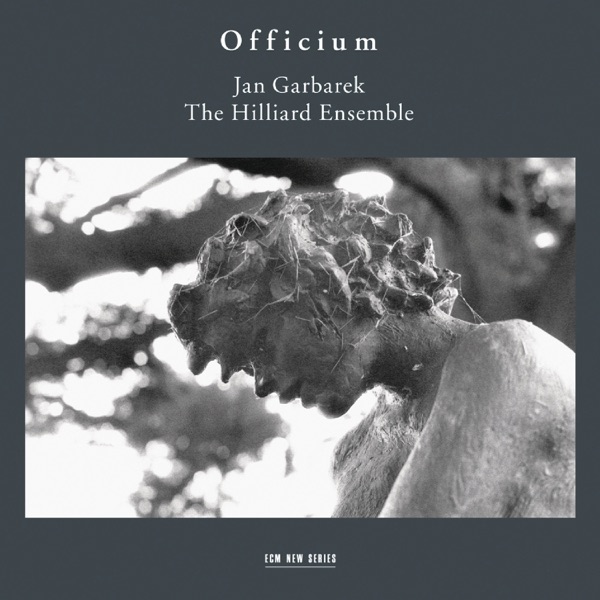
The defining figure is Jan Garbarek, the Norwegian saxophonist whose tone on soprano and tenor became synonymous with the ECM sound. Garbarek had studied with George Russell in Oslo in the late 1960s, which gave him a rigorous harmonic foundation, but what he did with it was entirely his own. Albums like Triptykon (1973) and Witchi-Tai-To (1974) showed a musician deliberately moving away from bebop fluency toward something slower and more modal, with Norwegian folk scales bleeding into the improvisation in ways that sounded organic rather than forced. His later Officium (1994), pairing his saxophone with the Hilliard Ensemble's medieval vocal music, remains one of the best-selling jazz recordings in ECM's catalog.
The Norwegian scene in particular developed remarkable depth. Terje Rypdal took an electric guitar approach that owed as much to late Miles Davis and rock as it did to any jazz tradition, while Arild Andersen and Jon Christensen anchored a rhythm section sensibility that prioritized texture and suggestion over propulsion. Swedish musicians brought their own angle — Bobo Stenson is perhaps the finest example, a pianist of extraordinary delicacy who manages to sound simultaneously classical, folk, and genuinely jazz. His work with Jan Garbarek in the mid-1970s and his own quartet recordings from the 1990s onward represent some of the most sophisticated piano jazz to come out of Europe.
Today the tradition is alive and evolving. Younger players like Bugge Wesseltoft and Nils Petter Molvær pushed the Nordic aesthetic into electronics and beats without abandoning its core spaciousness. The Esbjörn Svensson Trio, known as e.s.t., brought the sound to a wider audience in the 1990s and 2000s by incorporating rock dynamics and rhythmic energy without losing the introspection at the center of it all. Tord Gustavsen's trio recordings have since carried that piano trio tradition forward with quiet authority. What holds all of this together across generations is a shared willingness to let a phrase sit, to not fill every measure, to trust that what isn't played matters just as much as what is.
The genius of Nordic jazz is knowing when to stop — and being comfortable with what's left.
Essential Albums
♫
Witchi-Tai-To
Jan Garbarek / Bobo Stenson Quartet · 1974
The album where the Nordic sound fully arrives — folk melody, modal improvisation, and ECM's signature space all working together with total conviction.
♫
Odyssey
Terje Rypdal · 1975
Rypdal's electric guitar approach turns jazz structure into something closer to a northern landscape painting — vast, slow-moving, genuinely unlike anything American jazz was doing.
♫
Calefaction
Bobo Stenson Trio · 1996
Stenson at his most precise, demonstrating how a Scandinavian sensibility can inhabit the piano trio format without sounding like an imitation of anyone.
♫
Strange Place for Snow
Esbjörn Svensson Trio · 2002
e.s.t. at their most accessible and focused, making the case that Nordic jazz could reach a broad audience without diluting what made it distinctive.
In This Genre
43 artists in your library♫
Arild Andersen
Double Bass · Norway · Nordic Jazz
Arild Andersen has spent six decades proving that the double bass can carry a whole story on its own — melodic, searching, and never just keeping time. He came up through the Oslo scene in the late 1960s and quickly became one of the most in-demand bassists in European jazz, but he was always more interested in building something personal than in collecting session credits. His recordings for ECM Records defined a particular kind of Nordic sound: spacious, cool-headed, and quietly ambitious.
♫
Yonathan Avishai
Piano · Israel / France · Contemporary Jazz
Yonathan Avishai plays piano like he has all the time in the world, and somehow that patience makes every note land harder. Born in Israel and now based in Paris, he has built a reputation as one of the more quietly distinctive voices in contemporary European jazz — the kind of player you notice not because he's doing something loud, but because he keeps doing something right. His music sits in the space between restraint and feeling, and it rarely sounds like anything else.
♫
Jon Balke
Piano - Norway - Nordic Jazz
Jon Balke is the guy who looked at Nordic jazz's cool reputation and decided to drag in Baroque strings, North African rhythm, and Arabic poetry just to see what would happen. He's spent decades building projects that sound like nothing else on ECM's roster, which is saying something given that label's track record for strange beauty.
♫
Iain Ballamy
Saxophone - England - Contemporary Jazz
Iain Ballamy came out of the big, messy, brilliant British jazz orchestra Loose Tubes and never really lost that band's appetite for mixing things up. He plays tenor and soprano with a tone that's warm rather than flashy, and he's spent decades proving that English jazz didn't need to sound like anyone else's.
♫
Dan Berglund
Double Bass · Sweden · Nordic Jazz
Dan Berglund spent the better part of two decades as the engine room of the E.S.T. trio, one of the few European piano trios that genuinely rewired how people thought about jazz in the late nineties and early 2000s. His bass playing is unusually physical — you feel it before you fully hear it — and he brought a rock-leaning intensity to a context that could have easily stayed polite. Since E.S.T., he has kept that same restless energy going with his own project, Tonbruket, which pushes even further into electric, experimental territory.
♫
Rolf Billberg
Alto Saxophone - Sweden - Cool Jazz
Rolf Billberg was the sound of Swedish jazz at its quietest and most inward-looking, an alto player who could make a melody feel like a secret he was telling just you. He never got the international attention some of his countrymen did, but anyone who's heard his tone understands why Swedish musicians still bring his name up with a kind of hush.
♫
Ketil Bjørnstad
Piano · Norway · Nordic Jazz / Contemporary Classical
Ketil Bjørnstad sits in that rare space where jazz and contemporary classical music genuinely blur rather than awkwardly shake hands. A trained classical pianist who drifted toward improvisation and then deeper into the ECM aesthetic, he has spent decades making records that are quiet, spacious, and surprisingly hard to shake. He's probably best known outside Norway for his collaborations with the label ECM, which turned out to be a near-perfect match for everything he was trying to do.
♫
Jakob Bro
Guitar - Denmark - Nordic Jazz
Jakob Bro plays guitar like he's got all the time in the world, which is a rare thing in a music that often rewards speed and density. He found his sound by hanging around people who already had theirs — Paul Motian, Lee Konitz, Tomasz Stanko — and then quietly built something that sounds like none of them.
♫
Peter Bruun
Drums - Denmark - Nordic Jazz
Peter Bruun is the kind of drummer who makes a trio sound like a small orchestra. He's spent his career in Copenhagen's restless creative scene, equally at home laying down a groove as he is pulling a tune apart and putting it back together differently.
♫
Jon Christensen
Drums - Norway - Nordic Jazz
Jon Christensen never hit a drum like he was trying to prove something. He played like he had all the time in the world, which is exactly why half of Europe's best pianists and saxophonists wanted him behind them. If you've ever heard an ECM record and thought the drums sounded unusually spacious and unhurried, there's a decent chance it was him.
♫
Manfred Eicher
Producer / Label Founder - Germany - Contemporary Jazz
Manfred Eicher didn't play an instrument on any of the records that made him famous, but his ears shaped the sound of jazz more quietly and persistently than most people who did. As the founder of ECM Records in Munich in 1969, he built a label with such a distinctive aesthetic that you can often identify an ECM album within the first ten seconds — and that's either a remarkable achievement or a reasonable criticism, depending on who you ask. He is the rare producer whose taste became its own genre.
♫
Mathias Eick
Trumpet - Norway - Nordic Jazz
Mathias Eick writes melodies you can hum after one listen, which is rarer in jazz than it should be. He came up through Norway's restless scene of the 2000s, playing in rock-leaning jazz bands before landing on ECM and finding a sound built on long tones, open space, and a trumpet voice that sounds like it's telling you something personal.
♫
Ketil Einarsen
Flute - Norway - Nordic Jazz
Ketil Einarsen is one of the few jazz musicians who made the flute sound like it belonged in modern Norwegian jazz rather than a leftover from the 1970s fusion racks. He plays with a quiet, almost conversational tone, more interested in shading a melody than showing off technique, and that restraint has made him a favorite collaborator across the Oslo scene.
♫
Sidsel Endresen
Vocals - Norway - Avant-Garde Jazz
Sidsel Endresen started out singing clean, confident jazz-pop lines in Oslo and ended up somewhere nobody expected — making sounds with her voice that barely register as singing at all. She's one of those rare artists who got more radical as she got older, trading melody for texture and comfort for risk.
Jan Garbarek
Tenor Saxophone - Norway - Nordic Jazz & World Fusion
Jan Garbarek transformed the tenor saxophone into an instrument of profound spiritual inquiry, pioneering a distinctly Nordic sound that married free jazz exploration with world music influences. His soaring, often wordless vocals and lyrical approach created a template for generative, mood-rich jazz that transcended genre boundaries. For over five decades, he has remained one of Europe's most distinctive and influential improvisers.
♫
Lars Gullin
Baritone Saxophone - Sweden - Cool Jazz
Lars Gullin was the most original jazz voice to come out of Europe in the 1950s — a Swede who fell so deeply into bebop that American musicians kept asking who he was. He played baritone saxophone with a lightness that nobody had managed before, making an instrument built for weight sound like it was floating. His own compositions were something else entirely: lyrical, melancholy, and unmistakably Scandinavian, even when built on American jazz structures.
♫
Rigmor Gustafsson
Vocalist - Sweden - Vocal Jazz
Rigmor Gustafsson sings the way you'd want a friend to tell you a long story — unhurried, clear-eyed, never showing off just because she can. She became one of Sweden's most trusted jazz voices by refusing to oversing anything, letting the lyric do the work while she quietly bends the time around it.
♫
Tord Gustavsen
Piano · Norway · Nordic Jazz / ECM
Tord Gustavsen is one of the defining voices in contemporary Nordic jazz — a pianist whose playing is quiet, unhurried, and emotionally direct in a way that ECM records at their best tend to be. His trio recordings established him as a musician with a completely individual sound: sparse, hymn-like, drawing on gospel and Scandinavian folk music without being reducible to either. Patient listeners will find something genuinely moving in his work.
♫
Arve Henriksen
Trumpet - Norway - Nordic Jazz
Arve Henriksen plays trumpet like it's a breath instrument, which is sort of the point. He spent years chasing the sound of the Japanese shakuhachi flute until his horn started sounding like wind moving through bamboo instead of brass. The result is some of the most recognizable jazz trumpet playing to come out of Norway in the last thirty years.
♫
Martin Horntveth
Drums, Percussion - Norway - Nordic Jazz
Martin Horntveth is the drummer who keeps Jaga Jazzist from ever settling into one groove for too long. He grew up in a house full of instruments and siblings who all ended up in the same band, and he's spent his career treating jazz drumming like it's just one tool among many — alongside electronics, noise, and whatever else the moment calls for.
♫
Line Horntveth
Tuba, Percussion - Norway - Nordic Jazz Fusion
Line Horntveth is the tuba player in a band that treats the tuba like a lead instrument, which tells you most of what you need to know about Jaga Jazzist. She's spent decades inside one of Norway's strangest and most beloved musical exports, while also building a quieter solo career that trades the big-band fireworks for something more patient and personal.
♫
Lars Horntveth
Reeds & Guitar - Norway - Nordic Jazz
Lars Horntveth has spent his whole career refusing to sit still inside one genre, bouncing between jazz, prog, minimalism, and film scoring like it's all the same instrument. As the chief architect of Jaga Jazzist, he turned a teenage Tromsø garage band into one of the most inventive groups to come out of Norway. On his own, he's just as restless — building orchestral pop out of a single repeated phrase, or disappearing into a saxophone part for months at a time.
♫
Jaga Jazzist
Large Ensemble - Norway - Jazz Fusion
Jaga Jazzist is less a band than a small orchestra that happens to groove — ten-plus musicians from Tønsberg, Norway, blending horns, synths, and drum kits into something that sounds like a jazz big band raised on Aphex Twin and Steve Reich. They don't swing in the traditional sense, but they build and release tension like nobody else in Nordic music.
♫
Jan Johansson
Piano · Sweden · Jazz / Folk Fusion
Jan Johansson did something that sounds simple but almost nobody pulls off: he took Swedish folk melodies and played them as jazz piano, and it worked completely. His 1964 album Jazz på svenska became one of the best-selling jazz records in Scandinavian history, which tells you something about how naturally the idea landed. He died in a car accident at 37, which means his recorded output is small, but what he left behind is genuinely unlike anything else.
♫
Anders Jormin
Double Bass - Sweden - Nordic Jazz
Anders Jormin has spent decades making the double bass sound like it has no interest in keeping time — which is a compliment. Working mostly in the space between jazz and contemporary classical music, he has built a catalog that rewards patience and punishes background listening. His collaborations with Charles Lloyd and his long partnership with drummer Jon Christensen represent some of the most quietly absorbing music to come out of Scandinavia in the past thirty years.
♫
Jacob Karlzon
Piano - Sweden - Nordic Jazz
Jacob Karlzon is the kind of pianist who never got the memo that jazz and rock synths are supposed to stay in separate rooms. He plugs in, turns up, and plays piano lines that could just as easily come from a prog band as a jazz trio, and somehow it all still swings underneath.
♫
Eva Kruse
Double Bass - Denmark - Nordic Jazz
Eva Kruse plays bass the way a good conversationalist listens — patient, attentive, never rushing to fill the space. She's spent her career inside the Danish and broader Nordic jazz scene, less interested in flash than in the quiet architecture that holds a band together.
♫
Nils Landgren
Trombone, Vocals - Sweden - Jazz Fusion
He plays a red trombone, sings like he means it, and has spent decades proving that jazz doesn't have to apologize for groove. Nils Landgren is the guy who shows up at a festival in a leather jacket and leaves the stage drenched in sweat, funk horns blaring behind him.
♫
Bremer McCoy
Double Bass & Keys - Denmark - Nordic Jazz
Jonathan Bremer on double bass and Morten McCoy on keys make a duo that sounds bigger than two people should. They strip jazz down to a pulse and a texture, and somehow that's enough.
♫
Nils Petter Molvær
Trumpet · Norway · Nordic Jazz / Electronica
Nils Petter Molvær arrived in 1997 with Khmer and rewired what a jazz trumpet record could sound like. Electronic loops, ambient textures, hip-hop rhythms — and over it all, a trumpet tone of real beauty, processed and unprocessed in equal measure. He came from the ECM tradition but was listening to something else entirely, and the result was a new kind of Nordic sound that influenced a generation of musicians on both sides of the jazz-electronic divide.
♫
Georg Riedel
Bass - Sweden - Nordic Jazz
Georg Riedel has been the quiet backbone of Swedish jazz for over six decades, a bassist whose name appears on so many essential recordings that you start to wonder if he was simply everywhere at once. Born in Karlsbad and raised in Sweden, he became the go-to collaborator for the country's greatest jazz voices, most famously Jan Garbarek and Monica Zetterlund. Beyond jazz, he built a second life as a beloved composer for children's music, which in Sweden made him something close to a national institution.
♫
Terje Rypdal
Guitar - Norway - Nordic Jazz / Fusion
Terje Rypdal took the electric guitar somewhere most jazz players never thought to go — into wide-open Nordic landscapes where rock distortion, orchestral textures, and free improvisation blur together until the genre labels just stop making sense. He came up through the Norwegian rock scene before finding his way to Jan Garbarek and the ECM label, where he spent decades making music that sounded like weather. Nobody else has sounded quite like him.
♫
Bobo Stenson
Piano - Sweden - Nordic Jazz
Bobo Stenson has been making piano records for over fifty years, and he still sounds like nobody else. He came up through the Swedish jazz scene in the 1960s but long ago moved past any obvious reference points, arriving at a style that is spare, patient, and quietly gripping. If you want to understand what Nordic jazz actually sounds like at its most refined, he is the place to start.
♫
Ståle Storløkken
Keyboards - Norway - Nordic Jazz
Ståle Storløkken is the guy who made keyboards sound dangerous again in Nordic jazz, pulling organ drones and synth textures into rooms where you'd expect a quiet piano trio. He's spent decades inside Supersilent, one of the strangest and most patient improvising groups to come out of Norway, and lent his sound to everyone from Terje Rypdal to Arve Henriksen. If you think of Nordic jazz as polite and icy, Storløkken is there to mess with that idea.
♫
Thomas Strønen
Drums - Norway - Nordic Jazz
Thomas Strønen plays drums like he's painting with a very limited palette and somehow making it feel endless. He came up through Norway's fertile improv scene, built a genre-bending duo with Iain Ballamy called Food, and has spent the last decade making some of the most quietly gripping chamber-jazz records on ECM. If you think of drummers as timekeepers, he will rearrange that idea pretty quickly.
♫
Esbjörn Svensson
Piano · Sweden · Contemporary Jazz / Nordic Jazz
Esbjörn Svensson transformed Scandinavian jazz with his trio EST — Esbjörn Svensson Trio — in the 1990s and 2000s. The group brought rock textures and electronic atmospheres into the piano trio format without losing the improvised heart of the music, and the result was a kind of jazz that found audiences who had never listened to jazz before. Svensson died in a diving accident in 2008 at 44, leaving a body of work that still sounds startlingly contemporary.
♫
Esbjörn Svensson Trio (E.S.T.)
Piano Trio - Sweden - Nordic Jazz
E.S.T. spent the 1990s quietly building something that didn't fit anywhere, a piano trio that borrowed from rock, electronics, and Scandinavian folk without making a fuss about any of it. By the time the rest of the world caught on, they were selling out concert halls across Europe on the strength of albums that jazz purists weren't sure counted as jazz. Then, in the summer of 2008, pianist Esbjörn Svensson died in a diving accident, and the whole conversation stopped cold.
♫
Bugge Wesseltoft
Piano - Norway - Nordic Jazz / Jazz Fusion
Bugge Wesseltoft is the guy who looked at acoustic jazz piano and electronic club music and decided they didn't need to be enemies. He built a whole label around that idea, and two decades later Norwegian jazz still carries the fingerprints of what he started.
♫
Lena Willemark
Voice, Fiddle - Sweden - Nordic Folk-Jazz
Lena Willemark sings in a dialect from the Dalarna region of Sweden that most Swedes themselves can barely parse, and somehow that's part of the appeal. She took the old herding calls and fiddle tunes of her home valley and put them next to jazz piano and improvisation, and the result sounds like nothing else coming out of Scandinavia.
♫
Michael Wollny
Piano - Germany - Contemporary Jazz
Michael Wollny plays piano like he's not entirely sure the instrument should behave itself. One minute he's inside a Schumann-ish reverie, the next he's yanked the lid open and is scraping the strings with something metal. He's one of the few German jazz musicians who sells out concert halls back home, and he's done it without smoothing any of the edges off.
♫
Monica Zetterlund
Voice - Sweden - Nordic Jazz / Bossa Nova
Monica Zetterlund was the voice that made Swedish sound inevitable in jazz — warm, conversational, and quietly assured in a way that never begged for your attention. She worked in two languages and two worlds, recording with some of the finest American musicians while remaining deeply rooted in Swedish folk melody and humor. The combination produced something genuinely rare: a jazz singer who felt completely at home in the idiom without ever losing her own accent.
♫
Magnus Östrom
Drums - Sweden - Nordic Jazz
Magnus Östrom is the drummer best known as the engine behind e.s.t. — the trio that quietly rewired what European jazz could sound like in the 1990s and 2000s. After the sudden death of pianist Esbjörn Svensson in 2008, Östrom rebuilt his musical life as a solo artist and bandleader, carrying forward the spirit of that collaboration without pretending to replicate it. His work sits in a space where rock dynamics, electronic texture, and open jazz improvisation coexist without any obvious seams.
♫
Niels-Henning Ørsted Pedersen
Bass - Denmark - Hard Bop / Post-Bop
There is a reason that practically every major jazz musician who came through Europe wanted NHØP on their date. He had a sound on the upright bass that was almost absurdly full — warm but articulate, fast but never cluttered — and he played with the kind of melodic instinct that made bassists who heard him feel like they needed to go back to the drawing board. He spent most of his career based in Copenhagen, which means a lot of casual listeners missed him entirely, and that is genuinely their loss.