Where do you listen?
Choose your streaming service
inside the sleeve
Loading…
inside the sleeveITS
⌕
Read About
Composer/Theorist - American - Modal Jazz

George
Russell

1923 - 2009, United States

George Russell started out as a drummer and ended up rewriting the rulebook for how jazz musicians think about scales and harmony. His theory book changed the way Miles Davis and Bill Evans approached improvising, even though most people who bought their records never heard his name.

Modal JazzPost-BopAvant-Garde JazzJazz Fusion
George Russell

The Theorist Behind the Sound

George Russell is one of those names jazz fans nod at respectfully without always knowing why. Here's why: in 1953 he published a book called the Lydian Chromatic Concept of Tonal Organization, and that book quietly became one of the most influential pieces of music theory in jazz history. It proposed that improvisers didn't need to stay locked to the chords of a song — they could build solos around scales instead, opening up a freer, more spacious way of playing. Miles Davis read it. Bill Evans studied it closely. A few years later you get Kind of Blue (1959), and modal jazz becomes a thing. Russell didn't play on that record, but in a real sense he wrote part of its instruction manual.

He came up in the 1940s as a drummer around Cincinnati and Chicago, then landed in New York where a back injury and a hospital stay for tuberculosis pushed him toward composing instead of playing. He wrote arrangements for Dizzy Gillespie's big band, including the Afro-Cuban showcase that became a bebop landmark, and he kept circling the same question for the rest of his life: what if harmony in jazz worked differently than everyone assumed? His own records as a bandleader, things like Ezz-thetics (1961) and The Outer View (1962), aren't easy background listening. They're dense, structured, sometimes bristling with dissonance, played by musicians like Eric Dolphy and Don Ellis who clearly relished the puzzle.

By the late 1960s Russell was pushing even further out, mixing electronics and extended forms on pieces like Electronic Sonata for Souls Loved by Nature (1969). He spent time in Scandinavia, where he found an audience that took his ideas seriously and where he worked with young Norwegian players who'd go on to shape the Nordic jazz scene. Later he settled into teaching at the New England Conservatory, and that's really where his influence multiplied — generations of students got the Lydian Concept straight from the source, then carried pieces of it into their own music without necessarily crediting him out loud.

What's worth telling a friend before they press play: don't expect something easy or pretty in the conventional sense. Russell's music can sound knotty and cerebral because it kind of is — he was a theorist first, a composer second, and a bandleader third, in that order of obsession. But his ideas are baked into records you already love, whether you know it or not. Listening to him directly is less about discovering a hidden gem and more about seeing the blueprint behind the building.

Facts
BornJune 23, 1923, Cincinnati, Ohio
DiedJuly 27, 2009, Boston, Massachusetts
InstrumentComposer, bandleader, drummer
Active1940s - 2000s
Known forThe Lydian Chromatic Concept of Tonal Organization, a theory that helped spark modal jazz
Connections
Dizzy GillespieEarly employer and collaborator, New York
→
Bill EvansStudent of his theory, later collaborator, New York
→
Miles DavisInfluenced by his Lydian Concept, New York
→
Jan GarbarekCollaborator during Russell's years in Scandinavia, Oslo
→
Read more

Discography

12 records
Modern Jazz Concert
Modern Jazz Concert
1958
New York N.Y.
New York N.Y.
1959
♫
Othello Ballet Suite / Electronic Organ Sonata No. 1
1970
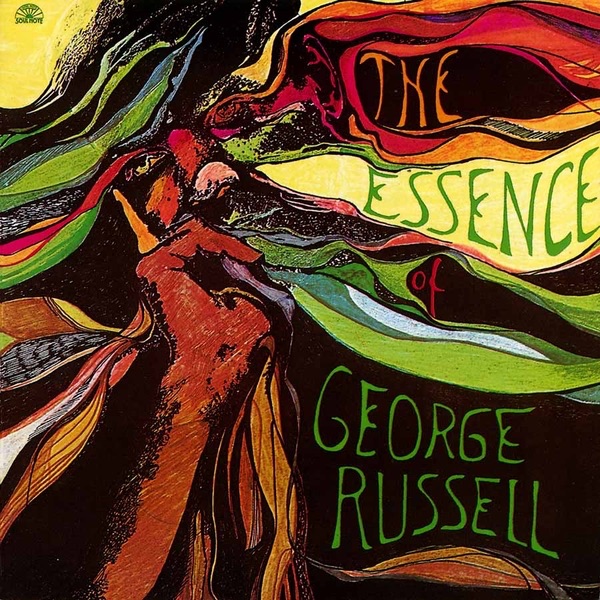
The Essence of George Russell
1971
Electronic Sonata For Souls Loved By Nature
1971
Listen to the Silence
1973
Vertical Form VI
Vertical Form VI
1981
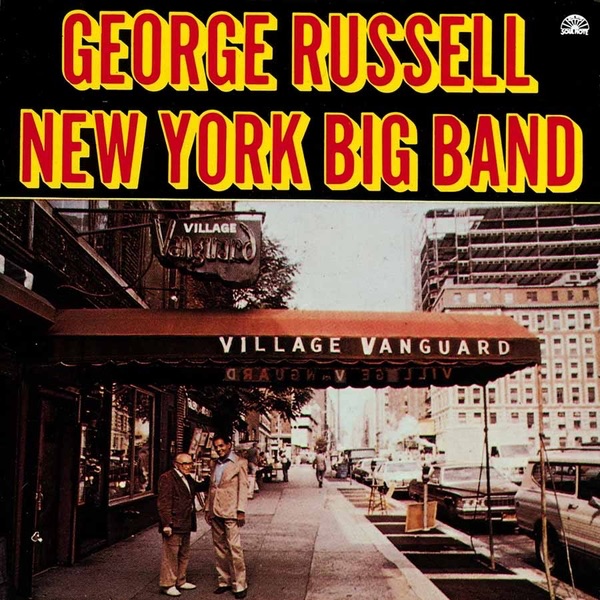
New York Big Band
New York Big Band
1982
The African Game
The African Game
1986
The Outer View
The Outer View
1991
The 80th Birthday Concert
2005
The Esoteric Circle
The Esoteric Circle
2014

Collaborations

Live on Youtube

Explore Further

Selected connections
Pianist, United States
Bill Evans
Studied Russell's theory directly and helped translate modal thinking into some of the most lyrical jazz ever recorded.
Explore →
Album, 1959
Kind of Blue
The record that made modal jazz famous, built on ideas Russell had already laid out in print years earlier.
Explore →
Trumpeter, United States
Miles Davis
Took Russell's scale-based thinking and turned it into a new sound for a whole generation of players.
Explore →

Who's playing
Listen next
Recording Info
Track listing
Musicians
Further Reading
Read more

Where next?

More by this artist

Albums with the same musicians

From the same era

Similar artists

inside the sleeve
Growing
Jazz, explained without pretension.
Read · Follow the connections · Press play
Right now: 7,100+ albums · 440+ artists
Start here
New to jazz? These artists are good places to start.
Loading…
Explore
Nine records worth getting lost in.
Born today
Album of the day
A landmark record, every day.
Read
  • Loading…
Article archive →
Recently added
Purpose
Inside the Sleeve is your companion on a journey through jazz — not a textbook, but something closer to a knowledgeable friend sitting next to you while you listen. Read about an artist, press play, follow a connection, discover an album you didn't know you needed.
Suggestions
Read

Articles

Essays, guides, and lists about jazz and the records that matter.

Loading…

Genre

Key Artists
Further Reading

Essential Albums

Related Genres

In This Genre

About

Inside the Sleeve

Work in progress

Inside the Sleeve grows continuously — new artists and albums are added, essays refined, as visitors explore and our editors follow up on what they find. Content, features, and design are still evolving; use the Report error button on any page to flag something that seems off.

Content

Every artist, album, and release date on Inside the Sleeve is real — verified against trusted sources including MusicBrainz and Wikipedia. We don't invent discographies or fabricate records. AI compiles that verified information into readable prose — essays on artists, albums, and the music itself. We can't manually review every essay before publishing, but every reported error is checked by a human editor.

Inside the Sleeve is not a review site. We're not here to rate or rank — we're here to guide you in. Where an album stands out, we'll say so. Where an artist changed everything, you'll know why. But we won't tear anything down. Jazz history is complex and sources sometimes disagree — if you spot something that seems off, please report it.

Streaming

Inside the Sleeve links to Spotify and Apple Music so you can listen while you read. These are not affiliate links. For Spotify, links open a search on open.spotify.com — we do not have direct links to specific recordings. For Apple Music, direct links are used where available, otherwise a search is opened.

Your choice of streaming service is stored locally in your browser only. It is never sent to our servers.

We're working on deeper Spotify integration, including direct links to specific recordings.

Privacy

Inside the Sleeve does not collect personal data and does not use cookies. We count page visits anonymously using a self-hosted analytics tool — no personal identifiers are stored, and the data never leaves our own server. The only preference stored on your device is your streaming service choice, saved locally in your browser and never transmitted.

When you submit a suggestion or error report, the text you write is stored in our database. No name or email is required or collected unless you choose to provide one.

Third-party services

Spotify and Apple Music are independent services with their own terms of use and privacy policies. Inside the Sleeve is not affiliated with or endorsed by either company.

Support

Inside the Sleeve is free and ad-free. If you enjoy it, a coffee helps cover server costs and keeps the project going.

Amazon

Some book recommendations on Inside the Sleeve link to Amazon. Buying through these links costs you nothing extra — but Amazon pays us a small commission, which goes directly towards keeping the site running. It's a simple way to support the project if you were going to buy the book anyway.

As an Amazon Associate, Inside the Sleeve earns from qualifying purchases.

Questions or feedback? Use the suggestion box on the front page.

Inside the Sleeve — A guide for those who want to go beyond the obvious About & Privacy