Where do you listen?
Choose your streaming service
inside the sleeve
Loading…
inside the sleeveITS
⌕
Read About
Double Bass · Norway · Nordic Jazz

Arild
Andersen

Start here Achirana (2000) →
1945 - present, Norway

Arild Andersen has spent six decades proving that the double bass can carry a whole story on its own — melodic, searching, and never just keeping time. He came up through the Oslo scene in the late 1960s and quickly became one of the most in-demand bassists in European jazz, but he was always more interested in building something personal than in collecting session credits. His recordings for ECM Records defined a particular kind of Nordic sound: spacious, cool-headed, and quietly ambitious.

Nordic JazzPost-BopContemporary JazzFree Jazz
♫

Bass Lines and Open Sky

If you want to understand what Scandinavian jazz actually sounds like — not as a concept, but as a feeling — Arild Andersen is a good place to start. He plays the double bass the way some people talk: deliberately, with long pauses that mean something. His tone is warm but never soft, and he has a way of turning a bass line into the actual melodic center of a piece rather than the thing supporting everything else. That's not a small trick. A lot of bassists spend their whole careers trying to do it and never quite get there.

Andersen came up in Oslo in the late 1960s, at a time when the city had a genuinely exciting jazz scene — small clubs, serious players, and a real appetite for music that didn't just imitate what was happening in New York. He played with Jan Garbarek during some of Garbarek's most exploratory years, and that association matters because it placed Andersen right at the center of the group of musicians who would define the ECM sound — that particular mix of folk-tinged melody, open space, and restrained intensity. ECM's Manfred Eicher recognized something in the Nordic players early, and Andersen was part of that original wave.

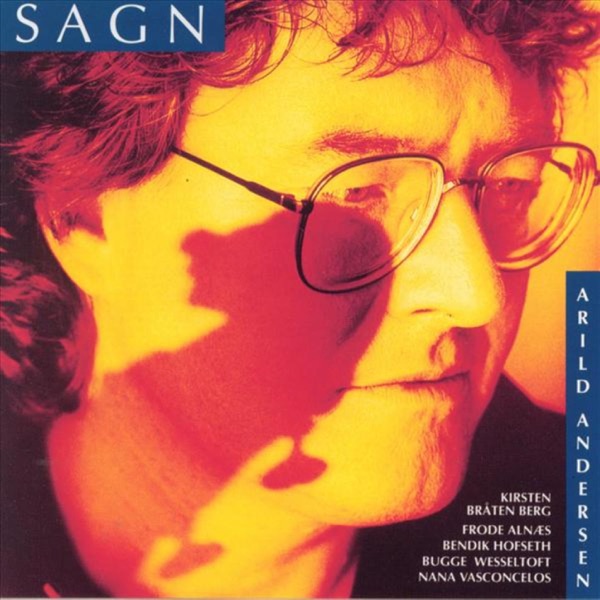
His own records as a leader are where the picture gets really interesting. Molde Concert (1981) is a good entry point — a live recording that captures how much he could hold together with a relatively small group. Sagn (1990) leaned further into Nordic folk influence, with traces of traditional Norwegian music woven into the harmonics, and it's the kind of album that sounds like a specific landscape without ever being clichéd about it. His later work kept evolving without lurching around stylistically, which is rarer than it sounds.

What you notice across his discography is that he never seems to be playing *at* the music — he's always inside it. His collaborations with pianists like Ketil Bjørnstad and his long-running work with drummers from both the Norwegian and broader European scene show a musician who genuinely listens, which is obvious when you say it but not at all obvious when you hear most players. He also has serious credentials in more free-leaning contexts, having worked in the 1970s with musicians including Don Cherry, so the open sections of his music have actual grounding, not just stylistic decoration.

If someone handed you one of Andersen's records without a label on it, you'd probably know it was European within about thirty seconds — there's a clarity and a certain unhurried quality to the playing that doesn't come from American jazz traditions. That's not a criticism. It's actually the whole point. He figured out pretty early that trying to sound like a New York bassist was a dead end, and what he built instead has its own entirely coherent logic. Put on Achirana (1982) and give it twenty minutes before you decide whether it's for you. It usually is.

Facts
BornOctober 27, 1945, Lillestrøm, Norway
InstrumentDouble Bass
Active1960s – present
Known forDefining the ECM Nordic bass sound; long association with Jan Garbarek; prolific leader on ECM Records
Connections
Jan GarbarekLongtime collaborator, Oslo / ECM
→
Don CherryFree jazz collaborator, Europe
→
Ketil BjørnstadRecording partner, Norway
→
Read more

Discography

35 records
♫
Clouds in My Head
1975
♫
Shimri
1977
Lifelines
Lifelines
1981
A Molde Concert
A Molde Concert
1982
♫
Tea for Four
1984
Sagn
Sagn
1990
I fløyterens hjerte
I fløyterens hjerte
1990
♫
Secret Obsession
1991
If You Look Far Enough
1993
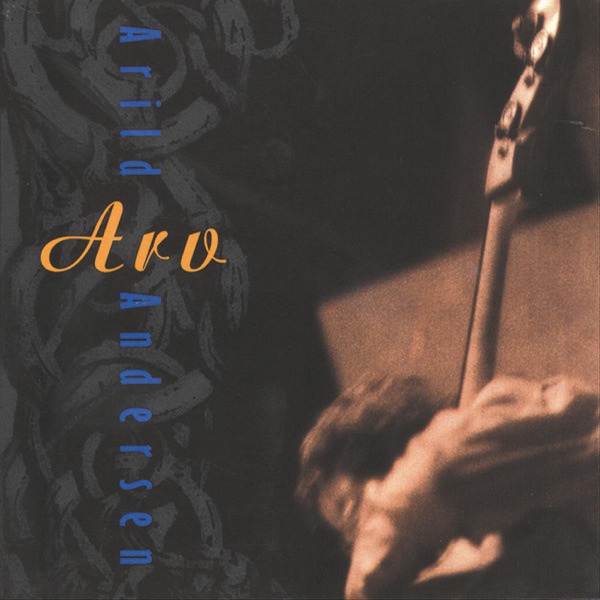
Arv
Arv
1994
Kristin Lavransdatter
1995
Hyperborean
Hyperborean
1997
'Mbara Boom
'Mbara Boom
1997
Sommerbrisen
Sommerbrisen
1998
Achirana
Achirana
2000
Grace
Grace
2001
North By Northwest
North By Northwest
2001
♫
The Sign
2002
Julegløggen
Julegløggen
2003
The Triangle
The Triangle
2004
♫
Joyosa
2004
♫
Short Fairytales
2006
Høstsløv
Høstsløv
2006
In House
In House
2007
♫
Sheila
2007
♫
ELECTRIC TREASURES (Live in Bonn)
2008
Live at Belleville
Live at Belleville
2008
Jul på svenska
Jul på svenska
2009
♫
Auditorio RSI, Lugano, Switzerland
2011
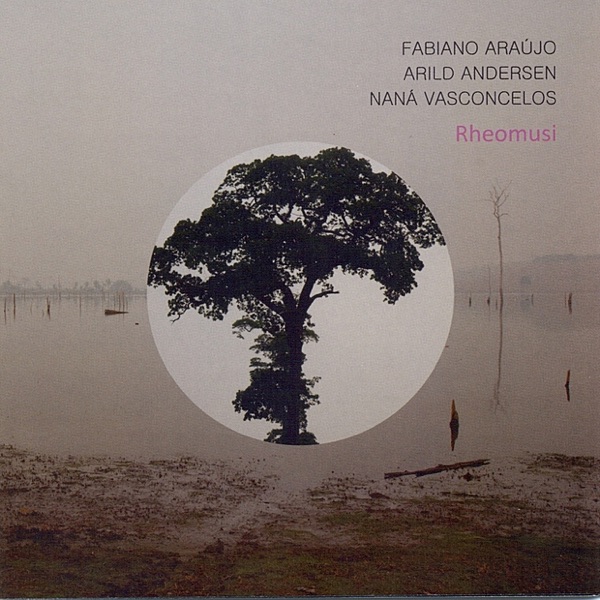
Rheomusi
Rheomusi
2012
♫
Celebration
2012
♫
Space is the Place
2012
Mira
Mira
2013
♫
Under the Rainbow
2013
♫
Earth Stills
2015

Collaborations

Live on Youtube

Explore Further

Selected connections
Saxophonist, Norway
Jan Garbarek
Andersen's most important early collaborator and the other defining voice of the ECM Nordic sound. Start with their shared recordings to hear how the two players shaped each other.
Explore →
Album, 1974
Witchi-Tai-To
Jan Garbarek's ECM debut that features Andersen on bass — one of the records that put the whole Nordic jazz scene on the map.
Explore →
Bassist, USA
Charlie Haden
If Andersen's melodic, lyrical approach to bass appeals to you, Haden is the American counterpart — equally focused on the bass as a voice rather than a timekeeper.
Explore →

Who's playing
Listen next
Recording Info
Track listing
Musicians
Further Reading
Read more

Where next?

More by this artist

Albums with the same musicians

From the same era

Similar artists

inside the sleeve
Growing
Jazz, explained without pretension.
Read · Follow the connections · Press play
Right now: 7,100+ albums · 440+ artists
Start here
New to jazz? These artists are good places to start.
Loading…
Explore
Nine records worth getting lost in.
Born today
Album of the day
A landmark record, every day.
Read
  • Loading…
Article archive →
Recently added
Purpose
Inside the Sleeve is your companion on a journey through jazz — not a textbook, but something closer to a knowledgeable friend sitting next to you while you listen. Read about an artist, press play, follow a connection, discover an album you didn't know you needed.
Suggestions
Read

Articles

Essays, guides, and lists about jazz and the records that matter.

Loading…

Genre

Key Artists
Further Reading

Essential Albums

Related Genres

In This Genre

About

Inside the Sleeve

Work in progress

Inside the Sleeve grows continuously — new artists and albums are added, essays refined, as visitors explore and our editors follow up on what they find. Content, features, and design are still evolving; use the Report error button on any page to flag something that seems off.

Content

Every artist, album, and release date on Inside the Sleeve is real — verified against trusted sources including MusicBrainz and Wikipedia. We don't invent discographies or fabricate records. AI compiles that verified information into readable prose — essays on artists, albums, and the music itself. We can't manually review every essay before publishing, but every reported error is checked by a human editor.

Inside the Sleeve is not a review site. We're not here to rate or rank — we're here to guide you in. Where an album stands out, we'll say so. Where an artist changed everything, you'll know why. But we won't tear anything down. Jazz history is complex and sources sometimes disagree — if you spot something that seems off, please report it.

Streaming

Inside the Sleeve links to Spotify and Apple Music so you can listen while you read. These are not affiliate links. For Spotify, links open a search on open.spotify.com — we do not have direct links to specific recordings. For Apple Music, direct links are used where available, otherwise a search is opened.

Your choice of streaming service is stored locally in your browser only. It is never sent to our servers.

We're working on deeper Spotify integration, including direct links to specific recordings.

Privacy

Inside the Sleeve does not collect personal data and does not use cookies. We count page visits anonymously using a self-hosted analytics tool — no personal identifiers are stored, and the data never leaves our own server. The only preference stored on your device is your streaming service choice, saved locally in your browser and never transmitted.

When you submit a suggestion or error report, the text you write is stored in our database. No name or email is required or collected unless you choose to provide one.

Third-party services

Spotify and Apple Music are independent services with their own terms of use and privacy policies. Inside the Sleeve is not affiliated with or endorsed by either company.

Support

Inside the Sleeve is free and ad-free. If you enjoy it, a coffee helps cover server costs and keeps the project going.

Amazon

Some book recommendations on Inside the Sleeve link to Amazon. Buying through these links costs you nothing extra — but Amazon pays us a small commission, which goes directly towards keeping the site running. It's a simple way to support the project if you were going to buy the book anyway.

As an Amazon Associate, Inside the Sleeve earns from qualifying purchases.

Questions or feedback? Use the suggestion box on the front page.

Inside the Sleeve — A guide for those who want to go beyond the obvious About & Privacy