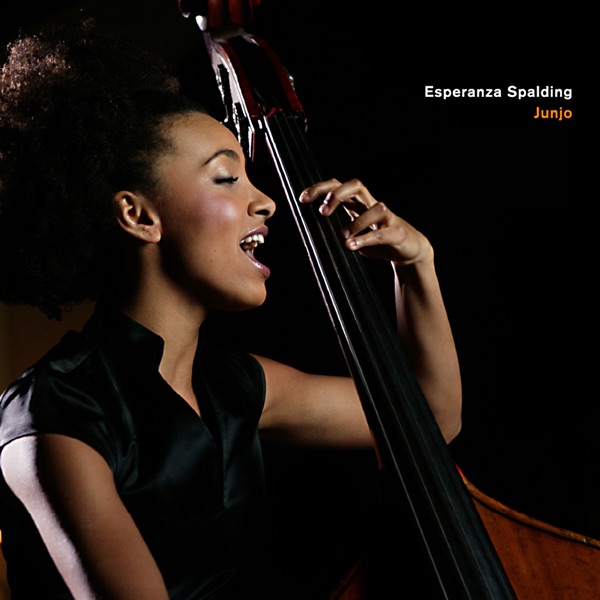
Bass First, Everything After
She was playing violin as a kid in Portland, switched to bass as a teenager, and by the time she was twenty she was already teaching at Berklee — which tells you something about how fast she moved. The upright bass is a supporting instrument in most contexts, holding the bottom, keeping time, staying out of the way. Spalding never quite agreed with that arrangement. She plays it melodically, conversationally, like she's always in the middle of saying something rather than just keeping the room from falling apart.
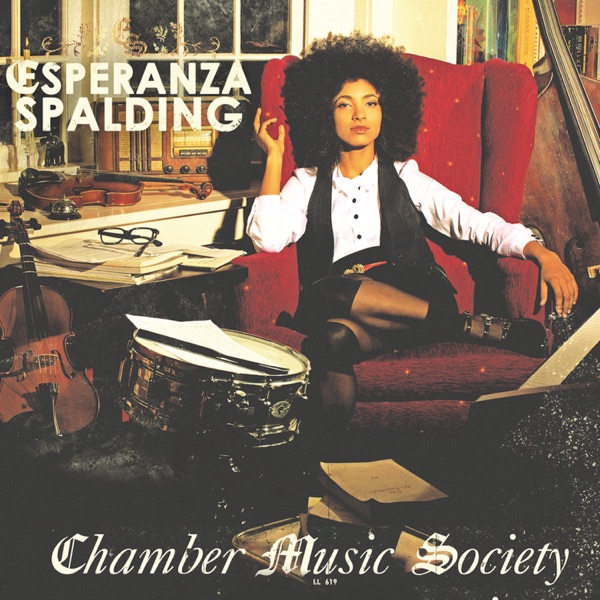
Her first few records — Junjo (2006), Esperanza (2008), Chamber Music Society (2010) — established a warm, lyrical blend of modern jazz, Brazilian music and song that was easy to love but also easy to underestimate. The playing was clearly exceptional, the voice was warm and flexible, and the Brazilian influences gave everything a buoyant feel. Some people filed her under smooth and moved on. That was a mistake.
Radio Music Society (2012) pushed harder into funk and soul, and Emily's D+Evolution (2016) was a genuine left turn — loud, theatrical, built around an alter-ego concept, with electric bass and a rock-adjacent energy that confused people who'd pegged her as a nice jazz singer. It was the most divisive thing she'd done, and also probably the most interesting. 12 Little Spells (2018) became more fragmented and exploratory, built around a cycle of songs inspired by different parts of the human body. Songwrights Apothecary Lab (2021) emerged from an unusually ambitious project exploring the healing possibilities of music, blurring the line between performance, research and composition. She doesn't repeat herself, which is either exciting or exhausting depending on your tolerance for artists who refuse to give you the same thing twice.
The Grammy she won in 2011 for Best New Artist over Justin Bieber became a culture-war moment she never asked for. Jazz fans were thrilled; Bieber fans were furious; the internet went predictably haywire. It was a strange bit of notoriety for someone whose actual music is more quietly demanding than that story suggests. The award pointed more people toward her work, which was good, but it also framed her as a novelty or an upset rather than as someone with a genuinely developed artistic point of view.
If you're coming to her for the first time, Chamber Music Society (2010) is probably the most immediately accessible entry point — beautifully produced, her voice at its most inviting, the playing refined without being cold. From there, Emily's D+Evolution (2016) will show you the other side of what she's willing to do. Those two records together give you a pretty honest picture of an artist who keeps moving, and doesn't much care if you can keep up.