2012 · Album
Radio Music Society
Heads Up International · Released: March 20, 2012 · Grammy Awards: Best Jazz Vocal Album; Best Instrumental Arrangement Accompanying Vocalist(s) for City of Roses

Spalding Reaches for Radio, Finds Herself
Radio Music Society showed Spalding willing to trust her instincts about what jazz could sound like in the present moment.
By the time Radio Music Society arrived, Esperanza Spalding had already proven herself as a virtuoso bassist and vocalist with genuine crossover appeal. This album marked a deliberate shift in how she wanted to be heard — less concerned with establishing her credentials as a jazz musician and more interested in what kind of bandleader and arranger she could become. The record feels deliberately constructed, almost architectural, where earlier work had sounded more spontaneous.
What strikes you immediately is how much space there is. The production doesn't rush. Tracks like City of Roses and I Know You Know breathe in ways that let the arrangements do actual work rather than just fill time. Spalding's voice sits differently in the mix here, less front-and-center, more integrated into the overall sound. She's sharing the stage with her band rather than leading them through it. The Grammy wins for Best Jazz Vocal Album and Best Instrumental Arrangement Accompanying Vocalist(s) for City of Roses weren't surprise votes — the song is genuinely well-constructed and performed with real care.
This isn't her most accessible record or her most experimental one. It occupies the middle ground where serious musicians often do their best work: confident enough to ignore what people expect, thoughtful enough to actually have something to say. If you've heard Spalding's earlier albums and want to understand how her thinking evolved, Radio Music Society is the essential stop. It's where she stopped trying to prove anything and started making choices based on sound alone.
Who's playing
Esperanza Spaldingelectric bass guitar
Jerry Stalnakerbass trombone
Leo Genovesepiano
Jef Lee Johnsonguitar
Lionel Louekeguitar
Ricardo Vogtguitar
Daniel Blakesaxophone, solo
Renato Carantoalto saxophone
Nicole Glovertenor saxophone
Stanley Mathabanealto saxophone
Jeff Rathbonebaritone saxophone
Kyle Zimmermanalto saxophone
Tivon Pennicotttenor saxophone
Joe Lovanotenor saxophone
Darren Barretttrumpet
Kiran Bosleytrumpet
Benjamin G. McDonaldtrumpet
Benjamin Seacristtrumpet
Ingmar Thomastrumpet
Stan Bocktrombone
Dan Brewstertrombone
Jeff Galindotrombone
Corey Kingtrombone
James Weidmanorgan
Ray Angryorgan
Raydar Ellisvoice synthesizer
Terri Lyne Carringtondrums
Lyndon Rochelledrums
Jamey Haddadpercussion
American Music Programperformer
Olivia de Pratoviolin
Jody Redhagecello
Where next?
More by Esperanza Spalding

Emily’s D+Evolution 2010
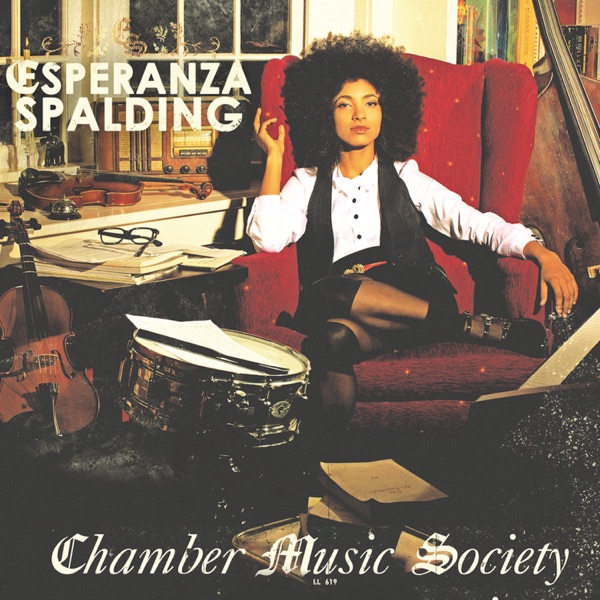
Chamber Music Society 2010
♫
12 Little Spells 2018

Songwrights Apothecary Lab 2021
The musicians on this record
Their own records, close in time


