Little Jazz, Big Fire
If you want to understand how jazz trumpet got from Louis Armstrong to Dizzy Gillespie, you have to stop in the middle and spend some time with Roy Eldridge. He absorbed Armstrong's warmth and rhythmic authority, then pushed the instrument into faster, higher, more harmonically restless territory. Dizzy studied him. That's not a minor detail — that's the whole story of how modern trumpet happened.
Eldridge grew up in Pittsburgh and came up fast through the dance band circuit, developing a style that was almost violently energetic. He loved to push into the upper register of the horn, not for show, but because that's where the tension lived. His tone up high had a bright, slightly ragged edge that felt like he was taking a real risk every time he went there. Sometimes he made it, sometimes he didn't — and either way, you couldn't look away.
He spent key years with Gene Krupa's band in the early 1940s, which brought him a lot of visibility but also put him squarely inside the racial tensions of the era. As one of the few African American featured soloists in a predominantly white band, he dealt with indignities on the road that he spoke about openly later in life. His music in that period burns with something extra — whether that had anything to do with what he was navigating offstage, you can hear the pressure in the playing.
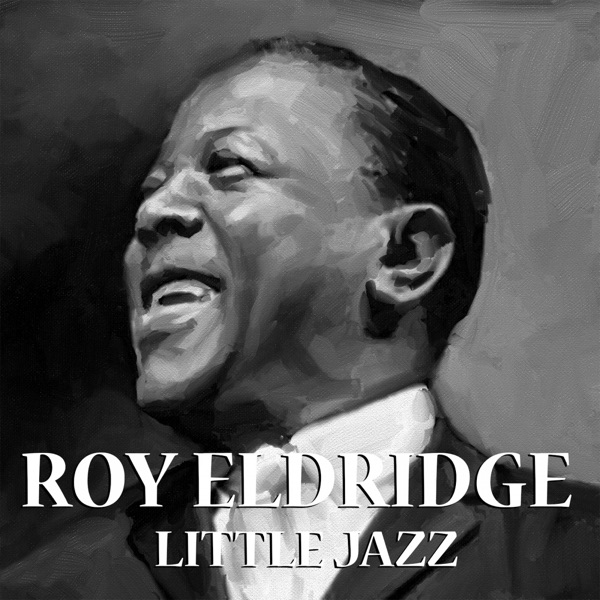
The record to start with is Little Jazz (1951), which pulls together his work in a way that shows off the full range — the swing feel, the harmonic sophistication, the pure physical boldness of his attack. He also recorded extensively with Ella Fitzgerald through Norman Granz's Jazz at the Philharmonic dates, and those performances are a great way in if you want to hear him in a more relaxed, conversational mode rather than all-out attack.
By the time bebop became the dominant language, Eldridge was sometimes unfairly cast as a relic — a Swing Era holdout who hadn't made the turn. That's wrong. He engaged with bop-era musicians seriously, adapted where he wanted to, and kept playing with real conviction well into the 1970s. He wasn't trying to be current. He was just playing the way he played, and it was still plenty.