Where do you listen?
Choose your streaming service
inside the sleeve
Loading…
inside the sleeveITS
⌕
Read About
Piano, Arranger - United States - Swing

Fletcher
Henderson

1897 - 1952, United States

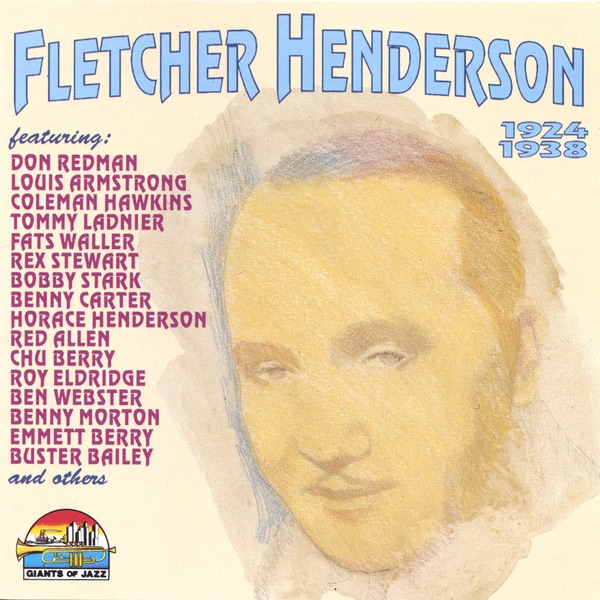
Fletcher Henderson is the guy whose name barely comes up when people talk about swing, even though he basically wrote the rulebook. His band at the Roseland Ballroom in the 1920s figured out how to make a big group of horns swing like a small combo, and a decade later Benny Goodman built his empire largely on Henderson's charts.

Early JazzSwing
♫

The Architect Nobody Credits

If you've ever heard a Benny Goodman record and felt that easy, rolling swing in the horn sections, you've heard Fletcher Henderson, whether the label says so or not. Henderson wasn't much of a piano player by his own admission, and he wasn't a natural bandleader either — he was quiet, a little disorganized, more comfortable with a chemistry degree than a baton. But he had an ear for structure, and starting in the early 1920s at New York's Roseland Ballroom, he put together a band that figured out something nobody had quite nailed yet: how to make a ten or twelve piece orchestra breathe and swing like a small group.

A lot of that credit goes to Don Redman, his arranger in the early years, who worked out the call-and-response between brass and reeds that became the basic vocabulary of big band jazz. But Henderson was the one who kept refining it, and he had the sense to hire the right players — Coleman Hawkins on tenor, Louis Armstrong for a stretch in 1924 and 1925. Armstrong's time with the band is a small but real turning point in jazz history; his phrasing loosened up the whole ensemble and pushed the other musicians toward a more relaxed, syncopated feel. You can hear the band shift under his influence even after he left.

Henderson's own orchestra never quite got the commercial traction it deserved. He struggled with money, with keeping personnel steady, with the day-to-day grind of running a band through the Depression. By the mid-1930s he was selling his arrangements outright to Goodman, who had the radio exposure and the promotional machine Henderson never had. Songs like "King Porter Stomp" became hits for Goodman using Henderson's charts, and that's the strange twist of his story — the sound most people associate with the birth of the Swing Era was largely written by a man most of those same people couldn't name.

He kept working through the late 1930s and into the 1940s, arranging for Goodman and others, occasionally leading his own groups again, but he never recaptured the momentum of those Roseland years. Poor health slowed him down in his final years, and he died in 1952, not quite a footnote but not quite a headline either.

What's worth remembering about Henderson isn't a single record or a signature solo — it's the shape of the thing itself. The sectional writing, the way he balanced soloists against ensemble, the whole architecture of the swing band came out of his bandstand more than anyone else's. He didn't have Ellington's genius for color or Basie's gift for groove, but he built the frame they and everyone else in the swing era hung their music on.

Facts
BornDecember 18, 1897, Cuthbert, Georgia
DiedDecember 29, 1952, New York City
InstrumentPiano, Arranger, Bandleader
Active1920s - 1940s
Known forPioneering big band arranging that shaped the sound of the Swing Era
Connections
Don RedmanChief arranger and collaborator, New York
→
Louis ArmstrongFeatured soloist in Henderson's orchestra, New York
→
Coleman HawkinsTenor saxophonist in Henderson's band, New York
→
Benny GoodmanPurchased and popularized Henderson's arrangements, New York
→
Read more

Discography

5 records
♫
First Impressions
1921
Duke Ellington, Fletcher Henderson, Artie Shaw and Their Orchestras
1965
Tidal Wave
Tidal Wave
1994
1924-1936
1924-1936
1995
Smack
Smack

Collaborations

Live on Youtube

Explore Further

Selected connections
Bandleader, United States
Duke Ellington
A contemporary who took big band writing in a more personal, colorful direction than Henderson's more architectural approach.
Explore →
Album, 1961
A Study in Frustration (1961)
A compilation gathering the essential Henderson orchestra sides from the 1920s and '30s — the clearest way to hear his arranging ideas in motion.
Explore →
Clarinetist, United States
Benny Goodman
Hear what happened when Henderson's charts met a bandleader with the radio reach he never had.
Explore →

Who's playing
Listen next
Recording Info
Track listing
Musicians
Further Reading
Read more

Where next?

More by this artist

Albums with the same musicians

From the same era

Similar artists

inside the sleeve
Growing
Jazz, explained without pretension.
Read · Follow the connections · Press play
Right now: 7,100+ albums · 440+ artists
Start here
New to jazz? These artists are good places to start.
Loading…
Explore
Nine records worth getting lost in.
Born today
Album of the day
A landmark record, every day.
Read
  • Loading…
Article archive →
Recently added
Purpose
Inside the Sleeve is your companion on a journey through jazz — not a textbook, but something closer to a knowledgeable friend sitting next to you while you listen. Read about an artist, press play, follow a connection, discover an album you didn't know you needed.
Suggestions
Read

Articles

Essays, guides, and lists about jazz and the records that matter.

Loading…

Genre

Key Artists
Further Reading

Essential Albums

Related Genres

In This Genre

About

Inside the Sleeve

Work in progress

Inside the Sleeve grows continuously — new artists and albums are added, essays refined, as visitors explore and our editors follow up on what they find. Content, features, and design are still evolving; use the Report error button on any page to flag something that seems off.

Content

Every artist, album, and release date on Inside the Sleeve is real — verified against trusted sources including MusicBrainz and Wikipedia. We don't invent discographies or fabricate records. AI compiles that verified information into readable prose — essays on artists, albums, and the music itself. We can't manually review every essay before publishing, but every reported error is checked by a human editor.

Inside the Sleeve is not a review site. We're not here to rate or rank — we're here to guide you in. Where an album stands out, we'll say so. Where an artist changed everything, you'll know why. But we won't tear anything down. Jazz history is complex and sources sometimes disagree — if you spot something that seems off, please report it.

Streaming

Inside the Sleeve links to Spotify and Apple Music so you can listen while you read. These are not affiliate links. For Spotify, links open a search on open.spotify.com — we do not have direct links to specific recordings. For Apple Music, direct links are used where available, otherwise a search is opened.

Your choice of streaming service is stored locally in your browser only. It is never sent to our servers.

We're working on deeper Spotify integration, including direct links to specific recordings.

Privacy

Inside the Sleeve does not collect personal data and does not use cookies. We count page visits anonymously using a self-hosted analytics tool — no personal identifiers are stored, and the data never leaves our own server. The only preference stored on your device is your streaming service choice, saved locally in your browser and never transmitted.

When you submit a suggestion or error report, the text you write is stored in our database. No name or email is required or collected unless you choose to provide one.

Third-party services

Spotify and Apple Music are independent services with their own terms of use and privacy policies. Inside the Sleeve is not affiliated with or endorsed by either company.

Support

Inside the Sleeve is free and ad-free. If you enjoy it, a coffee helps cover server costs and keeps the project going.

Amazon

Some book recommendations on Inside the Sleeve link to Amazon. Buying through these links costs you nothing extra — but Amazon pays us a small commission, which goes directly towards keeping the site running. It's a simple way to support the project if you were going to buy the book anyway.

As an Amazon Associate, Inside the Sleeve earns from qualifying purchases.

Questions or feedback? Use the suggestion box on the front page.

Inside the Sleeve — A guide for those who want to go beyond the obvious About & Privacy