Where do you listen?
Choose your streaming service
inside the sleeve
Loading…
inside the sleeveITS
⌕
Read About
Tenor Saxophone · USA · Swing / Bebop

Coleman
Hawkins

Start here Body and Soul (1959) →
1904 - 1969, St. Joseph, USA

Coleman Hawkins basically invented the tenor saxophone as a jazz instrument — before him, it was considered something of a novelty. He spent five decades staying relevant without ever losing himself, which is rarer than it sounds. By the time younger players thought they were leaving him behind, he'd already moved on to something they hadn't figured out yet.

SwingBebop
♫

The Tenor Starts Here

Before Hawkins, the tenor sax wasn't taken seriously in jazz. It had a slap-tongue novelty thing going on, and nobody was using it to say anything substantial. Hawkins changed that completely, developing a big, full-bodied tone and an approach to improvisation that was built around chord changes rather than just the melody. That sounds obvious now because everyone does it — but in the late 1920s, it was genuinely new thinking.

His recording of 'Body and Soul' from 1939 is the one everyone points to, and for good reason. He more or less abandons the melody after the first few bars and improvises almost entirely on the harmony, which was a radical thing to do on a popular song at that time. It's also just a great performance — warm, swaggering, completely in command. Ben Webster and Sonny Rollins both studied it closely, and you can hear why.

What's easy to miss is how well Hawkins kept up with the changes happening around him. He spent time in Europe through the 1930s and came back to find bebop brewing in New York. Rather than digging in against it, he was actually one of the first established players to record with the younger beboppers. He was on a 1944 session that's often cited as the first true bebop recording, playing alongside Dizzy Gillespie and Don Byas. He was forty years old at the time and didn't sound out of place.

His later work tends to get overlooked in favor of the big swing-era stuff, but there's real depth there. His recordings with Thelonious Monk in the late 1950s are something — Monk's angular, deliberately unresolved harmonic world was a strange fit on paper, but Hawkins navigated it without flinching. He had the ears for it. His tone had gotten a little rougher and darker by then, which actually suited that kind of material better than his glossier earlier sound would have.

If you're coming to Hawkins for the first time, start with Body and Soul (1939) just to understand what all the fuss is about, then jump to his collaborations with Monk to hear how he aged. He never became a nostalgia act. He kept playing until near the end of his life, and even in his final years he was still more harmonically curious than most players half his age.
Facts
BornNovember 21, 1904, St. Joseph, Missouri, USA
DiedMay 19, 1969, New York City, USA
InstrumentTenor Saxophone
Active1920s – 1969
Known for'Body and Soul' (1939), pioneering chord-based improvisation on tenor saxophone
Connections
Thelonious MonkRecording collaborator, New York
→
Ben WebsterStylistic successor, New York
→
Dizzy GillespieBebop session partner, New York
→
Read more

Discography

43 records
♫
Sir Charles Thompson and His Band Starring Coleman Hawkins
1954
♫
Fletcher Henderson and His Connie’s Inn Orchestra
1954
The Hawk Returns
The Hawk Returns
1955
♫
Accent on Tenor Sax
1955
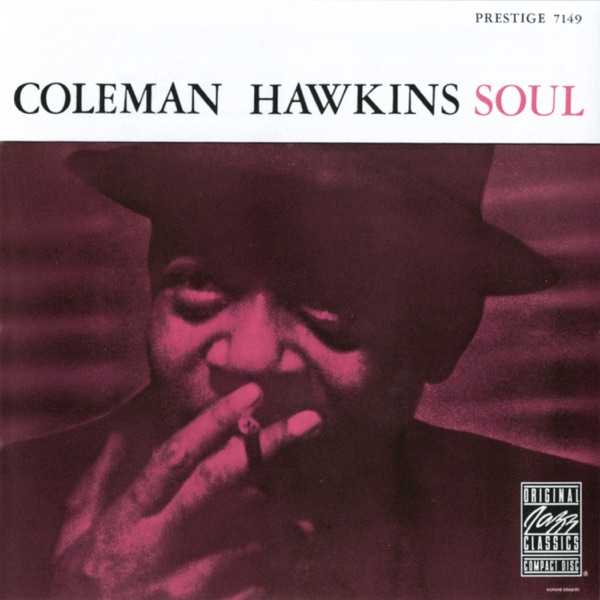
Soul
Soul
1956
The Hawk in Hi-Fi
The Hawk in Hi-Fi
1956
♫
The Hawk Flies High
1957
Coleman Hawkins
Coleman Hawkins
1957
The Genius of Coleman Hawkins
1957
At The Opera House
At The Opera House
1957
The High and Mighty Hawk
1958
Blues Groove
Blues Groove
1958
The Gilded Hawk
The Gilded Hawk
1958
Sittin' In
Sittin' In
1958
Hawk Eyes
Hawk Eyes
1959
♫
Dali
1959
Very Saxy
Very Saxy
1959
♫
Tenor Genius at the Festivals in Cannes and Paris
1959
♫
Swingville: Coleman Hawkins With the Red Garland Trio
1959
Body and Soul
Body and Soul
1959
At Ease With Coleman Hawkins
1960
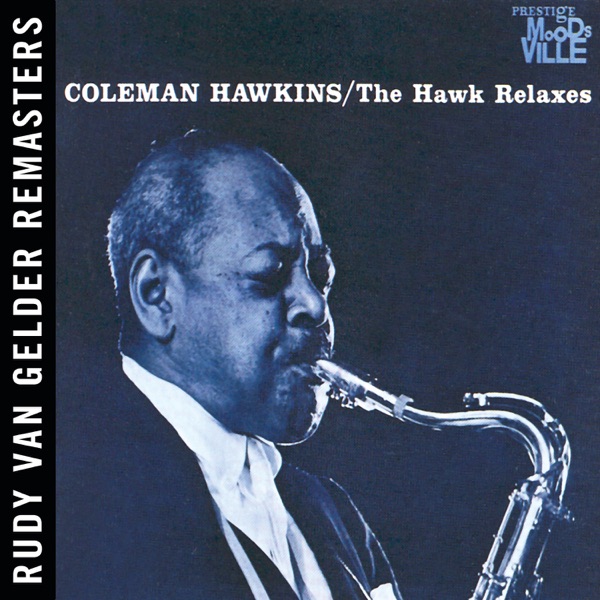
The Hawk Relaxes
The Hawk Relaxes
1961
The Hawk Swings, Volume 2
1961
♫
Stasch
1961
Jazz Reunion
Jazz Reunion
1961
Night Hawk
Night Hawk
1961
The Hawk Swings
The Hawk Swings
1961
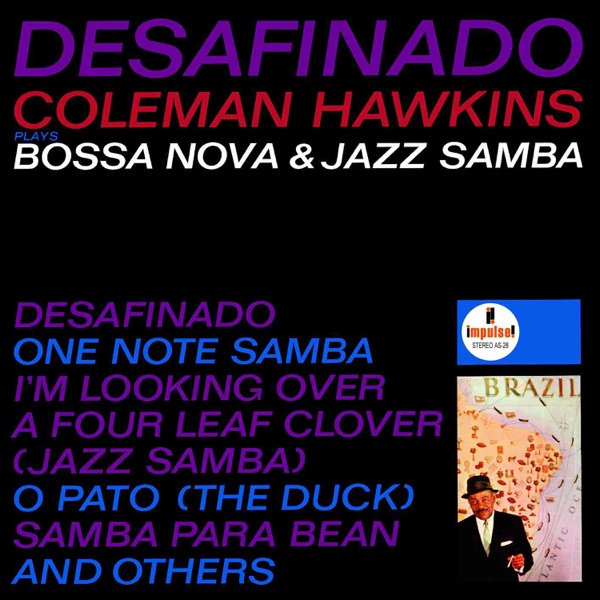
Desafinado
Desafinado
1962
Hawkins! Alive! At The Village Gate
1963
Back in Bean's Bag
Back in Bean's Bag
1963
Duke Ellington Meets Coleman Hawkins
1963
♫
At The Bayou Club Volume 1
1963
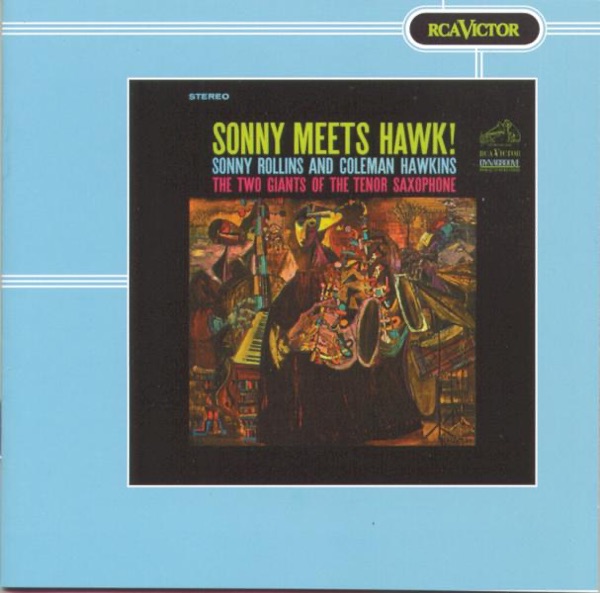
Sonny Meets Hawk!
Sonny Meets Hawk!
1963
Wrapped Tight
Wrapped Tight
1965
Hawk in Germany
Hawk in Germany
1972
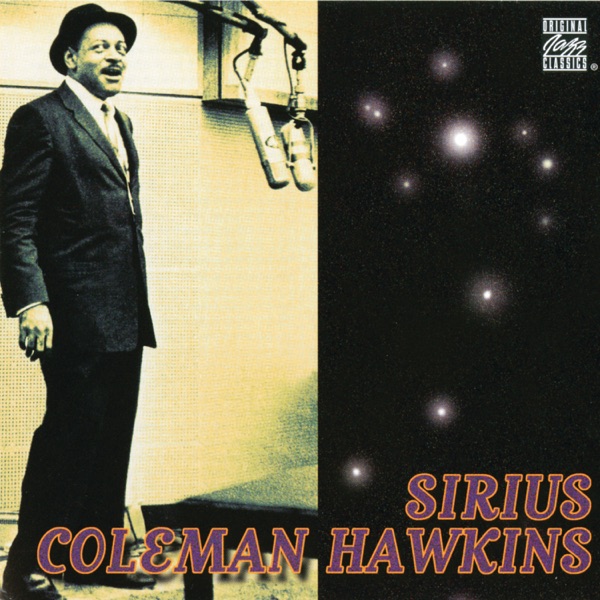
Sirius
Sirius
1974
In the Hush of the Night
1977
♫
Body And Soul At The Bayou Club Volume 2
1984
In a Mellow Tone
In a Mellow Tone
1988
Bean Stalkin'
Bean Stalkin'
1988
Live in Concert
Live in Concert
1989
♫
Coleman Hawkins: 1927-1939
1990
Coleman Hawkins and Confrères

Collaborations

Live on Youtube

Explore Further

Selected connections
Tenor Saxophonist, USA
Sonny Rollins
Rollins absorbed Hawkins deeply — hearing both back to back shows you exactly how the lineage passed and where it diverged.
Explore →
Album, 1957
Coleman Hawkins Encounters Ben Webster
Two heavyweights of the tenor in one room. It's relaxed and confident and a great example of swing-era mastery meeting its own next generation.
Explore →

Who's playing
Listen next
Recording Info
Track listing
Musicians
Further Reading
Read more

Where next?

More by this artist

Albums with the same musicians

From the same era

Similar artists

inside the sleeve
Growing
Jazz, explained without pretension.
Read · Follow the connections · Press play
Right now: 7,100+ albums · 440+ artists
Start here
New to jazz? These artists are good places to start.
Loading…
Explore
Nine records worth getting lost in.
Born today
Album of the day
A landmark record, every day.
Read
  • Loading…
Article archive →
Recently added
Purpose
Inside the Sleeve is your companion on a journey through jazz — not a textbook, but something closer to a knowledgeable friend sitting next to you while you listen. Read about an artist, press play, follow a connection, discover an album you didn't know you needed.
Suggestions
Read

Articles

Essays, guides, and lists about jazz and the records that matter.

Loading…

Genre

Key Artists
Further Reading

Essential Albums

Related Genres

In This Genre

About

Inside the Sleeve

Work in progress

Inside the Sleeve grows continuously — new artists and albums are added, essays refined, as visitors explore and our editors follow up on what they find. Content, features, and design are still evolving; use the Report error button on any page to flag something that seems off.

Content

Every artist, album, and release date on Inside the Sleeve is real — verified against trusted sources including MusicBrainz and Wikipedia. We don't invent discographies or fabricate records. AI compiles that verified information into readable prose — essays on artists, albums, and the music itself. We can't manually review every essay before publishing, but every reported error is checked by a human editor.

Inside the Sleeve is not a review site. We're not here to rate or rank — we're here to guide you in. Where an album stands out, we'll say so. Where an artist changed everything, you'll know why. But we won't tear anything down. Jazz history is complex and sources sometimes disagree — if you spot something that seems off, please report it.

Streaming

Inside the Sleeve links to Spotify and Apple Music so you can listen while you read. These are not affiliate links. For Spotify, links open a search on open.spotify.com — we do not have direct links to specific recordings. For Apple Music, direct links are used where available, otherwise a search is opened.

Your choice of streaming service is stored locally in your browser only. It is never sent to our servers.

We're working on deeper Spotify integration, including direct links to specific recordings.

Privacy

Inside the Sleeve does not collect personal data and does not use cookies. We count page visits anonymously using a self-hosted analytics tool — no personal identifiers are stored, and the data never leaves our own server. The only preference stored on your device is your streaming service choice, saved locally in your browser and never transmitted.

When you submit a suggestion or error report, the text you write is stored in our database. No name or email is required or collected unless you choose to provide one.

Third-party services

Spotify and Apple Music are independent services with their own terms of use and privacy policies. Inside the Sleeve is not affiliated with or endorsed by either company.

Support

Inside the Sleeve is free and ad-free. If you enjoy it, a coffee helps cover server costs and keeps the project going.

Amazon

Some book recommendations on Inside the Sleeve link to Amazon. Buying through these links costs you nothing extra — but Amazon pays us a small commission, which goes directly towards keeping the site running. It's a simple way to support the project if you were going to buy the book anyway.

As an Amazon Associate, Inside the Sleeve earns from qualifying purchases.

Questions or feedback? Use the suggestion box on the front page.

Inside the Sleeve — A guide for those who want to go beyond the obvious About & Privacy