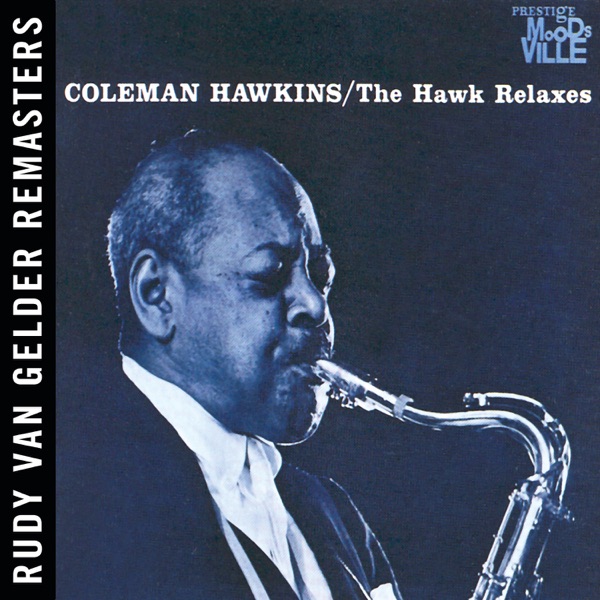
1961 · Album
The Hawk Swings, Volume 2
Recorded 1959 · Crown Records · Produced by Unconfirmed

The Hawk Still Hunting, Still Sharp
Hawkins sounds like he has something to prove, and that tension is exactly what makes this worth hearing.
By the late 1950s, Coleman Hawkins had already been a dominant force in jazz for three decades. He'd essentially invented the tenor saxophone as a serious solo instrument, and younger players had been chasing his shadow — and then running past him — for years. The Hawk Swings, Volume 2 finds him doing what he did best in this period: working in a small group setting where his big, warm tone and harmonically sophisticated approach could fill the room without needing a big band behind him. This isn't a reinvention. It's a veteran player settling into a groove he knows well and delivering it with conviction.
The rhythm section on this recording gives Hawkins a solid platform, and he takes full advantage. His phrasing is unhurried but never lazy — he'll sit back behind the beat just long enough to make you lean in, then push forward with a phrase that resolves exactly where you hoped it would. The bebop vocabulary that younger players had built on his foundations shows up in his lines here and there, proof that Hawkins was paying attention to what had happened to jazz even if he wasn't going to abandon who he was. He didn't need to reinvent himself. That confidence comes through on every track.
If you're coming to this from The Hawk Flies High (1957), where he worked alongside J.J. Johnson and Hank Jones in a sharper, more bebop-leaning context, this volume feels a little more relaxed — less to prove, more room to breathe. That's not a criticism. Sometimes the looser session is the more enjoyable one to actually sit with. This is a solid record from a saxophonist who never really had a bad decade, just some years that were better documented than others.