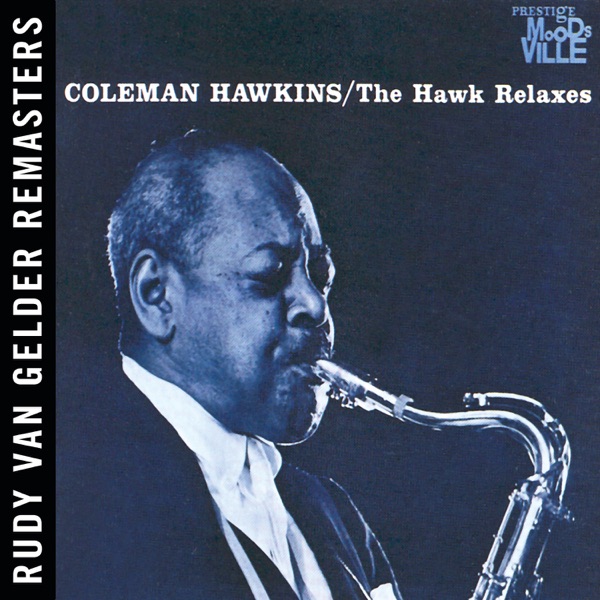
Hawk Meets the Abstract, Head-On
Hawkins was already a legend by 1959, and here he sounds like he knew it.
By the late 1950s, Coleman Hawkins had been the dominant voice on the tenor saxophone for three decades. He essentially invented the idea of playing the instrument seriously in a jazz context, and younger players — beboppers included — had grown up working around the shadow he cast. So when Hawkins recorded Dali (1959), he wasn't chasing anyone. If anything, he was doing what he always did: absorbing whatever was in the air and making it sound like his own idea. The album takes its name from Salvador Dalí, and there's a loose surrealist suggestion to the program — not in some gimmicky conceptual way, but in the sense that the music feels slightly outside normal time, unhurried and a little strange around the edges.
The playing here is warm and deliberate. Hawkins had one of the biggest tones in the business, and on this record it feels especially rounded, almost conversational. He's not trying to out-run the younger generation. He's just playing the way he plays, with the confidence of someone who has nothing left to prove. The rhythm section gives him room, and he uses it. There are moments where he hangs on a note a beat longer than you expect, or slides into a phrase from an unusual angle, and it just works.
This isn't the album you'd start with if someone had never heard Hawkins before — that would probably be his 1939 recording of "Body and Soul." But if you already know him, Dali is a satisfying late-career document. It shows an older master staying genuinely engaged with the music rather than coasting. That's rarer than it sounds, and worth your time.