1963 · Album
Hawkins! Alive! At The Village Gate
Recorded 1963 · Verve Records · Produced by Creed Taylor

The Old Lion Still Has Claws
Hawkins at the Village Gate proves the old man hadn't slowed down one bit.
By 1963, plenty of people had written off Coleman Hawkins as a relic. Bebop had happened, cool jazz had happened, and here was the guy who practically invented the tenor saxophone as a jazz instrument, supposedly left behind. Then came Hawkins! Alive! At The Village Gate (1963), and any doubts about whether Hawk still had it were immediately put to rest. This is a straight-ahead live set, recorded in front of an actual crowd, and the energy in the room is palpable from the first track. Hawkins sounds hungry, not nostalgic.
What makes this recording worth your time is how unguarded it feels. There is no studio polish smoothing over the rough edges — you get Hawkins in real time, making decisions, taking chances. His tone is still that big, warm, slightly gruff sound he had been developing since the 1920s, the vibrato-heavy approach that influenced basically every tenor player worth mentioning before Coltrane came along. But he is not coasting on that reputation here. He pushes into the changes with real conviction, and the rhythm section keeps things honest and swinging without getting in his way.
If you are new to Hawkins, this is actually a reasonable place to start alongside Body and Soul (1939), because it shows two very different sides of the same musician separated by decades. The Village Gate set is looser, more conversational, and proves that his approach — rooted in arpeggiated chord tones rather than the scalar runs younger players favored — still held up in a live context. It is not a perfect album, but it is an honest one, and that counts for a lot.
Who's playing
Where next?
More by Coleman Hawkins

Duke Ellington Meets Coleman Hawkins 1963
♫
The Hawk Flies High 1957

Coleman Hawkins and Confrères
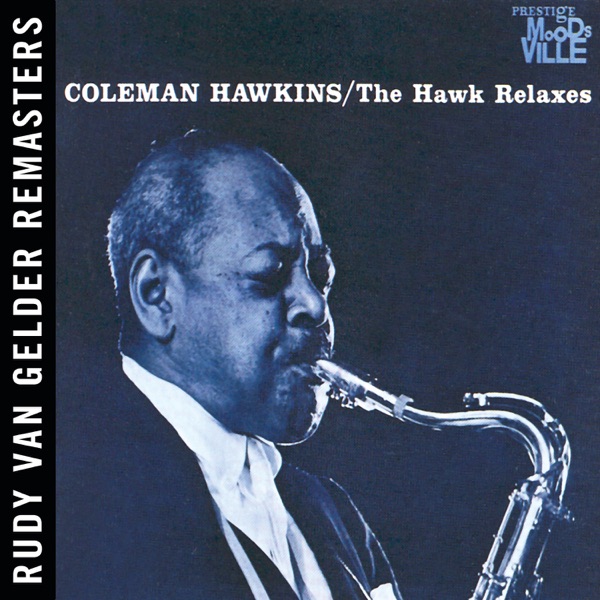
The Hawk Relaxes 1961
The musicians on this record
Their own records, close in time



