1962 · Album
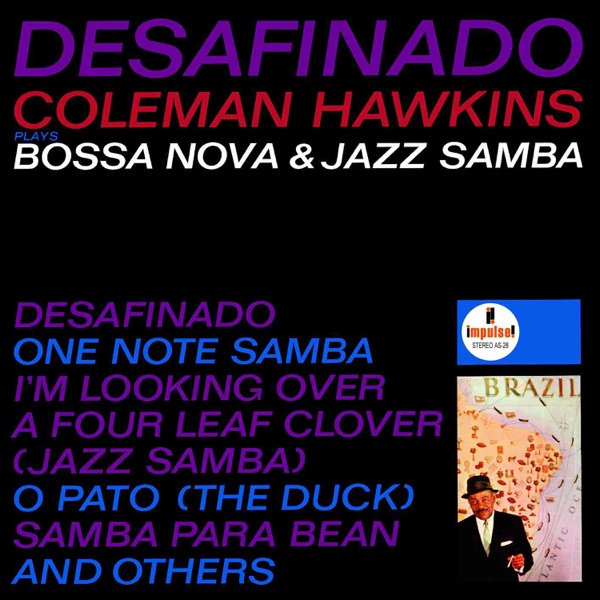
Desafinado
Recorded 1962 · Impulse! · Produced by Not specified in available sources
Hawkins Meets Bossa Nova in 1962
Harvey Pekar found music of high and enduring quality where others saw a passing trend.
In 1962, Coleman Hawkins walked into the studio to make an album that most saxophonists would have treated as a side project—a quick cash-in on bossa nova's American popularity. Hawkins did something different. He approached the music with the same seriousness he brought to everything, and the session captured something genuine: a seasoned improviser meeting a rhythm and melody that actually suited his temperament. The simplified style worked in his favor. Where a younger player might have fought the constraints of bossa nova's steady, amiable feel, Hawkins settled into it. His tone remained warm and authoritative, but the tunes gave him space to listen rather than dominate. It's worth remembering that by 1962, Hawkins had already spent decades proving himself. This wasn't a reinvention—it was an artist confident enough to sit comfortably in someone else's idiom.
The album arrived during a wave of bossa nova records, many of them manufactured or cynical. Critics noticed the difference. Harvey Pekar's review in Down Beat acknowledged the trend but made clear this one had substance. AllMusic reviewer Michael G. Nastos gave it four stars, hearing in Hawkins's laid-back approach exactly what the music needed—no excess, no ego wrestling with the beat, just a player who understood restraint.
If you're exploring Hawkins's catalog, this is useful but not essential. It's not his peak, and it won't change anyone's mind about his importance. But it's a solid session that reveals something about how a great player stays relevant: by knowing when to simplify rather than complicate.
Who's playing