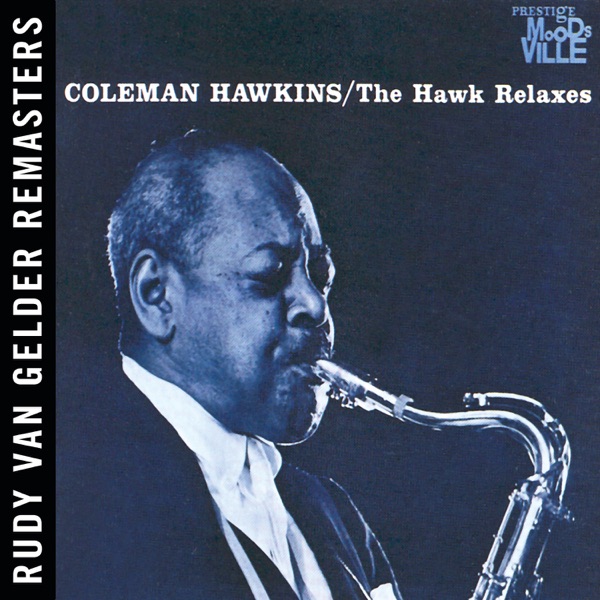
1963 · Album
At The Bayou Club Volume 1
Recorded 1963 · Enja Records · Produced by Horst Weber
The Old Lion Still Had Claws
Hawkins at a club date, relaxed and swinging, doing exactly what he was built for.
Coleman Hawkins had already invented the tenor saxophone as a jazz instrument by the time this recording was made, so there was nothing left to prove. That's actually what makes this album interesting — it's not a statement, it's just a working musician doing his job at a club gig, and doing it very well. The looseness you hear is real. This is Hawkins comfortable, unhurried, playing the way he played when nobody was asking him to represent anything.
The small group setting suits him. There's room to breathe, room to stretch out on a ballad without feeling like he has to justify the length. Hawkins was always at his best on ballads — his tone on slower numbers is warm and slightly rough at the edges in a way that studio recordings sometimes sand off. On a live date like this, you get more of the actual sound, the real instrument in a real room. It's a different experience than his famous studio work.
If you're coming to this expecting something radical or experimental, wrong album. Hawkins was not chasing the avant-garde by this point — he had his thing, he knew it worked, and he played it. What you get here is swinging, straight-ahead jazz from one of the people who helped define what that even meant. For listeners who want a solid, unpretentious example of his later-period playing in a live context, this delivers. It's not the place to start with Hawkins, but it's a worthwhile stop once you know his earlier work.