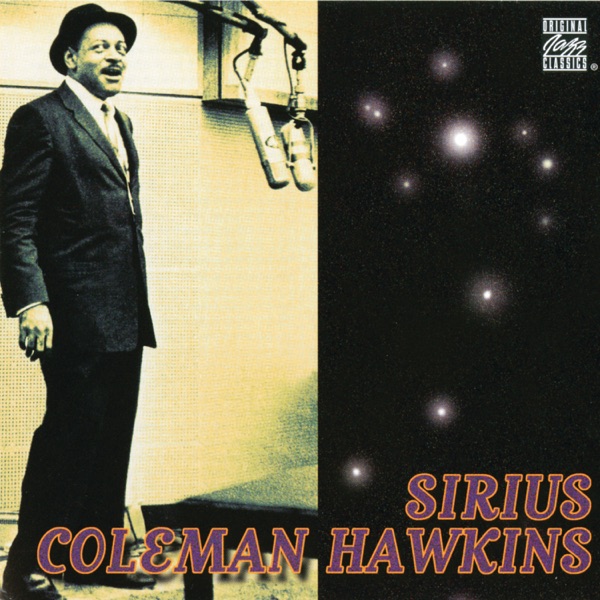
A Master's Twilight: Late Hawkins Captured
Recorded in 1966, this quartet session finds Hawkins struggling with breath but retaining his majestic tone.
Sirius arrived in 1974 as a curious relic—a session from eight years earlier that had been shelved and forgotten. That gap between recording and release tells you something about how the jazz world saw this music at the time. When Coleman Hawkins cut these tracks in late 1966, he was near the end of his life, and the session didn't merit immediate attention from Pablo Records. It sat in the vault until 1974, when it finally came out as an afterthought.
Listening to it now, you hear why the label hesitated. AllMusic reviewer Scott Yanow captured the central problem: Hawkins was constantly short of breath, unable to sustain the long melodic lines that had defined his sound for decades. On faster pieces, this limitation matters less—the music moves quickly enough that you don't notice the gaps. But on ballads, the deficiency becomes unavoidable and even uncomfortable. The majesty is still there in his tone, that unmistakable gravitas that made him one of the greatest tenor saxophonists in jazz history. You can hear it in how he shapes a phrase, how he lands on a note. The problem is simply that his body couldn't keep up with what his ear still wanted to do.
This is a historical document more than a satisfying listen, and that's the honest assessment. It's not a place to start with Hawkins—go to his early work or his classic recordings for that. Sirius matters mainly because it's the final studio snapshot of an aging giant, frail but still recognizable. There's something in that about how age catches up with even the greatest musicians, though dwelling on sadness misses the point. What stays with you is that the tone never abandoned him, only the breath did.
Who's playing
Where next?
More by Coleman Hawkins

Duke Ellington Meets Coleman Hawkins 1963
♫
The Hawk Flies High 1957

Coleman Hawkins and Confrères
The Hawk Relaxes 1961
The musicians on this record
Their own records, close in time


