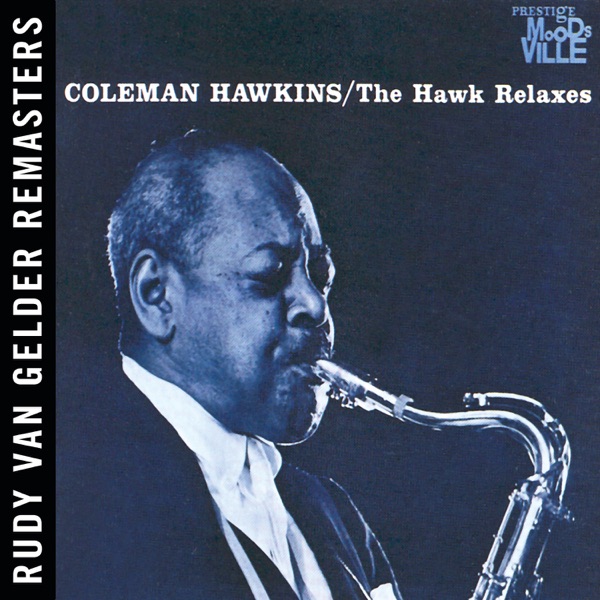
The Hawk Relaxes: Late Mastery, Open Ears
Hawkins proves in his sixties that openness to fresh voices was never a liability.
By 1961, Coleman Hawkins was in his sixties and could have coasted on reputation alone. Instead, The Hawk Relaxes shows him actively seeking out musicians who didn't fit the obvious template. Thad Jones on trumpet brings a harder, more modern edge than you'd expect; Eddie Costa at the piano keeps things urbane and conversational rather than decorative. The rhythm section of George Duvivier and Osie Johnson locks tight without ever sounding like they're playing by the book. What makes this late-period record work is how unselfconsciously everyone settles into the groove. Hawkins doesn't try to outswing the younger players or reassert dominance. He listens, responds, and lets the music find its own temperature.
This isn't a comeback record because Hawkins never needed one. It's simply a working band doing what good bands do: playing together. The quintet has a casual sophistication that sounds nothing like a studio assembly. Allmusic awarded it four and a half stars, noting that the group was "as unique as any Hawkins ever fronted," and that the album represents "one of his best latter period efforts." That assessment lands because there's no desperation here, no attempt to prove anything beyond the quality of the playing itself.
For listeners, this sits comfortably in the middle of Hawkins' catalog—not an entry point, and not his signature statement, but a genuinely solid record that shows what happens when a master musician stays curious. If you've already heard Body and Soul or his early Blue Note sessions, The Hawk Relaxes is a worthwhile next step. It's never been heralded as essential, but it deserves to be.
Who's playing