Where do you listen?
Choose your streaming service
inside the sleeve
Loading…
inside the sleeveITS
⌕
Read About
Piano · USA · Big Band / Swing / Jazz Orchestration

Duke
Ellington

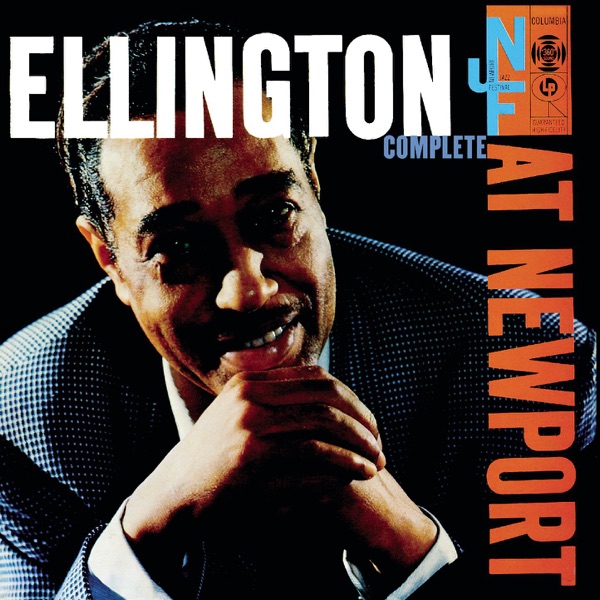
Start here Ellington At Newport 1956 (Complete) (1956) →
1899 – 1974, Washington D.C., USA

Duke Ellington didn't just lead a band — he wrote music specifically for the people in it, treating his orchestra like a living instrument that happened to be made of human beings. Over five decades, he produced an almost incomprehensible body of work: ballads, suites, film scores, sacred concerts, and some of the most sophisticated small-group recordings in the jazz canon. He remains one of the rare figures in American music whose ambition and output were genuinely matched.

Swing
Duke Ellington

The Orchestra as One Voice

Before you press play on anything, it helps to understand that Duke Ellington was primarily a composer and bandleader who happened to sit at the piano. His keyboard playing was tasteful and inventive, but the piano was mainly his laboratory — a place where he shaped ideas before developing them with Billy Strayhorn and the orchestra. What makes Ellington's music distinctive is how deeply personal it sounds — not personal in a confessional way, but in the sense that you can hear specific people in every chart. The growling plunger-muted trumpet of Cootie Williams, the honeyed alto of Johnny Hodges, the baritone weight of Harry Carney — Ellington wrote around these voices the way a novelist writes around characters they know intimately. "Mood Indigo" is perhaps the clearest example of this gift for color — Ellington used unusual voicings and muted textures to create a sound world that felt unlike anything else in jazz at the time.

The Ellington orchestra of the late 1930s and early 1940s is where most listeners should start. Ellington at Newport (1956) gets a lot of attention, and rightly so — Paul Gonsalves's extended tenor solo on 'Diminuendo and Crescendo in Blue' is one of the great live jazz moments on record — but the studio recordings from the Cotton Club years and the early 1940s show the band at its most tightly conceived. Pieces like 'Ko-Ko' and 'Concerto for Cootie' are short enough to fit on a 78 rpm record and yet feel architecturally complete, like miniature buildings where every room is exactly the right size.

Ellington's partnership with Billy Strayhorn deserves its own attention. Strayhorn joined the organization in 1939 and became so integral to the creative process that separating their contributions is often impossible — and arguably beside the point. Strayhorn wrote 'Take the A Train,' which became the band's signature theme, along with dozens of other pieces that fit seamlessly into the Ellington sound. After Strayhorn's death in 1967, Ellington recorded And His Mother Called Him Bill (1967) as a tribute, and it's one of the most emotionally direct things he ever put on tape.

What sometimes gets lost in the big-band story is how much Ellington loved the small-group format. Throughout the 1930s and 1940s, he recorded with smaller ensembles drawn from the orchestra — sessions that have a looser, more conversational quality than the full-band charts. These recordings let you hear Johnny Hodges and Ben Webster in close-up, and they reveal how many genuinely great jazz soloists Ellington quietly employed for decades. The band was, in many ways, a kind of conservatory that kept some of the finest musicians in jazz working steadily through the most economically precarious periods of the music's history.

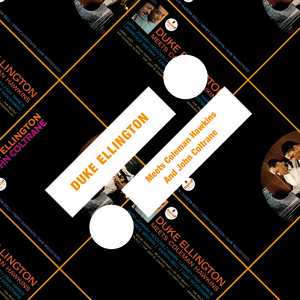
By the time Ellington reached the 1960s and 1970s, he was working on a scale that most composers in any tradition wouldn't attempt — the Sacred Concerts, long-form suites, international tours sponsored by the State Department, collaborations with John Coltrane and Coleman Hawkins that bridged generations without feeling forced. He was never a museum piece, even when the world around him treated him like a monument. If you're coming to him fresh, start with the 1940s small-group sides, move to the Newport live record, and then give yourself time with the longer suites. He rewards patience more than almost anyone.

Facts
BornApril 29, 1899, Washington D.C., USA
DiedMay 24, 1974, New York City, USA
InstrumentPiano, Composer, Bandleader
Active1920s – 1974
Known forLeading one of jazz's greatest orchestras for over four decades and composing some of the most sophisticated music in the American canon
Connections
Billy StrayhornComposer / Arranger, New York City
→
Johnny HodgesAlto Saxophonist, Ellington Orchestra
→
Paul GonsalvesTenor Saxophonist, Ellington Orchestra
→
Read more
GuideRay Brown at 100: where to start with jazz's most recorded bassist

Discography

22 records
Ellington At Newport 1956 (Complete)
1956
Duke Ellington & John Coltrane
1963
The Duke: The Columbia Years (1927-1962)
1927
In a Sentimental Mood
1935
Anatomy Of a Murder
Anatomy Of a Murder
1959
Blues in Orbit
Blues in Orbit
1960
Piano in the Foreground
1961
Money Jungle
Money Jungle
1962
Far East Suite
Far East Suite
1967
The Ellington Suites
1976
Three Suites
Three Suites
1976
Dance Air Force Date 1960
Black Brown and Beige: A Duke Ellington Tone Parallel to the American Negro
The Duke
The Duke
Piano Reflections
Piano Reflections
♫
One Night Stand
The Okeh Ellington
The Okeh Ellington
Meets Coleman Hawkins / And John Coltrane
Jazz Profile: Duke Ellington
The Duke Plays Ellington
Jazz Profiles
Jazz Profiles
The Legendary Duke Ellington

Collaborations

Live on Youtube

Explore Further

Selected connections
Pianist / Composer, USA
Billy Strayhorn
Ellington's closest creative collaborator — exploring Strayhorn's own small body of solo recordings reveals how much of the Ellington sound was actually a shared language.
Explore →
Album, 1956
Ellington at Newport
The live record that reminded the music world why the Ellington band still mattered — Gonsalves's marathon solo is worth the price of admission alone.
Explore →

Who's playing
Listen next
Recording Info
Track listing
Musicians
Further Reading
Read more

Where next?

More by this artist

Albums with the same musicians

From the same era

Similar artists

inside the sleeve
Growing
Jazz, explained without pretension.
Read · Follow the connections · Press play
Right now: 7,100+ albums · 440+ artists
Start here
New to jazz? These artists are good places to start.
Loading…
Explore
Nine records worth getting lost in.
Born today
Album of the day
A landmark record, every day.
Read
  • Loading…
Article archive →
Recently added
Purpose
Inside the Sleeve is your companion on a journey through jazz — not a textbook, but something closer to a knowledgeable friend sitting next to you while you listen. Read about an artist, press play, follow a connection, discover an album you didn't know you needed.
Suggestions
Read

Articles

Essays, guides, and lists about jazz and the records that matter.

Loading…

Genre

Key Artists
Further Reading

Essential Albums

Related Genres

In This Genre

About

Inside the Sleeve

Work in progress

Inside the Sleeve grows continuously — new artists and albums are added, essays refined, as visitors explore and our editors follow up on what they find. Content, features, and design are still evolving; use the Report error button on any page to flag something that seems off.

Content

Every artist, album, and release date on Inside the Sleeve is real — verified against trusted sources including MusicBrainz and Wikipedia. We don't invent discographies or fabricate records. AI compiles that verified information into readable prose — essays on artists, albums, and the music itself. We can't manually review every essay before publishing, but every reported error is checked by a human editor.

Inside the Sleeve is not a review site. We're not here to rate or rank — we're here to guide you in. Where an album stands out, we'll say so. Where an artist changed everything, you'll know why. But we won't tear anything down. Jazz history is complex and sources sometimes disagree — if you spot something that seems off, please report it.

Streaming

Inside the Sleeve links to Spotify and Apple Music so you can listen while you read. These are not affiliate links. For Spotify, links open a search on open.spotify.com — we do not have direct links to specific recordings. For Apple Music, direct links are used where available, otherwise a search is opened.

Your choice of streaming service is stored locally in your browser only. It is never sent to our servers.

We're working on deeper Spotify integration, including direct links to specific recordings.

Privacy

Inside the Sleeve does not collect personal data and does not use cookies. We count page visits anonymously using a self-hosted analytics tool — no personal identifiers are stored, and the data never leaves our own server. The only preference stored on your device is your streaming service choice, saved locally in your browser and never transmitted.

When you submit a suggestion or error report, the text you write is stored in our database. No name or email is required or collected unless you choose to provide one.

Third-party services

Spotify and Apple Music are independent services with their own terms of use and privacy policies. Inside the Sleeve is not affiliated with or endorsed by either company.

Support

Inside the Sleeve is free and ad-free. If you enjoy it, a coffee helps cover server costs and keeps the project going.

Amazon

Some book recommendations on Inside the Sleeve link to Amazon. Buying through these links costs you nothing extra — but Amazon pays us a small commission, which goes directly towards keeping the site running. It's a simple way to support the project if you were going to buy the book anyway.

As an Amazon Associate, Inside the Sleeve earns from qualifying purchases.

Questions or feedback? Use the suggestion box on the front page.

Inside the Sleeve — A guide for those who want to go beyond the obvious About & Privacy