Where do you listen?
Choose your streaming service
inside the sleeve
Loading…
inside the sleeveITS
⌕
Read About
Alto Saxophone - USA - Swing

Johnny
Hodges

1907 - 1970, USA

Johnny Hodges spent most of his career in the shadow of Duke Ellington's orchestra, which is a little like saying Sinatra spent most of his career in the shadow of a microphone. His alto saxophone sound was so immediately recognizable — warm, slightly lazy, impossibly sensual — that Ellington built entire compositions just to show it off. Nobody else on the instrument sounded quite like him, before or since.

Early JazzSwingSoul Jazz
Johnny Hodges

The Slowest Burn Around

Before you press play on anything with Hodges, you need to know one thing: the man had a gift for the ballad that borders on unfair. His tone on slow numbers is so rich and unhurried that it can feel like the music is moving at a different speed than everything around it. He didn't rush. He didn't overplay. He found the melody, leaned into it, and let it breathe in a way that most saxophonists spend entire careers trying to figure out.

Hodges grew up in Boston and picked up the soprano saxophone first, reportedly getting some informal guidance from Sidney Bechet as a teenager — which explains a few things about his early style. He made the switch to alto and joined Duke Ellington's orchestra in 1928, where he would stay, with one notable detour, for the rest of his life. The Ellington band was his home base, his showcase, and in many respects the thing that defined both his career and Ellington's sound. The orchestra without Hodges was a noticeably different proposition.

That detour came in the early 1950s when Hodges briefly led his own small group, and it produced some of his most direct and satisfying recordings. The smaller setting let him stretch out without the formal architecture of the Ellington repertoire around him. Albums like Used to Be Duke (1954) capture a looser, bluesier side of his playing — more R&B adjacent, rooted in the kind of soulful, unhurried swing that would later get labeled soul jazz. He eventually returned to Ellington, and the reunion was apparently mutual relief on both sides.

There's a temptation to describe Hodges as purely a romantic player, but that undersells his range. He could swing hard when the tempo called for it, and his blues feeling was deep and completely unforced. What he didn't do was showboat. His technique was considerable, but he wore it so lightly that you could almost miss it. Compared to the acrobatics of bebop alto players like Charlie Parker, Hodges can sound almost sleepy — until you realize that every note is exactly where it should be.

He died in 1970, still a member of Ellington's orchestra, reportedly collapsing between sets. A good place to start is Ellington's Blues Summit (1959), or better yet just pull up any Ellington recording from the 1930s or 1940s and listen for the alto saxophone the moment it enters. You'll know it instantly.

Facts
BornJuly 25, 1907, Cambridge, Massachusetts
DiedMay 11, 1970, New York City
InstrumentAlto saxophone, soprano saxophone
Active1920s – 1970
Known forHis lush, sensual alto tone and decades as Duke Ellington's featured soloist
Connections
Duke EllingtonBandleader and employer, New York City
→
Sidney BechetEarly influence, Boston
→
Billy StrayhornCollaborator and arranger, New York City
→
Read more

Discography

38 records
Creamy
Creamy
1955
♫
Dance Bash
1955
Johnny Hodges and the Ellington All Stars
1956
Memories of Ellington
1956
♫
Ellingtonia '56
1956
♫
Play The Prettiest Gershwin
1959
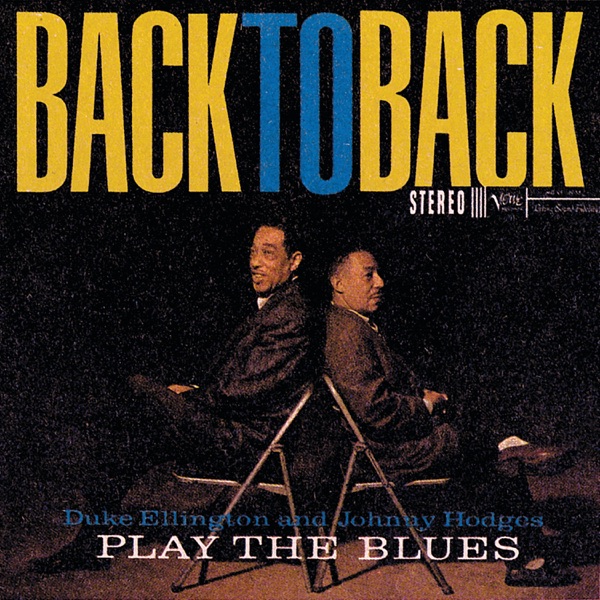
Back to Back: Duke Ellington and Johnny Hodges Play the Blues
1959
Side by Side
Side by Side
1959
Duke's in Bed
Duke's in Bed
1959
The Big Sound
The Big Sound
1961
The Eleventh Hour
The Eleventh Hour
1962
Sandy's Gone
Sandy's Gone
1963
Blue Rabbit
Blue Rabbit
1964
Everybody Knows
Everybody Knows
1964
♫
Mess Of Blues
1964
Joe's Blues
Joe's Blues
1965
Con-Soul & Sax
Con-Soul & Sax
1965
♫
Wings and Things
1965
Stride Right
Stride Right
1966
♫
Alto Blue
1966
Blue Pyramid
Blue Pyramid
1966
Triple Play
Triple Play
1967
♫
Don't Sleep in the Subway
1967
Swing's Our Thing
Swing's Our Thing
1968
♫
Rippin' and Runnin'
1969
3 Shades of Blue
3 Shades of Blue
1970
A Tribute to Johnny Hodges
1970
Compact Jazz: Johnny Hodges & Wild Bill Davis
1989
♫
In A Mellotone
1990
♫
At Sportpalast, Berlin
1993
♫
Jeep's Blues
1995
♫
Johnny Hodges With Billy Strayhorn And The Orchestra
1995
♫
Day Dream
1998
♫
Johnny Hodges & Wild Bill Davis at Grace's Little Belmont, Atlantic City
2000
♫
Collates No. 2
2002
♫
Super Session
2002
♫
Hop, Skip and Jump
2002
♫
Buenos Aires Blues / The Eleventh Hour
2009

Collaborations

Live on Youtube

Explore Further

Selected connections
Bandleader / Composer, USA
Duke Ellington
Hodges and Ellington are inseparable — exploring Ellington's catalog is essentially exploring the full arc of Hodges' career at its highest level.
Explore →
Album, 1956
Dance Bash
A small-group Hodges session that shows his bluesy, looser side away from the Ellington spotlight.
Explore →
Alto Saxophonist, USA
Ben Webster
A tenor player, but another Ellington stalwart with the same commitment to warmth and economy over flash — a natural next listen.
Explore →

Who's playing
Listen next
Recording Info
Track listing
Musicians
Further Reading
Read more

Where next?

More by this artist

Albums with the same musicians

From the same era

Similar artists

inside the sleeve
Growing
Jazz, explained without pretension.
Read · Follow the connections · Press play
Right now: 7,100+ albums · 440+ artists
Start here
New to jazz? These artists are good places to start.
Loading…
Explore
Nine records worth getting lost in.
Born today
Album of the day
A landmark record, every day.
Read
  • Loading…
Article archive →
Recently added
Purpose
Inside the Sleeve is your companion on a journey through jazz — not a textbook, but something closer to a knowledgeable friend sitting next to you while you listen. Read about an artist, press play, follow a connection, discover an album you didn't know you needed.
Suggestions
Read

Articles

Essays, guides, and lists about jazz and the records that matter.

Loading…

Genre

Key Artists
Further Reading

Essential Albums

Related Genres

In This Genre

About

Inside the Sleeve

Work in progress

Inside the Sleeve grows continuously — new artists and albums are added, essays refined, as visitors explore and our editors follow up on what they find. Content, features, and design are still evolving; use the Report error button on any page to flag something that seems off.

Content

Every artist, album, and release date on Inside the Sleeve is real — verified against trusted sources including MusicBrainz and Wikipedia. We don't invent discographies or fabricate records. AI compiles that verified information into readable prose — essays on artists, albums, and the music itself. We can't manually review every essay before publishing, but every reported error is checked by a human editor.

Inside the Sleeve is not a review site. We're not here to rate or rank — we're here to guide you in. Where an album stands out, we'll say so. Where an artist changed everything, you'll know why. But we won't tear anything down. Jazz history is complex and sources sometimes disagree — if you spot something that seems off, please report it.

Streaming

Inside the Sleeve links to Spotify and Apple Music so you can listen while you read. These are not affiliate links. For Spotify, links open a search on open.spotify.com — we do not have direct links to specific recordings. For Apple Music, direct links are used where available, otherwise a search is opened.

Your choice of streaming service is stored locally in your browser only. It is never sent to our servers.

We're working on deeper Spotify integration, including direct links to specific recordings.

Privacy

Inside the Sleeve does not collect personal data and does not use cookies. We count page visits anonymously using a self-hosted analytics tool — no personal identifiers are stored, and the data never leaves our own server. The only preference stored on your device is your streaming service choice, saved locally in your browser and never transmitted.

When you submit a suggestion or error report, the text you write is stored in our database. No name or email is required or collected unless you choose to provide one.

Third-party services

Spotify and Apple Music are independent services with their own terms of use and privacy policies. Inside the Sleeve is not affiliated with or endorsed by either company.

Support

Inside the Sleeve is free and ad-free. If you enjoy it, a coffee helps cover server costs and keeps the project going.

Amazon

Some book recommendations on Inside the Sleeve link to Amazon. Buying through these links costs you nothing extra — but Amazon pays us a small commission, which goes directly towards keeping the site running. It's a simple way to support the project if you were going to buy the book anyway.

As an Amazon Associate, Inside the Sleeve earns from qualifying purchases.

Questions or feedback? Use the suggestion box on the front page.

Inside the Sleeve — A guide for those who want to go beyond the obvious About & Privacy