Stride Piano, Fully Awake
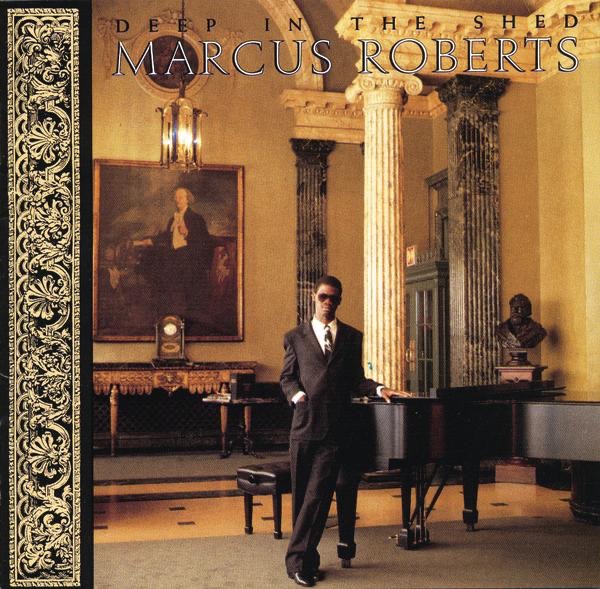
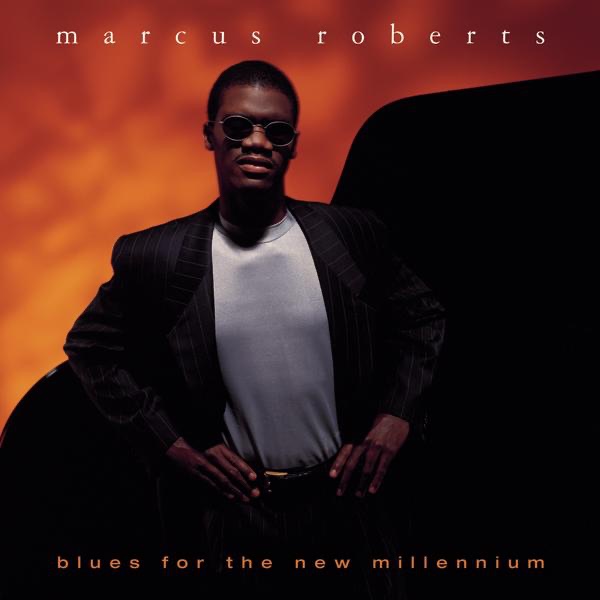
Marcus Roberts is blind, which matters less for sentiment and more because it shapes how he learned the instrument — by ear, by touch, by soaking up recordings until the whole history of jazz piano lived in his hands. He grew up in Jacksonville, Florida, came up through church music, and by his early twenties was sitting at the piano chair in Wynton Marsalis's band, a gig that put him right in the middle of the 1980s push to treat jazz as a serious American art form rather than a relic.
What makes Roberts worth hearing isn't that he plays old styles — plenty of pianists can quote stride piano or Ellington voicings. It's that he actually thinks in those languages instead of just borrowing from them. On records like Alone with Three Giants (1991) and his solo explorations of Jelly Roll Morton, you hear him treat early jazz not as a museum piece but as live material, something you can still improvise inside of. He'll drop a stride left hand into a phrase that resolves like Monk, then push it somewhere more harmonically open, and it never feels like a costume change.
He's also spent a lot of his career as a bandleader and educator, which fits him. Roberts has always talked about jazz piano as a lineage you have to understand before you can extend it — he's not interested in novelty for its own sake. His trio work, especially with bassist Roland Guerin and various drummers over the years, has that same quality: deeply rooted in blues and swing rhythm, but never static, never just revivalist mimicry.
The Marsalis association is important context but it's not the whole story. Roberts built his own path afterward, leading groups, teaching at Florida State University, and continuing to record music that treats American piano tradition — ragtime, stride, blues, swing — as a living vocabulary rather than a history lesson. If you want a way into him, start with how he handles rhythm: steady, grounded, almost old-fashioned, and then listen for the moments where he bends that rhythm just enough to remind you he's very much a product of his own time.
He's not a flashy player in the way some contemporaries are, and he's never chased fusion or electronics or any of the other directions jazz piano took in his lifetime. That's by choice. Roberts decided early that there was enough unfinished business in the acoustic piano tradition to occupy a whole career, and he's spent decades proving that choice wasn't a limitation.