Roberts Builds a Piano Cathedral for a New Century
A pianist at full maturity, Roberts shapes blues language into something that feels urgent and contemporary.
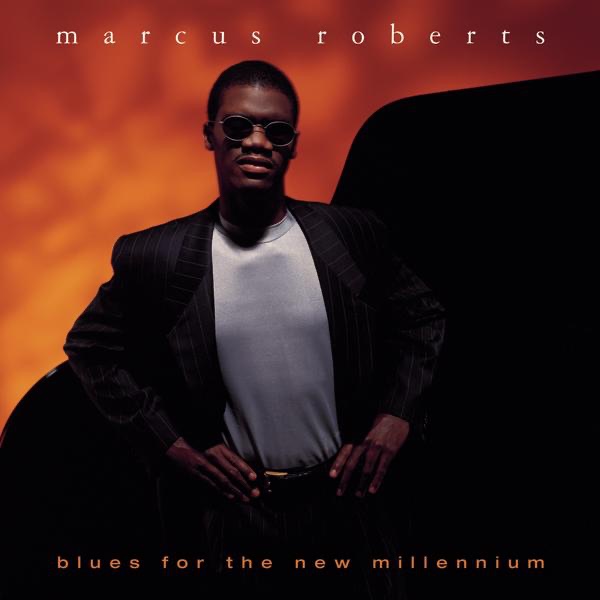
By 1997, Marcus Roberts had already established himself as a major voice in jazz piano—formally trained, harmonically adventurous, deeply rooted in blues and stride tradition. Blues for the New Millennium (1997) arrives at a moment when he could afford to be ambitious without proving anything. This album finds him assembling a full ensemble and centering the recording entirely on blues in its many forms, not as a historical exercise but as a living language capable of addressing the moment.
What makes this record distinctive is Roberts' refusal to separate blues tradition from contemporary sophistication. The band plays with clarity and space—every voice audible, nothing cluttered. Roberts' own playing combines older stride vocabularies with modern harmonic thinking, and he never lets the piano dominate; the ensemble swings as a unit. The blues here are not nostalgic. They breathe like something alive, capable of anger, humor, and reflection in the same breath.
This is not Roberts at his most experimental, nor his most straightforward. It occupies middle ground between accessibility and genuine musical depth, which is exactly where it should be. The record matters because it demonstrates that blues language in jazz hands could still say something necessary in 1997, and that a mature artist could build something substantial from what others might dismiss as old material. It stands among his strongest works for anyone wanting to hear what he actually sounds like beyond academic contexts.