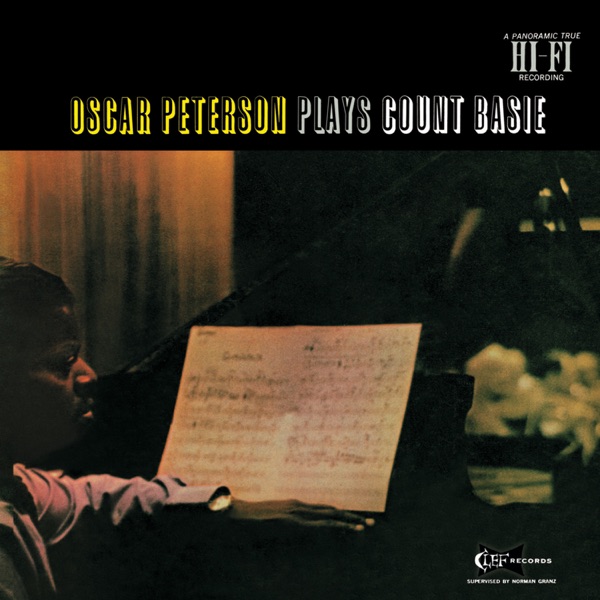
Peterson's Homage to the Count's Blueprints
Oscar Peterson takes Basie's spare elegance and fills it with his own relentless virtuosity.
Oscar Peterson approaches Count Basie's compositions and arrangements like a pianist studying blueprints before deciding to rebuild the house entirely. This is Peterson doing what he does best: taking jazz standards and existing material, then reconstructing them through sheer technical brilliance and harmonic sophistication. The album works because Peterson respects Basie's fundamentals—the blues sensibility, the groove, the space between notes—while operating in a completely different universe of complexity and speed.
What makes this record distinct is Peterson's commitment to letting Basie's melodies breathe even as his own hands do impossible things around them. Listen to how the trio drives forward without ever feeling rushed, maintaining the swing that made Basie's sound so durable. Peterson's touch here is precise but warm, never coldly technical. The rhythm section locks in tight, and Peterson himself moves between accompanying and soloing with the kind of sophistication that comes from years of working in small group settings.
This isn't Peterson's most celebrated work—that distinction belongs elsewhere in his catalog—but it's an important document of how a modernist pianist of the late 1950s understood the legacy he'd inherited. It's solid, swinging piano jazz, the kind of record that rewards repeat listening because there's always another harmonic turn or rhythmic idea worth noticing. Not a reinvention, not a departure, but a genuine conversation between two generations of jazz thinking.
Who's playing
Where next?
More by Oscar Peterson

Night Train 1963
We Get Requests 1964
Ben Webster Meets Oscar Peterson 1959

Oscar Peterson Plays The Cole Porter Songbook 1959
The musicians on this record

Big Swing Face 1967
Buddy Rich
plays drums (drum set) here
plays drums (drum set) here
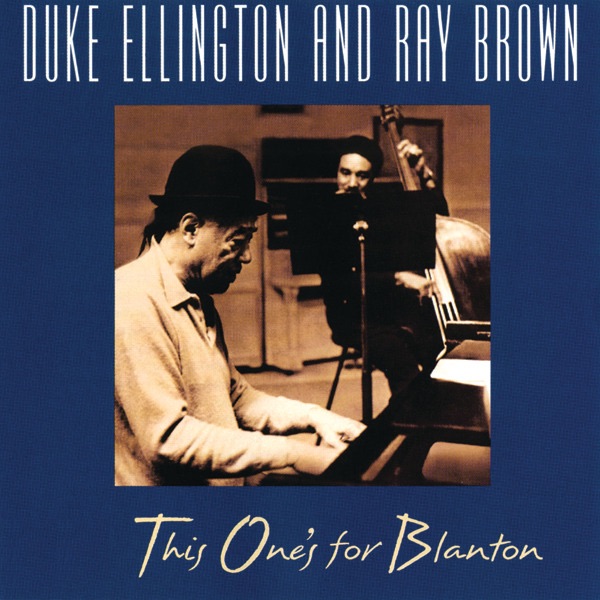
This One's for Blanton! 1975
Ray Brown
plays double bass here
plays double bass here
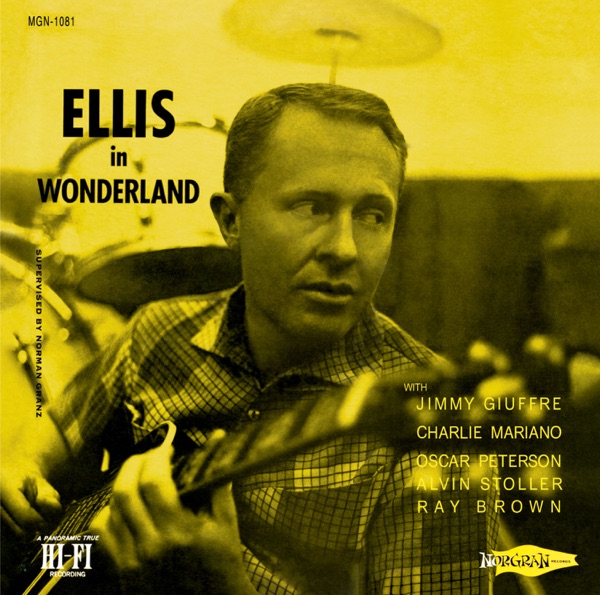
Trio 1992
Herb Ellis
plays guitar here
plays guitar here