Where do you listen?
Choose your streaming service
inside the sleeve
Loading…
inside the sleeveITS
⌕
Read About
Alto Saxophone - United States - Bebop / Hard Bop

Gigi
Gryce

1925 - 1983, United States

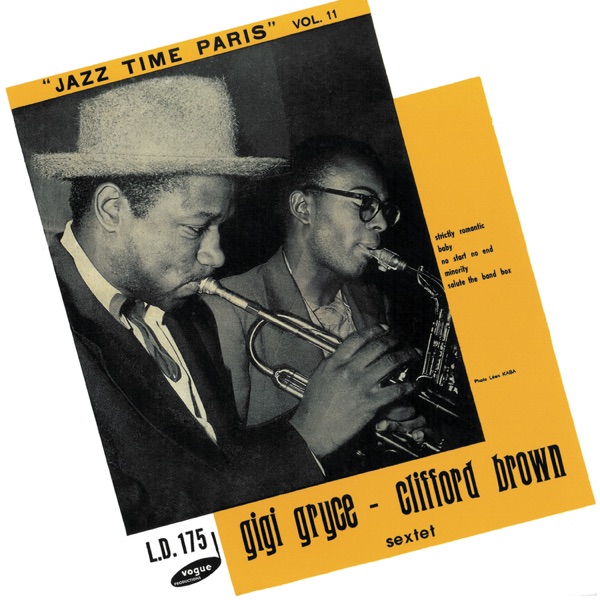
Gigi Gryce wrote some of the smartest tunes to come out of the bebop era, then walked away from the music business entirely and taught grade school under a different name. He deserves to be remembered as more than a footnote to Clifford Brown's quintet.

BebopHard BopCool Jazz
Gigi Gryce

The Composer Who Disappeared

If you know Gigi Gryce at all, you probably know him as the alto player standing next to Clifford Brown on a handful of classic mid-1950s records. That's not nothing, but it undersells him badly. Gryce was one of the sharpest writers of his generation — tunes like "Minority" and "Nica's Tempo" have the kind of melodic logic that makes other musicians want to learn them, which is the real test of a good jazz composer.

As a player, Gryce had a clean, controlled alto sound, closer to Charlie Parker's vocabulary than anyone's but without the jagged edges. He wasn't trying to out-blow anybody. His solos sound like a guy who thought about structure first and let the fire come second, which fits a man who spent as much time arranging and composing as he did improvising.

In the mid-50s he co-led the Jazz Lab Quintet with trumpeter Donald Byrd, a band built around Gryce's writing rather than blowing-session energy, and he kept turning up on sessions led by Art Farmer and others as the house arranger everyone wanted. But Gryce also did something almost nobody else in jazz was doing at the time: he started his own music publishing companies, Melotone and later Totem, specifically so Black composers could keep the rights to their own songs instead of signing them away. That's not a small footnote — it was a real fight against how the business usually worked.

Then, around 1960, he basically vanished from jazz. He went back to school, became a public school music teacher in New York under the name Basheer Qusim, and by most accounts never performed publicly again. No dramatic explanation survives, no interview where he spells it out — he just stopped, and stayed stopped for the rest of his life.

What's left is the writing. Other musicians kept playing his tunes long after he'd left the scene, which is its own kind of quiet vindication. Pick up Clifford Brown and Max Roach (1954) or Nica's Tempo (1955) and you'll hear exactly why people still bother tracking down his catalog decades after he stopped answering questions about it.

Facts
BornNovember 28, 1925, Pensacola, Florida
DiedMarch 14, 1983, New York City
InstrumentAlto saxophone, composition, arranging
Active1940s - early 1960s
Known forComposing "Minority" and "Nica's Tempo," co-leading the Jazz Lab Quintet, founding independent publishing companies for Black composers
Connections
Clifford BrownBandmate and collaborator, New York / Philadelphia
→
Donald ByrdCo-leader, Jazz Lab Quintet, New York
→
Art FarmerFrequent collaborator, New York
→
Max RoachBandleader, recorded Gryce's compositions, New York
→
Read more

Discography

9 records
Nica’s Tempo
Nica’s Tempo
1955
Jazz Lab
Jazz Lab
1957
♫
Modern Jazz Perspective
1957
♫
New Formulas From the Jazz Lab
1957
Gigi Gryce
Gigi Gryce
1958
The Rat Race Blues
The Rat Race Blues
1961
Gigi Gryce and the Jazz Lab Quintet
1991
♫
In Paris
1995
Gigi Gryce - Clifford Brown Sextet (Jazz Connoisseur)
2016

Collaborations

Live on Youtube

Explore Further

Selected connections
Trumpeter, United States
Donald Byrd
Gryce's partner in the Jazz Lab Quintet, built around his tight, composed arrangements.
Explore →
Album, 1954
Clifford Brown and Max Roach
Features Gryce's writing and alto work alongside one of hard bop's defining front lines.
Explore →
Saxophonist/Arranger, United States
Benny Golson
Another composer-first saxophonist of the same era, useful for hearing how differently two writers approached the same hard bop toolkit.
Explore →

Who's playing
Listen next
Recording Info
Track listing
Musicians
Further Reading
Read more

Where next?

More by this artist

Albums with the same musicians

From the same era

Similar artists

inside the sleeve
Growing
Jazz, explained without pretension.
Read · Follow the connections · Press play
Right now: 7,100+ albums · 440+ artists
Start here
New to jazz? These artists are good places to start.
Loading…
Explore
Nine records worth getting lost in.
Born today
Album of the day
A landmark record, every day.
Read
  • Loading…
Article archive →
Recently added
Purpose
Inside the Sleeve is your companion on a journey through jazz — not a textbook, but something closer to a knowledgeable friend sitting next to you while you listen. Read about an artist, press play, follow a connection, discover an album you didn't know you needed.
Suggestions
Read

Articles

Essays, guides, and lists about jazz and the records that matter.

Loading…

Genre

Key Artists
Further Reading

Essential Albums

Related Genres

In This Genre

About

Inside the Sleeve

Work in progress

Inside the Sleeve grows continuously — new artists and albums are added, essays refined, as visitors explore and our editors follow up on what they find. Content, features, and design are still evolving; use the Report error button on any page to flag something that seems off.

Content

Every artist, album, and release date on Inside the Sleeve is real — verified against trusted sources including MusicBrainz and Wikipedia. We don't invent discographies or fabricate records. AI compiles that verified information into readable prose — essays on artists, albums, and the music itself. We can't manually review every essay before publishing, but every reported error is checked by a human editor.

Inside the Sleeve is not a review site. We're not here to rate or rank — we're here to guide you in. Where an album stands out, we'll say so. Where an artist changed everything, you'll know why. But we won't tear anything down. Jazz history is complex and sources sometimes disagree — if you spot something that seems off, please report it.

Streaming

Inside the Sleeve links to Spotify and Apple Music so you can listen while you read. These are not affiliate links. For Spotify, links open a search on open.spotify.com — we do not have direct links to specific recordings. For Apple Music, direct links are used where available, otherwise a search is opened.

Your choice of streaming service is stored locally in your browser only. It is never sent to our servers.

We're working on deeper Spotify integration, including direct links to specific recordings.

Privacy

Inside the Sleeve does not collect personal data and does not use cookies. We count page visits anonymously using a self-hosted analytics tool — no personal identifiers are stored, and the data never leaves our own server. The only preference stored on your device is your streaming service choice, saved locally in your browser and never transmitted.

When you submit a suggestion or error report, the text you write is stored in our database. No name or email is required or collected unless you choose to provide one.

Third-party services

Spotify and Apple Music are independent services with their own terms of use and privacy policies. Inside the Sleeve is not affiliated with or endorsed by either company.

Support

Inside the Sleeve is free and ad-free. If you enjoy it, a coffee helps cover server costs and keeps the project going.

Amazon

Some book recommendations on Inside the Sleeve link to Amazon. Buying through these links costs you nothing extra — but Amazon pays us a small commission, which goes directly towards keeping the site running. It's a simple way to support the project if you were going to buy the book anyway.

As an Amazon Associate, Inside the Sleeve earns from qualifying purchases.

Questions or feedback? Use the suggestion box on the front page.

Inside the Sleeve — A guide for those who want to go beyond the obvious About & Privacy