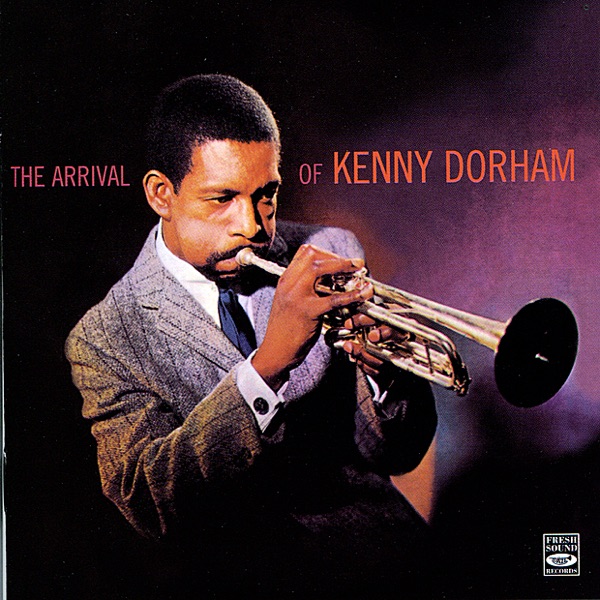
The Trumpet Player You Overlooked
Dorham grew up in Texas and came of age musically during the bebop explosion of the mid-1940s. He worked with Dizzy Gillespie and Billy Eckstine early on, which tells you the level he was operating at from the start. When Charlie Parker needed a trumpet player, Dorham was one of the people he called. That's not a minor footnote — that's about as strong a credential as the era offered.
After the bebop years, Dorham co-founded the Jazz Messengers with Art Blakey in 1954, which was a pivotal group for the hard bop sound. He left after a year and replaced Clifford Brown in the Max Roach quintet, which again tells you something: people trusted him in high-stakes situations. His tone was warm and a little dark, not as bright and cutting as Clifford Brown's, not as angular as Miles Davis at the time. He had a melodic intelligence that showed up most clearly in slower tempos — he could make a ballad breathe without overdoing the sentiment.
His Blue Note recordings from the late 1950s and early 1960s are where most people find him now. Quiet Kenny (1959) is the one that gets mentioned most often, and for good reason — it's a late-night record, muted and introspective, with Dorham playing with a kind of quiet confidence that suits the format perfectly. Una Mas (1963) has more urgency to it, with a Latin-inflected title track that became one of his most-played compositions. Trompeta Toccata (1964) is another strong one, often overlooked even among his admirers.
What made him distinctive was partly the writing. Dorham composed regularly and had a gift for melodies that stuck without being obvious. He wasn't just blowing over standards — he was shaping the material. Musicians who played with him, including Joe Henderson and Tommy Flanagan, clearly responded to that. Listen to how the groups on his Blue Note dates sound: focused, unhurried, like everyone's in on something good.
The last years of his life were hard. Kidney disease slowed him down considerably through the late 1960s, and he died in 1972 at 48. He had written critically about jazz for publications including Down Beat, which added another dimension to how he engaged with the music. The recordings he left are more than enough to make the case — the case being that if you've spent time with Lee Morgan and Freddie Hubbard and haven't gotten to Dorham yet, you're missing someone whose work will feel immediately familiar and genuinely rewarding.