Where do you listen?
Choose your streaming service
inside the sleeve
Loading…
inside the sleeveITS
⌕
Read About
Trumpet - United States - Hard Bop & Soul Jazz

Lee
Morgan

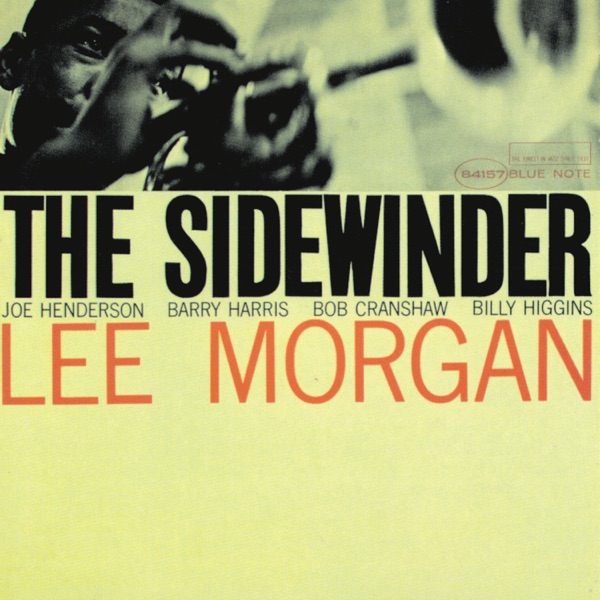
Start here The Sidewinder (1964) →
1938 - 1972, Philadelphia, Pennsylvania, United States

Lee Morgan was a trumpet virtuoso whose brash tone and infectious swing made him one of hard bop's most compelling voices. Discovered as a teenager by Dizzy Gillespie, he brought a street-level energy to the genre that balanced technical brilliance with raw emotional directness. His tragically shortened career left behind a catalog of essential recordings that remain unsurpassed in their combination of sophistication and soul.

Hard BopSoul Jazz
Lee Morgan

The Sidewinder's Eternal Moment

Lee Morgan hit the jazz scene in the mid-1950s like someone who'd been waiting his whole life to play. By nineteen, he'd already been on the road with Dizzy Gillespie's band, and he had this tone—bright and clear, the kind that just cuts through whatever else is happening. You could hear the blues in it, honest stuff that connected back to older jazz traditions but felt completely alive and present. When he played, you felt like he needed you to hear what he was saying right then. Unlike a lot of guys getting experimental around him, Morgan never forgot about melody or making people want to move.

His biggest moment came with The Sidewinder (1964), which ended up being one of Blue Note's biggest sellers. That title track is just funky and perfectly right—the melody sticks with you, and his solo on it sounds like he's having a conversation with you. It proved you could make real innovation that people actually wanted to hear. But if you just listen to that one album, you're missing what made him special. Albums like Search for the New Land and The Procrastinator show a guy who could work with modal stuff one minute and then just blow the blues the next, especially when he had sharp musicians like Joe Timmons and Wayne Shorter pushing back at him.

What made Morgan different was that he didn't see accessibility and serious musicianship as enemies. He recorded for Blue Note throughout the 1960s, leading sessions that just swung naturally. Throw him a standard, a blues, or one of Herbie Hancock's spare, minimal compositions, and he'd bring the same attention to what he was doing and genuine feeling. You can tell how he picked his rhythm sections—pianists like Barry Harris and Wynton Kelly, drummers like Billy Higgins—because he wanted people around him who loved to swing and cared about harmony equally.

In 1972, at thirty-three, Morgan was shot and killed by Helen Morgan, his common-law wife, during a domestic fight. It's one of those senseless losses that still sits wrong. Toward the end, he was struggling in his personal life, and you can hear it affecting his playing, but even those later recordings have real moments of beauty. The thing about Morgan is he never stopped being himself—a musician who understood that jazz comes down to the human voice, and a trumpet player's job was to sing clearly, with real conviction, and from someplace true. That's his legacy: a reminder that all the technique in the world doesn't matter if there's no real feeling backing it up.

Facts
BornJuly 10, 1938, Philadelphia, Pennsylvania
DiedFebruary 16, 1972, New York City, New York
InstrumentTrumpet
Active1955 - 1972
Primary LabelBlue Note Records
Known forHard bop trumpet virtuosity, 'The Sidewinder,' soul jazz innovation, infectious swing
Connections
Dizzy GillespieEarly mentor and bandleader, New York
→
Art BlakeyColleague in the Jazz Messengers, New York
→
Wayne ShorterCollaborator and saxophonist, New York
→
Herbie HancockPianist on several sessions, New York
→
Joe ChambersDrummer and frequent collaborator, New York
→
Barry HarrisPianist on classic Blue Note dates, New York
→
Read more
GuideBilly Higgins at 90: the drummer who played on everythingLabelBlue Note Records: 10 albums that defined a label

Discography

12 records
The Sidewinder
The Sidewinder
1964
Candy
Candy
1957
The Cooker
The Cooker
1958
Volume 3
Volume 3
1959
Search For The New Land
1964
The Sidewinder (The Rudy Van Gelder Edition)
1964
The Rumproller
The Rumproller
1965
Cornbread
Cornbread
1965
The Gigolo
The Gigolo
1966
Charisma
Charisma
1969
Sixth Sense
Sixth Sense
1969
Sonic Boom
Sonic Boom
1979

Collaborations

Live on Youtube

Explore Further

Selected connections
Album, 1964
The Sidewinder
Morgan's most iconic session and a career-defining moment that demonstrates why he remains essential listening.
Explore →
Album, 1963
Search for the New Land
A deeper dive into Morgan's sophistication, featuring Wayne Shorter and exploring modal and post-bop terrain.
Explore →
Album, 1965
The Procrastinator
A masterclass in group interplay and Morgan's ability to lead from the front while elevating all around him.
Explore →
Bandleader, Philadelphia
Clifford Brown
Morgan's spiritual predecessor in the hard bop trumpet lineage and a touchstone for his approach to melody.
Explore →

Who's playing
Listen next
Recording Info
Track listing
Musicians
Further Reading
Read more

Where next?

More by this artist

Albums with the same musicians

From the same era

Similar artists

inside the sleeve
Growing
Jazz, explained without pretension.
Read · Follow the connections · Press play
Right now: 7,100+ albums · 440+ artists
Start here
New to jazz? These artists are good places to start.
Loading…
Explore
Nine records worth getting lost in.
Born today
Album of the day
A landmark record, every day.
Read
  • Loading…
Article archive →
Recently added
Purpose
Inside the Sleeve is your companion on a journey through jazz — not a textbook, but something closer to a knowledgeable friend sitting next to you while you listen. Read about an artist, press play, follow a connection, discover an album you didn't know you needed.
Suggestions
Read

Articles

Essays, guides, and lists about jazz and the records that matter.

Loading…

Genre

Key Artists
Further Reading

Essential Albums

Related Genres

In This Genre

About

Inside the Sleeve

Work in progress

Inside the Sleeve grows continuously — new artists and albums are added, essays refined, as visitors explore and our editors follow up on what they find. Content, features, and design are still evolving; use the Report error button on any page to flag something that seems off.

Content

Every artist, album, and release date on Inside the Sleeve is real — verified against trusted sources including MusicBrainz and Wikipedia. We don't invent discographies or fabricate records. AI compiles that verified information into readable prose — essays on artists, albums, and the music itself. We can't manually review every essay before publishing, but every reported error is checked by a human editor.

Inside the Sleeve is not a review site. We're not here to rate or rank — we're here to guide you in. Where an album stands out, we'll say so. Where an artist changed everything, you'll know why. But we won't tear anything down. Jazz history is complex and sources sometimes disagree — if you spot something that seems off, please report it.

Streaming

Inside the Sleeve links to Spotify and Apple Music so you can listen while you read. These are not affiliate links. For Spotify, links open a search on open.spotify.com — we do not have direct links to specific recordings. For Apple Music, direct links are used where available, otherwise a search is opened.

Your choice of streaming service is stored locally in your browser only. It is never sent to our servers.

We're working on deeper Spotify integration, including direct links to specific recordings.

Privacy

Inside the Sleeve does not collect personal data and does not use cookies. We count page visits anonymously using a self-hosted analytics tool — no personal identifiers are stored, and the data never leaves our own server. The only preference stored on your device is your streaming service choice, saved locally in your browser and never transmitted.

When you submit a suggestion or error report, the text you write is stored in our database. No name or email is required or collected unless you choose to provide one.

Third-party services

Spotify and Apple Music are independent services with their own terms of use and privacy policies. Inside the Sleeve is not affiliated with or endorsed by either company.

Support

Inside the Sleeve is free and ad-free. If you enjoy it, a coffee helps cover server costs and keeps the project going.

Amazon

Some book recommendations on Inside the Sleeve link to Amazon. Buying through these links costs you nothing extra — but Amazon pays us a small commission, which goes directly towards keeping the site running. It's a simple way to support the project if you were going to buy the book anyway.

As an Amazon Associate, Inside the Sleeve earns from qualifying purchases.

Questions or feedback? Use the suggestion box on the front page.

Inside the Sleeve — A guide for those who want to go beyond the obvious About & Privacy