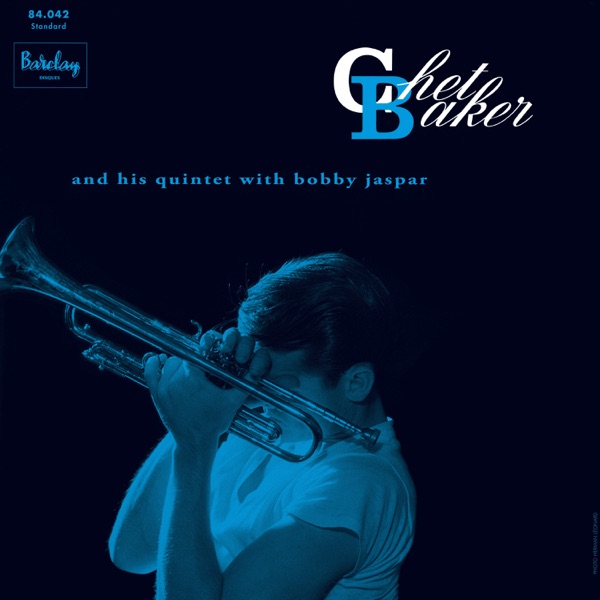
The Quiet Belgian Who Crossed Over
If you've never heard of Bobby Jaspar, you're not alone, and that's a shame because he was genuinely good. He came up in Liège in the 1940s, playing tenor sax with a light, Lester Young-inflected tone that fit right into the cool jazz sound coming out of Paris in the early fifties. He wasn't trying to burn the house down with bebop fire. He was more interested in clean lines and good taste, which made him a natural fit for the French scene of the time.
What really set him apart was the flute. In the early fifties almost nobody was taking the instrument seriously in jazz — it was a doubling instrument, something a reed player picked up for color on one or two tracks. Jaspar treated it like a lead voice, with the same harmonic sophistication he brought to tenor. He was recording legitimate flute solos years before most American players had figured out what to do with the thing, and guys who came later clearly noticed.
He married the singer Blossom Dearie and the two of them eventually landed in New York, where Jaspar found steady work with J.J. Johnson's quintet from around 1956 into the early sixties. That gig put him in rooms with serious American rhythm sections and serious American audiences, and he held his own — not as a flashy soloist, but as someone who always played the right note at the right time. His 1957 session Short Stop (1957), cut with Donald Byrd and Tommy Flanagan, is a good snapshot of where he was at: relaxed, melodic, never showing off.
He died in New York in 1963, only thirty-seven, of a heart attack, and the jazz world mostly moved on without stopping to notice. That's the real tragedy of Bobby Jaspar's story — not that he failed to become famous, but that he was just getting to a really interesting place in his playing when it ended. If you want a way into European jazz before it had its own confident identity, or you're curious about the flute's early years as a serious jazz instrument, he's a name worth tracking down.