Where do you listen?
Choose your streaming service
inside the sleeve
Loading…
inside the sleeveITS
⌕
Read About

♫

Facts
Connections
Read more

Discography

Collaborations

Live on Youtube

Explore Further

Selected connections
1956 · Album

The Genius Of Bud Powell

↑ Bud Powell

Recorded 1950 and 1951 · Mercury / Clef · Produced by Not specified in verified sources
The Genius Of Bud Powell

Powell's Piano at Full Velocity

These sessions catch Powell playing with absolute clarity and speed, no hesitation, no safety net.

The Genius of Bud Powell arrived in 1956 as a collection of material Powell had recorded years earlier, in 1950 and 1951. By the time Mercury released it, Powell was already known for his speed and precision at the keyboard—his ability to play lines that seemed to tumble out faster than you'd think a human hand could manage. What you hear on these tracks is exactly that: Powell moving through bebop figures with the kind of fluency that made other pianists stop and listen. His touch is sharp and articulate. There's no murk, no pedal-heavy romanticism. Each note lands exactly where it needs to be, and he's not interested in making it sound easy or smooth. He's interested in playing what he hears, which often means playing a lot, and playing it now.

These were not new recordings when the album came out, which matters because you're hearing Powell at a particular moment early in his recording life, before the weight of his personal struggles began to show up in his playing. The sessions have a directness to them. He's not overthinking. The piano sounds crisp and well-recorded for the era, which is a gift—you can hear exactly what he's doing. The album swings hard in the bebop pocket, and if you're coming to Powell for the first time, this is a legitimate entry point. It's not his only important record, but it's one where the physical act of playing—the speed, the clarity, the refusal to waste a single gesture—is right there on the surface, impossible to miss.

AllMusic gave the album a perfect five-star rating, which says something about how these sessions have held up. They're straightforward jazz piano in the bebop tradition, played by someone who was genuinely among the best at it. No apologies, no concept, just Powell playing with the kind of command that makes you understand why people made such a fuss about him.

Who's playing
Ray Browndouble bass
Bud Powellpiano
Max Roachdrums
Listen next
By Bud Powell
The Amazing Bud Powell 1954
Max Roach's own record
Deeds, Not Words 1958
Max Roach plays drums (drum set) here
More Bebop
Mozart / Corea 1962
Chick Corea
Recording Info
Track listing
1Tempus Fugit2:25
2Celia2:59
3Cherokee3:36
4I'll Keep Loving You2:41
5Strickly Confidential3:09
6All God's Chillun3:02
7So Sorry Please3:15
8Get Happy2:54
9Sometimes I'm Happy3:36
10Sweet Georgia Brown2:49
11Yesterdays2:52
12April in Paris3:09
13Body and Soul3:22
14Tea for Two4:14
15Hallelujah3:00
16Parian Throughfare (Parisienne Thorofare)2:29
17Oblivion2:12
18Dusky 'n' Sandy (Dusk in Sandi)2:16
19Hallucinations (Budo)2:28
20The Fruit - Bud Powell3:18
21The Last Time I Saw Paris3:16
22Just One of Those Things3:52
23A Nightingale Sang in Berkeley Square3:46
Musicians
Further Reading
Read more

Where next?

More by Bud Powell
The Amazing Bud Powell 1954
Strictly Powell 1957
Inner Fires 1953
Celia 1957
All 7 albums →
The musicians on this record
Deeds, Not Words 1958
Max Roach
plays drums (drum set) here
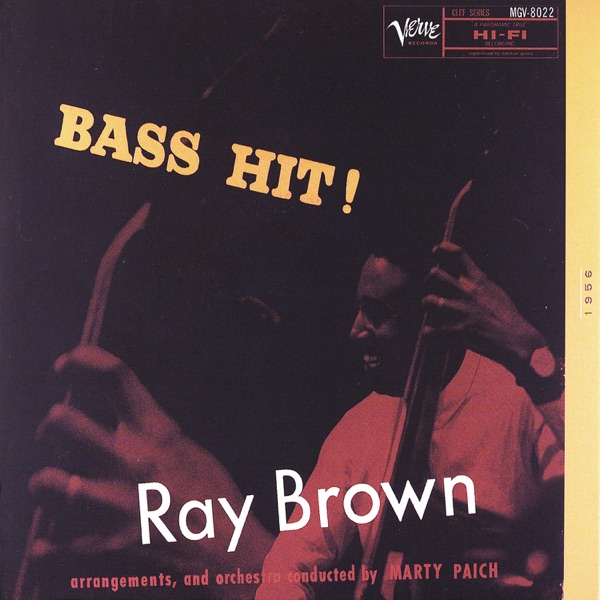
Bass Hit! 1957
Ray Brown
plays double bass here
Their own records, close in time
More Bebop
Mozart / Corea 1962
Chick Corea
20/20 1963
George Benson
Doin' Allright 1961
Dexter Gordon
Mingus Three 1957
Hampton Hawes
All 90 Bebop artists →

More by this artist

Albums with the same musicians

From the same era

Similar artists

inside the sleeve
Growing
Jazz, explained without pretension.
Read · Follow the connections · Press play
Right now: 7,100+ albums · 440+ artists
Start here
New to jazz? These artists are good places to start.
Loading…
Explore
Nine records worth getting lost in.
Born today
Album of the day
A landmark record, every day.
Read
  • Loading…
Article archive →
Recently added
Purpose
Inside the Sleeve is your companion on a journey through jazz — not a textbook, but something closer to a knowledgeable friend sitting next to you while you listen. Read about an artist, press play, follow a connection, discover an album you didn't know you needed.
Suggestions
Read

Articles

Essays, guides, and lists about jazz and the records that matter.

Loading…

Genre

Key Artists
Further Reading

Essential Albums

Related Genres

In This Genre

About

Inside the Sleeve

Work in progress

Inside the Sleeve grows continuously — new artists and albums are added, essays refined, as visitors explore and our editors follow up on what they find. Content, features, and design are still evolving; use the Report error button on any page to flag something that seems off.

Content

Every artist, album, and release date on Inside the Sleeve is real — verified against trusted sources including MusicBrainz and Wikipedia. We don't invent discographies or fabricate records. AI compiles that verified information into readable prose — essays on artists, albums, and the music itself. We can't manually review every essay before publishing, but every reported error is checked by a human editor.

Inside the Sleeve is not a review site. We're not here to rate or rank — we're here to guide you in. Where an album stands out, we'll say so. Where an artist changed everything, you'll know why. But we won't tear anything down. Jazz history is complex and sources sometimes disagree — if you spot something that seems off, please report it.

Streaming

Inside the Sleeve links to Spotify and Apple Music so you can listen while you read. These are not affiliate links. For Spotify, links open a search on open.spotify.com — we do not have direct links to specific recordings. For Apple Music, direct links are used where available, otherwise a search is opened.

Your choice of streaming service is stored locally in your browser only. It is never sent to our servers.

We're working on deeper Spotify integration, including direct links to specific recordings.

Privacy

Inside the Sleeve does not collect personal data and does not use cookies. We count page visits anonymously using a self-hosted analytics tool — no personal identifiers are stored, and the data never leaves our own server. The only preference stored on your device is your streaming service choice, saved locally in your browser and never transmitted.

When you submit a suggestion or error report, the text you write is stored in our database. No name or email is required or collected unless you choose to provide one.

Third-party services

Spotify and Apple Music are independent services with their own terms of use and privacy policies. Inside the Sleeve is not affiliated with or endorsed by either company.

Support

Inside the Sleeve is free and ad-free. If you enjoy it, a coffee helps cover server costs and keeps the project going.

Amazon

Some book recommendations on Inside the Sleeve link to Amazon. Buying through these links costs you nothing extra — but Amazon pays us a small commission, which goes directly towards keeping the site running. It's a simple way to support the project if you were going to buy the book anyway.

As an Amazon Associate, Inside the Sleeve earns from qualifying purchases.

Questions or feedback? Use the suggestion box on the front page.

Inside the Sleeve — A guide for those who want to go beyond the obvious About & Privacy