Take Your Time, She Will
The first thing you notice about Shirley Horn is the tempo. She plays and sings slower than almost anyone else in jazz — not because she can't move, but because she chooses not to. She was a trained pianist from childhood, studied at Howard University, and could handle bebop changes just fine. But she found her voice in the ballad, in the drawn-out phrase, in making a two-minute song feel like it takes a long evening to unfold. If you put on Loads of Love (1963) expecting swing, you'll feel like you're being asked to slow down whether you want to or not.
Miles Davis heard her play in Washington in the early 1960s and told her she should come to New York. She did, briefly, and the response was strong enough that she had real momentum. Then she made a decision that would define her career: she went back home to raise her daughter, and largely stayed out of the national spotlight for close to twenty years. That kind of disappearing act usually ends a career. For Horn it became part of her story, and when she came back, she came back on her own terms.
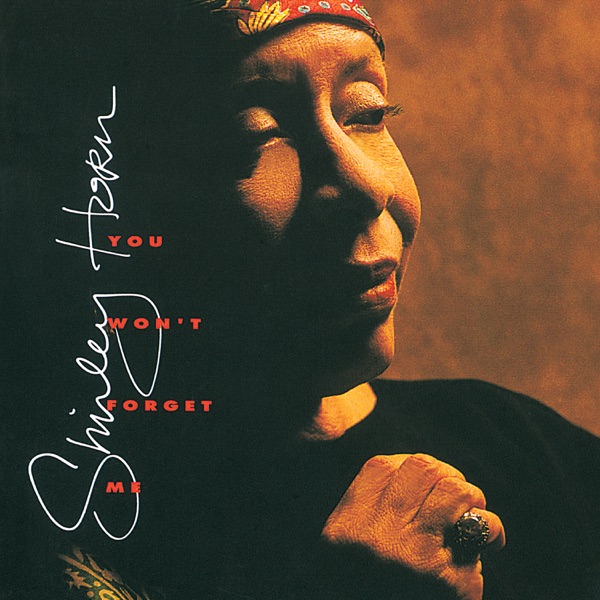
Her second act started in earnest in the 1980s when she connected with Verve Records and producer Johnny Mandel, and the records she made from that period onward are where most listeners find her. You Won't Forget Me (1991) is the one that tends to hook people first — it has Miles Davis on it, a guest appearance that felt like a passing of the torch, or at least an acknowledgment from one slow-burn artist to another. The album sounds intimate in a way that's hard to fake. It's the kind of record you put on late at night when you don't want music that asks anything of you.
What Horn did with a piano trio was make it sound like a conversation happening in real time. She'd accompany herself mid-phrase, drop into a lower register for emphasis, then let Charles Ables on bass hold things together while she took her time getting to the next line. She never seemed like she was performing so much as thinking out loud. That quality is hard to describe to someone who hasn't heard it, but once you hear it, it's unmistakable in the best way — you recognize it immediately if you ever come across it in someone else.
She kept recording and performing until health problems slowed her down in the early 2000s. Diabetes cost her a foot, and she died in 2005. The Washington D.C. jazz community had claimed her as their own for decades, but her reputation in the wider jazz world had by then grown to match the loyalty of those early local fans. She never moved to New York permanently, never chased the career that might have been. The records she left are exactly as unhurried as she was.