The Clock He Rewound
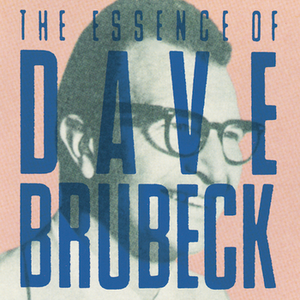
Brubeck grew up on a cattle ranch in California, which tells you something about the outsider angle he always brought to jazz. He studied classical composition with Darius Milhaud at Mills College, and that training gave him a harmonic vocabulary that sat at an angle to bebop orthodoxy. He wasn't trying to play like Charlie Parker — he was trying to figure out how European counterpoint and American rhythm could actually talk to each other rather than just share a stage.
The Dave Brubeck Quartet that most people know — with Paul Desmond on alto saxophone, Eugene Wright on bass, and Joe Morello on drums — was one of the most unusual working bands in jazz. Desmond's sound was cool and lyrical to the point of being almost translucent, while Brubeck's piano was percussive, block-chorded, and dense. They shouldn't have fit together, but the contrast became the whole point. Desmond would float a melody over the top while Brubeck anchored things with his left hand like he was nailing the rhythm to the floor.
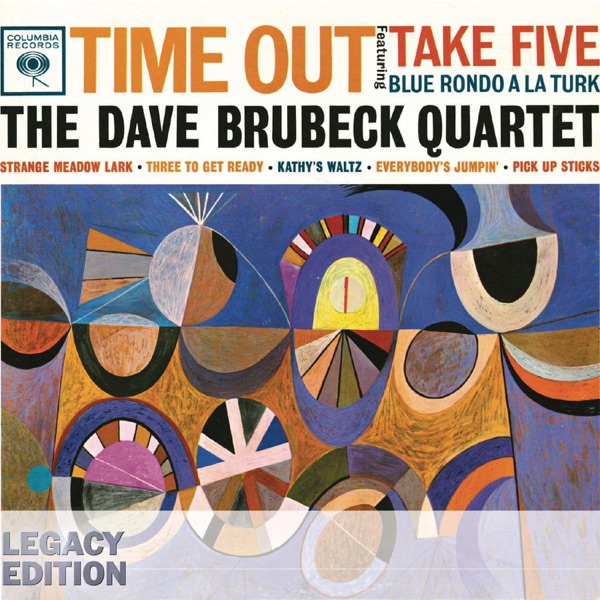
Time Out (1959) is the record everyone knows, and it deserves the attention it gets. Playing in 5/4 on "Take Five" or 9/8 on "Blue Rondo à la Turk" sounds like a gimmick until you actually listen — the tunes are so strong that the odd meters feel completely natural after about thirty seconds. The album came out of a tour the quartet made through Eastern Europe and Turkey, where Brubeck heard folk musicians playing rhythms that didn't divide into four. He brought those patterns home and built one of the best-selling jazz albums of all time out of them. Columbia Records thought they were crazy to release it.
It's worth remembering that the Brubeck Quartet had a real civil rights dimension that often gets buried under the music theory talk. Eugene Wright was African American, and Brubeck repeatedly refused to perform at venues and universities that insisted on segregated audiences. He cancelled dozens of dates rather than appear without Wright. In an era when that kind of stance cost real money and real bookings, Brubeck held the line consistently.
His later work — the large-scale choral and orchestral pieces, the religious compositions — is less known and honestly a bit uneven, but it shows what he was actually aiming at his whole career: a jazz that could hold its head up in any room. He kept performing into his late eighties, still blocky and physical at the piano, still sounding like nobody else. He died one day before his ninety-second birthday.