1980 · Album
Time Signatures: A Career Retrospective
Recorded Various sessions, 1951–1966 · Columbia Records · Produced by Irving Townsend

Five-Four Time and the Shape of a Career
Brubeck's retrospective proves that odd meters weren't a gimmick—they were his natural language.
Dave Brubeck spent his career doing something jazz wasn't supposed to do: make complex math sound like conversation. Time Signatures: A Career Retrospective collects recordings spanning decades, and what you notice immediately is that Brubeck never chased trends. While hard bop and modal jazz were reshaping the music around him, he stayed committed to what he'd already figured out: that a piano trio or quartet could swing harder in five-four time than most groups managed in four-four. The album opens with the expected highlights—"Take Five" and "Blue Rondo à la Turk" are here, deservedly, because those records genuinely did introduce millions of people to time signatures beyond four-four. But the real value of this collection is watching how consistently Brubeck returned to the same formal ideas across different eras and personnel combinations. Whether it's an early trio date or something recorded much later, there's a recognizable Brubeck sensibility: patient exposition, clean articulation on the piano, and an almost classical concern with structure.
This isn't a "best of" in the conventional sense. Some of these recordings sound better than others depending on your equipment and taste, and Brubeck's piano playing has a precise, sometimes brittle quality that won't charm everyone. What the collection actually does is make an argument about consistency—and about how commercial success and artistic integrity don't have to pull in opposite directions. Brubeck wanted to reach people, not to prove obscurity credentials. That's partly why some jazz musicians dismissed him even as radio stations couldn't get enough. But there's something to be said for an artist who believed his ideas were strong enough to survive popularity.
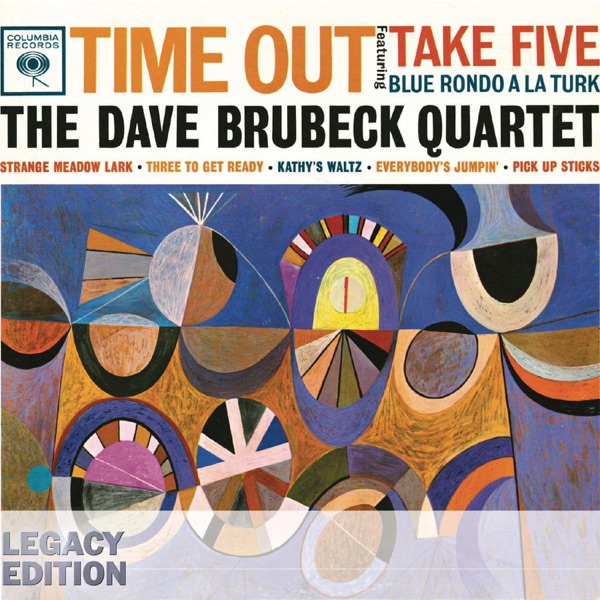
If you've never heard Brubeck, start with Time Out (1959) first—it's the clearest picture of why he mattered. This retrospective works better once you already understand what he was after. It's a portrait of an artist whose intelligence was never separated from his desire to entertain, and who proved over and over that you don't need to sound difficult to sound serious.
Where next?
More by Dave Brubeck
All 14 albums →