Where do you listen?
Choose your streaming service
inside the sleeve
Loading…
inside the sleeveITS
⌕
Read About

♫

Facts
Connections
Read more

Discography

Collaborations

Live on Youtube

Explore Further

Selected connections
1976 · Album

There Comes a Time

↑ Gil Evans

Recorded 1975 · RCA
There Comes a Time

Evans Conducts Electric Voices in Fusion Orchestration

Creative big band fusion that expertly mixes acoustic and electric instruments, one of Evans' last truly great sets.

By 1975, Gil Evans had spent decades conducting large ensembles through bebop, cool jazz, and modal territories. For There Comes a Time, he assembled a twenty-piece orchestra that bridged acoustic tradition and electric innovation — strings of horns alongside Ryo Kawasaki's electric guitar, Howard Johnson and Billy Harper anchoring the reed section, David Sanborn on alto, and Tony Williams driving from the drums. The session captured Evans working with material that asked his orchestra to swing hard while accommodating the textures of fusion: synthesizer touches, electric guitar tones, and contemporary rhythm section energy that would have seemed out of place in his earlier Claude Debussy-influenced arrangements.

What makes this album cohere is Evans' restraint and orchestration. He didn't use electricity as novelty; he absorbed it into his compositional voice. Sanborn's playing is warm and direct, Kawasaki contributes melodic sensibility alongside electric shimmer, and the brass — Ernie Royal, Lew Soloff, Tom "Bones" Malone — maintains the weight Evans always demanded. Williams' drumming keeps the date modern without pushing it toward fusion cliché. The arrangements breathe. They don't overexplain themselves.

This was late-career work, and it holds up better than you might expect. AllMusic reviewer Scott Yanow noted it as one of Evans' last truly great sets, and that assessment is fair: There Comes a Time shows an elder statesman still curious, still able to make space for unfamiliar colors without abandoning his own voice.

Who's playing
Herb Bushlerbass
Paul Metzkebass
Gil Evanspiano
川崎燎electric guitar
Joe Daleytrombone
Tony Williamsdrums
Bruce Ditmaspercussion
Sue Evanspercussion
Warren Smithpercussion
George Adamswoodwind
John ClarkFrench horn
Peter GordonFrench horn
Billy Harperwoodwind
Howard Johnsonreeds
Pete LevinFrench horn
Ernie Royalbrass
David Sanbornwoodwind
Lew Soloffbrass
Bob Stewarttuba
Tom “Bones” Malonebrass
Listen next
By Gil Evans
Svengali 1973
Tony Williams's own record
Million Dollar Legs 1966
Tony Williams plays drums (drum set) here
More Cool Jazz
On the Corner 1972
Miles Davis
Recording Info
Track listing
1King Porter Stomp3:48
2There Comes a Time16:10
3Makes Her Move1:25
4Little Wing5:03
5The Meaning of the Blues5:51
6Aftermath the Fourth Movement Children of the Fire5:45
7Anita's Dance2:53
Musicians
Further Reading
Read more

Where next?

More by Gil Evans
Svengali 1973
Great Jazz Standards 1959
The Individualism of Gil Evans 1964
The Gil Evans Orchestra Plays the Music of Jimi Hendrix 1988
All 29 albums →
The musicians on this record
Million Dollar Legs 1966
Tony Williams
plays drums (drum set) here
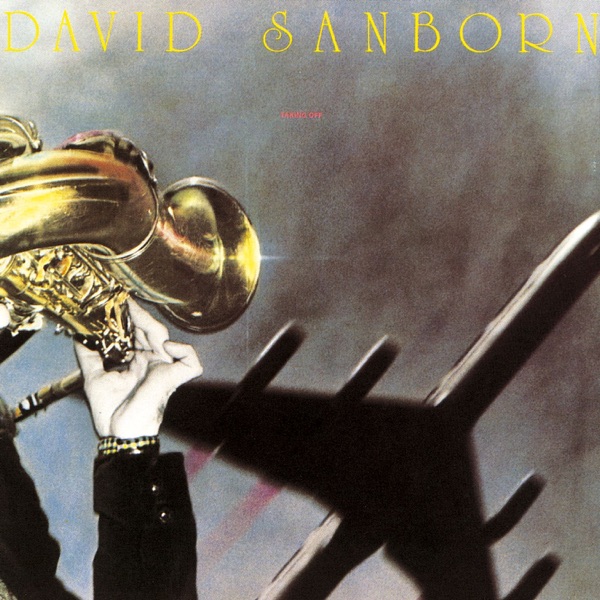
Taking Off 1975
David Sanborn
plays woodwind here
Their own records, close in time
More Cool Jazz
On the Corner 1972
Miles Davis
Live at the Berlin Jazz Days 1980 1982
Lee Konitz
Ne Plus Ultra 1970
Warne Marsh
Concierto 1975
Jim Hall
All 72 Cool Jazz artists →

More by this artist

Albums with the same musicians

From the same era

Similar artists

inside the sleeve
Growing
Jazz, explained without pretension.
Read · Follow the connections · Press play
Right now: 7,100+ albums · 440+ artists
Start here
New to jazz? These artists are good places to start.
Loading…
Explore
Nine records worth getting lost in.
Born today
Album of the day
A landmark record, every day.
Read
  • Loading…
Article archive →
Recently added
Purpose
Inside the Sleeve is your companion on a journey through jazz — not a textbook, but something closer to a knowledgeable friend sitting next to you while you listen. Read about an artist, press play, follow a connection, discover an album you didn't know you needed.
Suggestions
Read

Articles

Essays, guides, and lists about jazz and the records that matter.

Loading…

Genre

Key Artists
Further Reading

Essential Albums

Related Genres

In This Genre

About

Inside the Sleeve

Work in progress

Inside the Sleeve grows continuously — new artists and albums are added, essays refined, as visitors explore and our editors follow up on what they find. Content, features, and design are still evolving; use the Report error button on any page to flag something that seems off.

Content

Every artist, album, and release date on Inside the Sleeve is real — verified against trusted sources including MusicBrainz and Wikipedia. We don't invent discographies or fabricate records. AI compiles that verified information into readable prose — essays on artists, albums, and the music itself. We can't manually review every essay before publishing, but every reported error is checked by a human editor.

Inside the Sleeve is not a review site. We're not here to rate or rank — we're here to guide you in. Where an album stands out, we'll say so. Where an artist changed everything, you'll know why. But we won't tear anything down. Jazz history is complex and sources sometimes disagree — if you spot something that seems off, please report it.

Streaming

Inside the Sleeve links to Spotify and Apple Music so you can listen while you read. These are not affiliate links. For Spotify, links open a search on open.spotify.com — we do not have direct links to specific recordings. For Apple Music, direct links are used where available, otherwise a search is opened.

Your choice of streaming service is stored locally in your browser only. It is never sent to our servers.

We're working on deeper Spotify integration, including direct links to specific recordings.

Privacy

Inside the Sleeve does not collect personal data and does not use cookies. We count page visits anonymously using a self-hosted analytics tool — no personal identifiers are stored, and the data never leaves our own server. The only preference stored on your device is your streaming service choice, saved locally in your browser and never transmitted.

When you submit a suggestion or error report, the text you write is stored in our database. No name or email is required or collected unless you choose to provide one.

Third-party services

Spotify and Apple Music are independent services with their own terms of use and privacy policies. Inside the Sleeve is not affiliated with or endorsed by either company.

Support

Inside the Sleeve is free and ad-free. If you enjoy it, a coffee helps cover server costs and keeps the project going.

Amazon

Some book recommendations on Inside the Sleeve link to Amazon. Buying through these links costs you nothing extra — but Amazon pays us a small commission, which goes directly towards keeping the site running. It's a simple way to support the project if you were going to buy the book anyway.

As an Amazon Associate, Inside the Sleeve earns from qualifying purchases.

Questions or feedback? Use the suggestion box on the front page.

Inside the Sleeve — A guide for those who want to go beyond the obvious About & Privacy