1959 · Album
Take Five
Recorded 1958-1959 · Columbia Records · Produced by Teo Macero

When the Time Signature Stopped Mattering
Take Five proved that jazz didn't need four-four time to make you want to move.
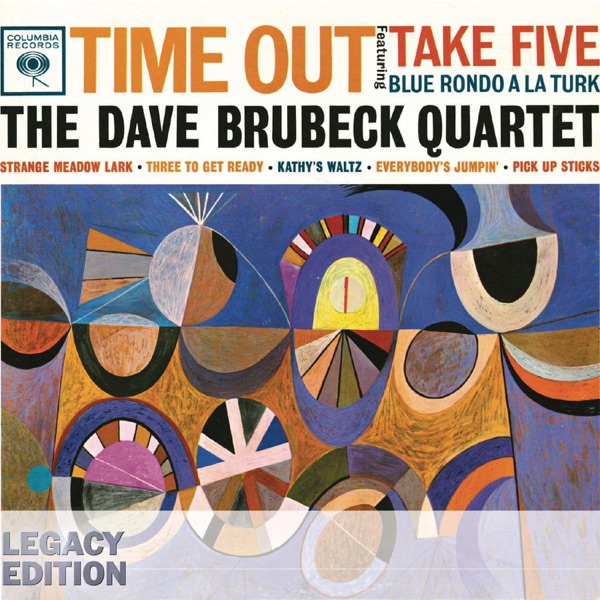
When Dave Brubeck and his quartet walked into the studio to record Time Out (1959), nobody expected the title track to become one of the most recognizable pieces of jazz ever made. "Take Five" is built on a five-four time signature, which sounds like a mathematical problem until you hear it—then it feels inevitable, even natural. Paul Desmond's alto saxophone line is so clean and direct that it draws you in immediately, and the rhythm section sits underneath it like they're playing the most obvious thing in the world. The song doesn't shout about being unusual. It just is.
This record sits near the height of Brubeck's commercial reach. His quartet had already built a substantial following, but Time Out connected with listeners far beyond the jazz audience. Part of that was the novelty of the time signatures—"Take Five," "Blue Rondo à la Turk," and "Unsquare Dance" each dance around different rhythmic puzzles—but mostly it was the warmth and accessibility of the playing. These aren't difficult records demanding patience. They're sophisticated, sure, but they swing and they breathe naturally. Brubeck's piano playing here is straightforward and conversational rather than flashy, which serves the material well.
If you're already familiar with Brubeck's music, this is worth returning to simply because "Take Five" occupies such a strange space—a genuine crossover hit that didn't compromise the musicianship to get there. If you haven't heard much of his work, Time Out is actually the perfect entry point rather than a detour into his catalog. It's unpretentious enough to enjoy immediately, but deep enough to keep revealing things with repeated listens.
Who's playing
Where next?
More by Dave Brubeck
All 14 albums →


The musicians on this record
Their own records, close in time


