1962 · Album
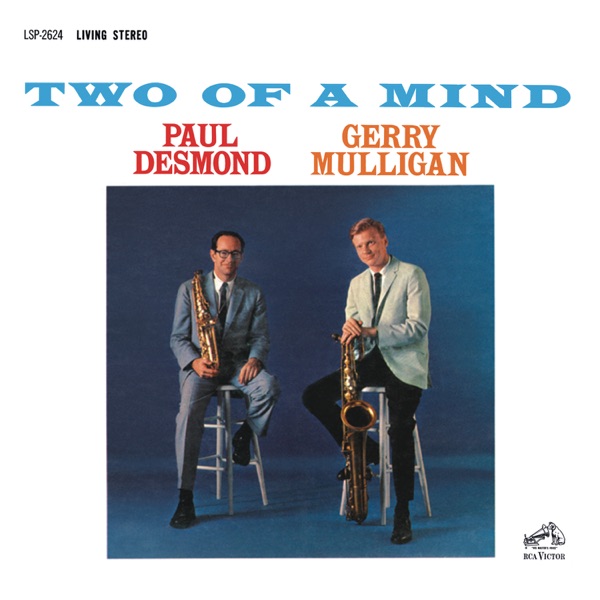
Two of a Mind
Recorded 1962 · RCA Victor · Produced by not specified in provided source material
Two Voices, No Piano, Perfect Balance
Desmond and Mulligan's interplay is consistently delightful, their light tones and melodic improvisation making every exchange feel like a conversation between old friends.
Two of a Mind arrived in 1962 to immediate critical recognition. AllMusic awarded it 4½ stars, and The Penguin Guide to Jazz Recordings gave it a perfect 4/4, signaling that listeners and critics alike understood what they were hearing: something special. This was not a record that built its reputation slowly or found its audience by accident. Both publications singled out the same quality — the ease and intelligence of the interplay between Paul Desmond and Gerry Mulligan. The saxophonists shared a rare gift: immediately distinctive light tones, strong melodic instincts, and the wit to know when to step back and let the other person breathe.
This was the second album the two recorded in a pianoless quartet setting, a format that strips away harmonic cushioning and forces both players to navigate space with precision. Without a pianist filling gaps, every note matters more. Desmond's alto and Mulligan's baritone occupy different registers naturally, but their phrasing — the way they shape melody, the spaces they leave open — keeps them in constant dialogue. It's lean, direct playing that never sounds sparse.
If you're new to either saxophonist, this is a better entry point than chasing down their larger discographies. The album captures both at ease, playing what they played best, which is to say playing together without fuss or pretense. The critical consensus was right the first time: this is simply worth hearing.
Who's playing
Wendell Marshalldouble bass
Joe Benjamindouble bass
John Bealdouble bass
Paul Desmondalto saxophone
Gerry Mulliganbaritone saxophone
Connie Kaydrums
Mel Lewisdrums
Where next?
More by Paul Desmond
All 28 albums →


The musicians on this record
Their own records, close in time