
Precision and Swing in Perfect Balance
Brubeck proves you can be intellectually rigorous and deeply swinging at the same time.
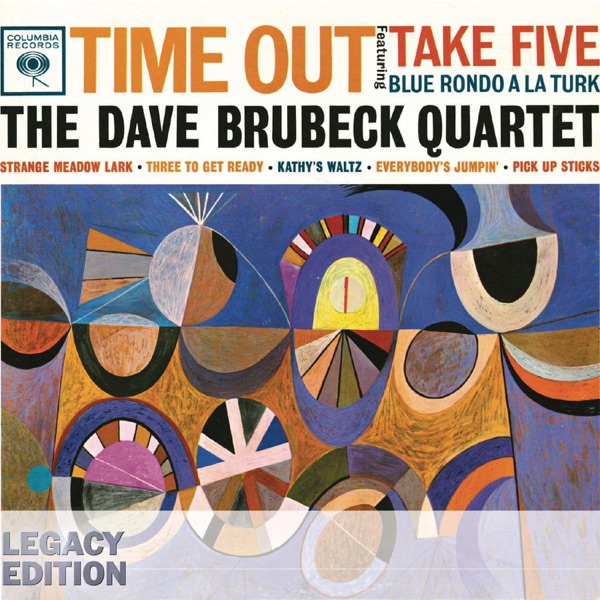
By the late 1950s, Dave Brubeck had already established himself as a pianist unafraid of odd time signatures and compositional complexity, but On Time (1959) catches him at a moment where everything clicks into place. This isn't a record about proving how clever he can be. Instead, it's a showcase of a quartet that understands how to make intricate arrangements feel natural, even inevitable. The material here sits somewhere between the accessibility that made Time Out (1959) a crossover hit and the experimental bent that defined his earlier work. Brubeck and his group sound completely comfortable, which is precisely what makes the album work.
What distinguishes this record is how it balances precision with genuine swing. The ensemble plays with remarkable tightness—the arrangements snap into place, rhythms lock in, and there's never any sense of the band struggling with the material. Yet none of that technical polish gets in the way of the actual feeling of the music. Brubeck's comping behind his soloists shows a pianist listening intently to what's happening around him, pushing when needed and laying back when the moment calls for restraint. The tunes themselves are memorable without being obvious, the kind of material that rewards repeated listening because there's always something new to catch in the interplay between voices.
This sits comfortably in the middle of Brubeck's catalog—not his most daring record, not his most commercially calculated, just a genuinely solid session by a musician at his peak. It's worth seeking out if you've connected with his other work from this era, particularly as a snapshot of where his compositional voice was heading. The album demonstrates why Brubeck mattered beyond novelty: he could write music that sounded modern without sounding cold.
Who's playing
Where next?
More by Dave Brubeck
All 14 albums →


The musicians on this record
Their own records, close in time


