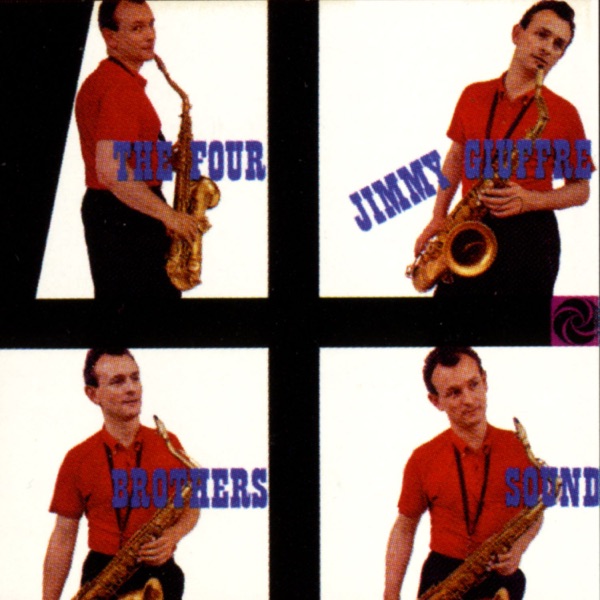
One Man, Four Voices, One Vision
Giuffre overdubs his tenor four times to chase the ghost of a classic sound.
Jimmy Giuffre didn't need a band to rebuild Woody Herman's Four Brothers legacy — he just needed himself and a tape machine. The Four Brothers Sound (1959) is a singular record, built on a gimmick that could've been gimmicky but instead becomes something oddly moving: Giuffre's tenor saxophone layered four times over, each voice distinct enough to suggest conversation, intimate enough to feel like one person thinking out loud. The Woody Herman reference isn't ornamental. That band's 1947 recording — built on four saxophones in tight, bright harmony — was a landmark, and Giuffre knew it. But instead of assembling live musicians, he chose isolation. Four overdubbed takes of his own horn, each one carefully voiced to respond to the others, creating texture without pretense. It works because Giuffre's tone is supple enough to bend into different characters, and because the arrangement respects silence as much as sound. This isn't a vanity project masked as homage. It's a direct answer to a question nobody asked: what if you could hear one saxophonist negotiate with three versions of himself? Late in his career, Giuffre would move toward free improvisation and folk forms, but here he's still anchored in swing tradition, still believing in melody and structure. The album sits oddly in his discography — not a peak, not a turning point, but a particular curiosity that rewards patient listening. It won't hit you immediately. Its strength is subtlety, and that kind of thing demands a second hearing.
Where next?
More by Jimmy Giuffre
All 20 albums →