1960 · Album
Change of the Century
Recorded 1959 · Atlantic Records · Produced by Nesuhi Ertegün
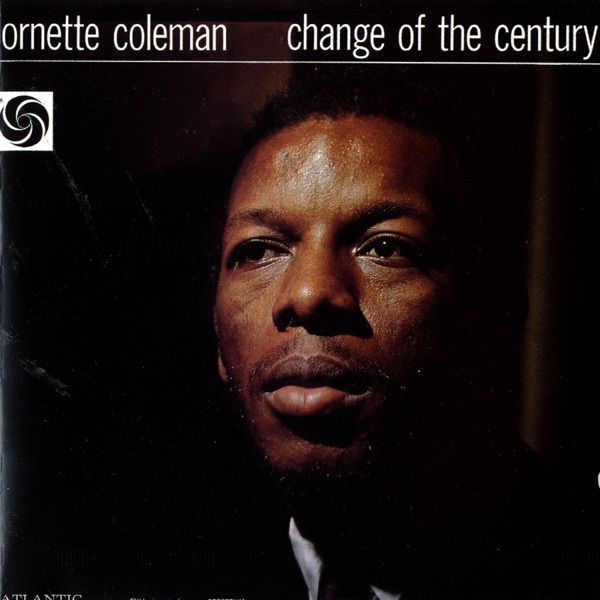
When the Rules Stopped Mattering
Coleman strips jazz down to pure conversation, no chord changes required.
Change of the Century landed like a puzzle nobody asked for. By the late 1950s, Ornette Coleman had been playing bebop and hard bop like everyone else, but he heard something different—a way to play that didn't need a pianist laying down chord changes underneath everything. That sounds simple until you try it. The rhythm section here has to listen harder than they ever have, responding to melodic movement instead of predetermined harmonies. What you hear is almost unsettling at first: the horns weaving around each other without a safety net, the drums and bass creating space rather than filling it. Tracks like "Ramblin'" and "Congeniality" sound looser than conventional jazz, but that looseness is actually controlled. Coleman and Don Cherry trade lines with incredible precision, even when the harmonic ground keeps shifting.
This is Coleman's debut as a bandleader on record, and it immediately felt dangerous to established ears. The album doesn't swing in the way dancers expect—instead it pulses with a different kind of momentum, more conversational than propulsive. Some listeners found it abstract and cold; others heard liberation. What matters is that it forced people to ask what jazz actually needed to be. The record wasn't an instant commercial success, but musicians understood immediately that something had opened up. You could hear this and then hear everything differently.
If you're coming to Coleman for the first time, this is smarter than starting with later, more experimental work. The ideas here are radical enough, but they're still rooted in melody and coherent musical thinking. It's the moment when Coleman stopped asking permission and started asking questions. The album doesn't resolve those questions—it just keeps asking them, patiently, for thirty minutes.
Who's playing
Where next?
More by Ornette Coleman

The Shape of Jazz to Come 1959

New York Is Now 1968

Something Else!!!! The Music of Ornette Coleman

Tomorrow Is The Question! 1959
The musicians on this record
♫
Rejoicing 1984
Charlie Haden
plays double bass here
plays double bass here

The Avant-Garde 1966
Don Cherry
plays pocket trumpet here
plays pocket trumpet here
♫
The Oracle 1989
Billy Higgins
plays drums (drum set) here
plays drums (drum set) here


