The Man Who Made Keyboards Glow
If you've ever heard a warm wash of electric piano under a hip-hop beat and wondered where it came from, there's a decent chance it traces back to Lonnie Liston Smith. He came up playing real jazz — the kind with changes and swing — working alongside Pharoah Sanders, Gato Barbieri, Art Blakey, and Max Roach in the late 1960s, soaking up the modal and spiritual language that was taking over New York at the time. But Smith wasn't content to just play in that world. He wanted to open it up.
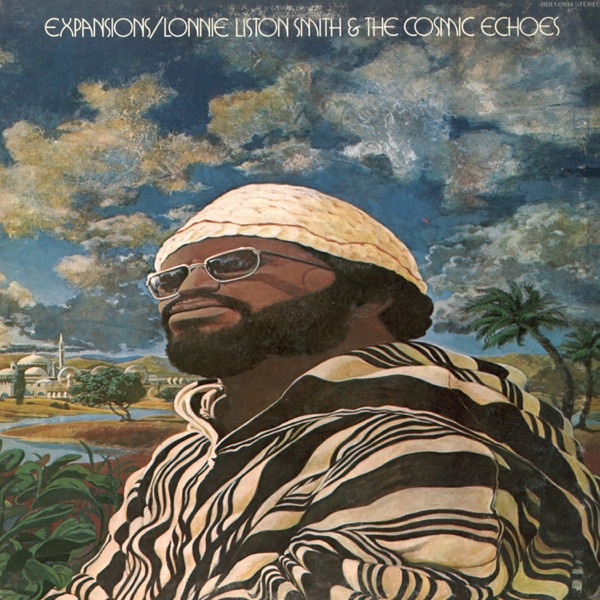
That's exactly what he did with albums like Astral Traveling (1973), Expansions (1975), and Visions of a New World (1975), recorded with his band the Cosmic Echoes. These records took the open-ended, searching quality of spiritual jazz and set it over grooves — funky bass lines, steady drums, and layers of electric piano and synthesizer that felt less like a solo instrument and more like weather. It wasn't jazz trying to be funk, or funk trying to be jazz. It was its own thing, and it sounded like nothing else on the shelf at the time.
What makes Smith's music distinctive is the warmth. A lot of fusion from that era leans hard into flash — speed, volume, technical showing-off. Smith went the other direction. His playing is patient, almost meditative, built around simple melodic phrases that repeat and bloom rather than run scales. The title track of Expansions (1975) is the clearest example: a simple vamp that just keeps opening up, like someone slowly turning up the lights in a room.
Hip-hop producers noticed this decades before most jazz writers did. Smith's grooves turned up sampled in records by Mary J. Blige, De La Soul, and Pete Rock, among others, which introduced his sound to a generation that had never heard of Flying Dutchman Records or the Cosmic Echoes. It's a funny kind of afterlife — a guy who studied under bebop and hard bop musicians ended up being foundational to boom-bap. His brother, vocalist and flutist Donald Smith, sang on many of these records and helped give them their loose, soulful feel.
Smith kept working through the decades that followed, adapting to smooth jazz and new-age currents without ever fully abandoning the spiritual-jazz roots that shaped him. He's not a household name the way some of his contemporaries became, but spend time with Expansions (1975) or Visions of a New World (1975) and you'll hear exactly why crate diggers and samplers kept coming back to him. He built a sound you could recognize in two seconds, and that's rarer than people think.