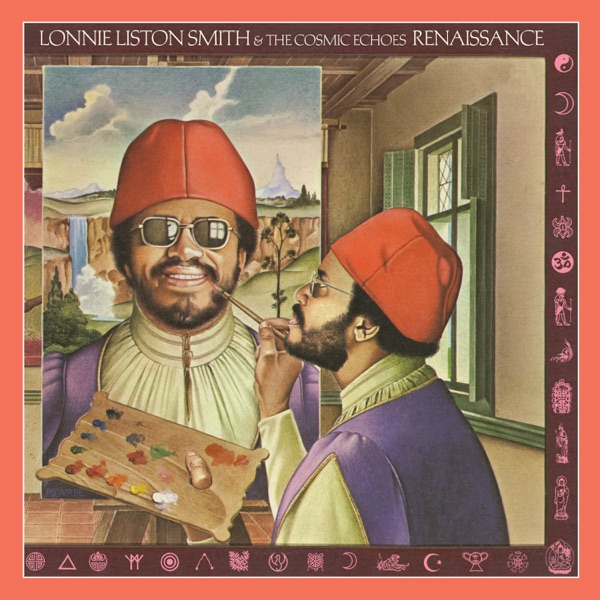
Cosmic Soul in Subtle Shades
Smith's layered synthesizers float over steady grooves, creating space rather than filling it.
Silhouettes moves with the patience of someone who knows exactly how much sound a moment can hold. Smith's synthesizers drift in luminous waves—not the dense, busy kind, but architectures of tone that seem to breathe. The rhythms are steady and hypnotic, grounded in funk-inflected grooves that never rush. What strikes you first is the restraint: every note has room to exist. This is Smith working in his mature voice, the one he'd developed across the late 1970s and into the 80s, where his classical training and his love of open-voiced chords merged with an almost meditative sensibility.
By 1984, Smith had already made his mark as a bandleader and a sought-after sideman, but Silhouettes feels like a consolidation rather than a new direction. The album sits comfortably within his wheelhouse—keyboards driving everything, ethereal atmospheres supported by tight, unhurried rhythms. It's music built for depth listening, not background play. Each track unfolds slowly enough that you notice the textures, the way Smith layers his lines, the quiet intelligence in the arrangement. There's no flash here, and there's no need for it.
Flying Dutchman had been Smith's home for several years, and this remains a solid entry in that catalog. It won't overwhelm you, and it's not trying to. What it does is create a pocket of calm, sophisticated music that rewards attention without demanding it. For listeners already familiar with Smith's work, this is essential. For newcomers, start with something more urgent first—Expansions (1975) is a better entry point—then come back here once you understand what he's after.
Where next?
More by Lonnie Liston Smith
All 12 albums →