Where do you listen?
Choose your streaming service
inside the sleeve
Loading…
inside the sleeveITS
⌕
Read About
Double Bass - United States - Free Jazz

William
Parker

1952 - present, United States

William Parker has spent five decades making the bass sound like it's carrying the whole weight of the music, and somehow it always does. He came up in the New York loft scene of the 1970s, spent a decade inside Cecil Taylor's unit, and eventually became the guy other players called when they needed someone who could hold a free improvisation together without ever making it feel tame.

Free JazzAvant-Garde JazzSpiritual Jazz
♫

The Bass That Holds the Room

If you've never heard William Parker play, start with this: he sounds like he's playing three instruments at once. There's the low, wooden thump that keeps things grounded, then this bowed, keening cry that sits somewhere between a human voice and a foghorn, and underneath it all a rhythmic pulse that never quits, even when everyone else in the room has gone completely off the map. That's the trick with Parker. He came out of free jazz, a music people associate with chaos, but his whole reputation is built on being the guy who makes chaos feel like it has a floor under it.

He grew up in the Bronx and taught himself a lot of what he knows, though he also studied with players like Jimmy Garrison and Wilbur Ware, guys who knew exactly what a bass was supposed to do in a band even when the band decided to ignore the rules. By the mid-1970s he was deep in New York's loft jazz scene, playing with anyone doing serious improvised music, and by the late seventies he'd landed in Cecil Taylor's working group, where he stayed for close to a decade. That gig alone would be enough for most careers. For Parker it was just the warm-up. In the 1990s he became the anchor of David S. Ware's quartet, a group that made albums like Flight of i (1992) and Third Ear Recitation (1993) that still get pulled out as proof of what that decade's avant-garde could do.

Parker's own bands are where you really hear his personality. The Little Huey Creative Music Orchestra is this sprawling, joyful, sometimes ramshackle big band that pulls in gospel, blues, marching band energy, and total-freedom improvisation all at once. His smaller groups, like In Order to Survive, do something similar on a tighter scale — check In Order to Survive (1995) if you want to hear how disciplined 'free' playing can actually be. He's also spent years in duo with drummer Hamid Drake, and that partnership is worth seeking out on its own, because Drake is one of the only drummers who can match Parker's sense of groove without smoothing out his edges.

What doesn't always get mentioned is how much Parker has done off the bandstand. With his wife, dancer and choreographer Patricia Nicholson Parker, he co-founded the Vision Festival, which has been keeping New York's avant-garde jazz community alive and visible for decades, giving space to musicians who don't get much attention from the mainstream jazz industry. That's not a side note to his playing — it's part of the same instinct, the belief that this music needs people willing to hold the structure together so everyone else can push against it.

If you're new to Parker, don't go in expecting pretty. Go in expecting depth. His bass tone alone is worth the price of admission, thick and dark and full of overtones, the kind of sound that makes you feel it in your chest before you understand what he's doing with it. Once you get past the surface noise of free jazz — the squawks, the density, the lack of an obvious melody to hum — what you find underneath is one of the most patient, listening musicians the music has produced. He's not trying to overwhelm you. He's trying to build something you can actually stand inside.

Facts
Born1952, Bronx, New York
InstrumentDouble bass
Active1970s - present
Known forFree jazz bass playing, the Little Huey Creative Music Orchestra, co-founding the Vision Festival
Connections
Cecil TaylorBandleader, New York
→
David S. WareBandleader and collaborator, New York
→
Hamid DrakeLongtime duo partner, Chicago
→
Read more

Discography

29 records
♫
Through Acceptance of the Mystery Peace
1980
♫
Some Order, Long Understood
1983
♫
Vermont Spring 1986
1987
In Order to Survive
In Order to Survive
1993
Zo
Zo
1994
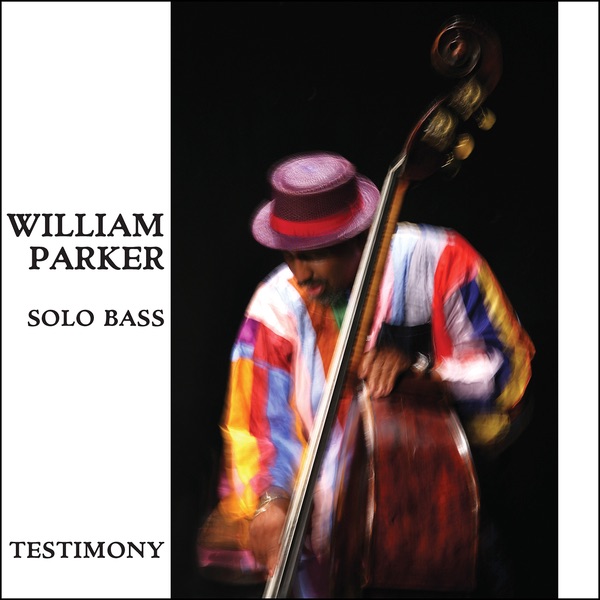
Testimony
Testimony
1996
Harras
Harras
1996
Seeing New York From the Ear
1996
♫
Cama de terra
1996
Sad Life
Sad Life
1997
9
9
1997
♫
Lifting the Sanctions
1998
Contrabasses
Contrabasses
1998
♫
New World Pygmies
1998
♫
Authenticity
1998
♫
Broken/Circle
1998
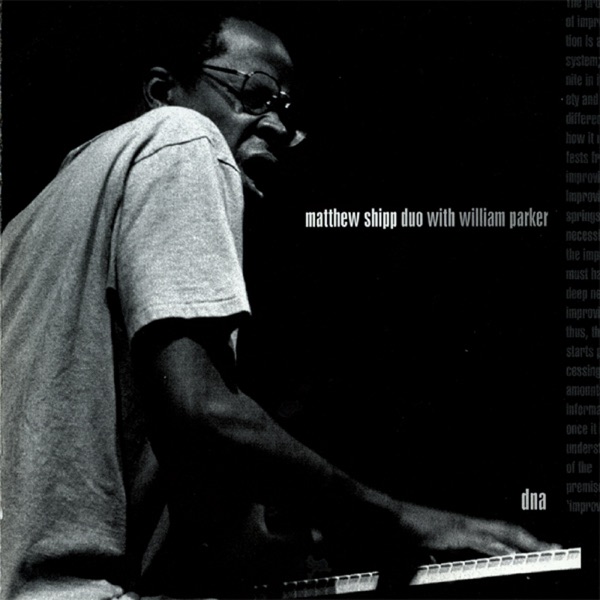
DNA
DNA
1999
♫
Zen Mountains Zen Streets
1999
♫
A Hero’s Welcome: Pieces for Rare Occasions
1999
♫
Alain Kirili Musée Grenoble
1999
♫
Live at Radio Valencia
2000
2nd Set
2nd Set
2001
♫
Song Cycle
2001
♫
Emancipation Suite #1
2002
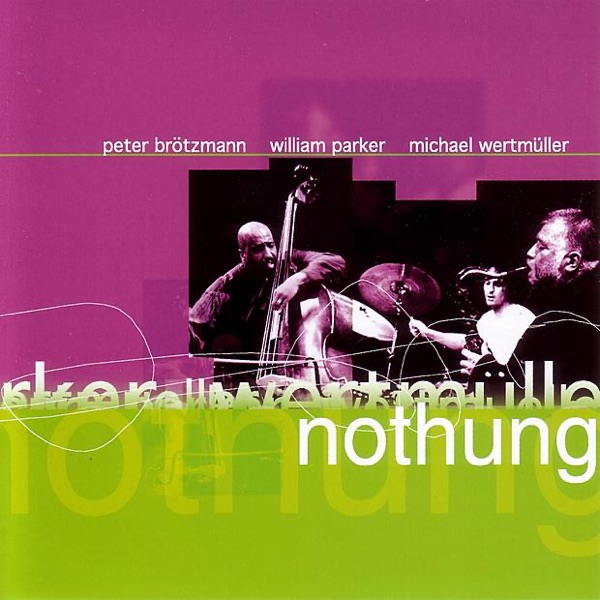
Nothung
Nothung
2002
The Peach Orchard
The Peach Orchard
♫
Cherry Box
♫
Invisible Weave
♫
Sacred Scrape

Collaborations

Live on Youtube

Explore Further

Selected connections
Pianist, United States
Matthew Shipp
A frequent collaborator whose dense, percussive piano lines match Parker's rhythmic freedom note for note.
Explore →
Album, 1995
In Order to Survive
One of Parker's essential quartet recordings, showing how tightly organized his 'free' playing really is.
Explore →
Drummer, United States
Hamid Drake
Parker's most enduring duo partner, and a rare drummer who can groove and stay untethered at the same time.
Explore →

Who's playing
Listen next
Recording Info
Track listing
Musicians
Further Reading
Read more

Where next?

More by this artist

Albums with the same musicians

From the same era

Similar artists

inside the sleeve
Growing
Jazz, explained without pretension.
Read · Follow the connections · Press play
Right now: 7,100+ albums · 440+ artists
Start here
New to jazz? These artists are good places to start.
Loading…
Explore
Nine records worth getting lost in.
Born today
Album of the day
A landmark record, every day.
Read
  • Loading…
Article archive →
Recently added
Purpose
Inside the Sleeve is your companion on a journey through jazz — not a textbook, but something closer to a knowledgeable friend sitting next to you while you listen. Read about an artist, press play, follow a connection, discover an album you didn't know you needed.
Suggestions
Read

Articles

Essays, guides, and lists about jazz and the records that matter.

Loading…

Genre

Key Artists
Further Reading

Essential Albums

Related Genres

In This Genre

About

Inside the Sleeve

Work in progress

Inside the Sleeve grows continuously — new artists and albums are added, essays refined, as visitors explore and our editors follow up on what they find. Content, features, and design are still evolving; use the Report error button on any page to flag something that seems off.

Content

Every artist, album, and release date on Inside the Sleeve is real — verified against trusted sources including MusicBrainz and Wikipedia. We don't invent discographies or fabricate records. AI compiles that verified information into readable prose — essays on artists, albums, and the music itself. We can't manually review every essay before publishing, but every reported error is checked by a human editor.

Inside the Sleeve is not a review site. We're not here to rate or rank — we're here to guide you in. Where an album stands out, we'll say so. Where an artist changed everything, you'll know why. But we won't tear anything down. Jazz history is complex and sources sometimes disagree — if you spot something that seems off, please report it.

Streaming

Inside the Sleeve links to Spotify and Apple Music so you can listen while you read. These are not affiliate links. For Spotify, links open a search on open.spotify.com — we do not have direct links to specific recordings. For Apple Music, direct links are used where available, otherwise a search is opened.

Your choice of streaming service is stored locally in your browser only. It is never sent to our servers.

We're working on deeper Spotify integration, including direct links to specific recordings.

Privacy

Inside the Sleeve does not collect personal data and does not use cookies. We count page visits anonymously using a self-hosted analytics tool — no personal identifiers are stored, and the data never leaves our own server. The only preference stored on your device is your streaming service choice, saved locally in your browser and never transmitted.

When you submit a suggestion or error report, the text you write is stored in our database. No name or email is required or collected unless you choose to provide one.

Third-party services

Spotify and Apple Music are independent services with their own terms of use and privacy policies. Inside the Sleeve is not affiliated with or endorsed by either company.

Support

Inside the Sleeve is free and ad-free. If you enjoy it, a coffee helps cover server costs and keeps the project going.

Amazon

Some book recommendations on Inside the Sleeve link to Amazon. Buying through these links costs you nothing extra — but Amazon pays us a small commission, which goes directly towards keeping the site running. It's a simple way to support the project if you were going to buy the book anyway.

As an Amazon Associate, Inside the Sleeve earns from qualifying purchases.

Questions or feedback? Use the suggestion box on the front page.

Inside the Sleeve — A guide for those who want to go beyond the obvious About & Privacy