New Orleans Pocket, Everywhere Else
Before he was Idris Muhammad he was Leo Morris, a kid from New Orleans who came up playing second-line rhythms in brass bands and R&B sessions around town. That early schooling never left him. Even when he was playing bebop time or riding a modal vamp behind Pharoah Sanders, there was a tilt to his beat, a loose-hipped swing that came straight from the street. He converted to Islam in the 1950s and took the name Idris Muhammad, and by the time he moved to New York he was already a seasoned professional, not a kid trying to prove himself.
He's probably best known for the records he made as a sideman in the 1960s and 70s, where his name might not be on the cover but his fingerprints are all over the record. He played the shuffle on Lou Donaldson's organ-combo soul jazz dates, locked in with Grover Washington Jr. on Mister Magic (1974), and brought a deep, patient groove to Pharoah Sanders's Karma (1969), including that long opening track "The Creator Has a Master Plan" where the drums just breathe under everything. He wasn't flashy. He didn't need to be. His whole approach was about making the music feel good first and showing off second, if at all.
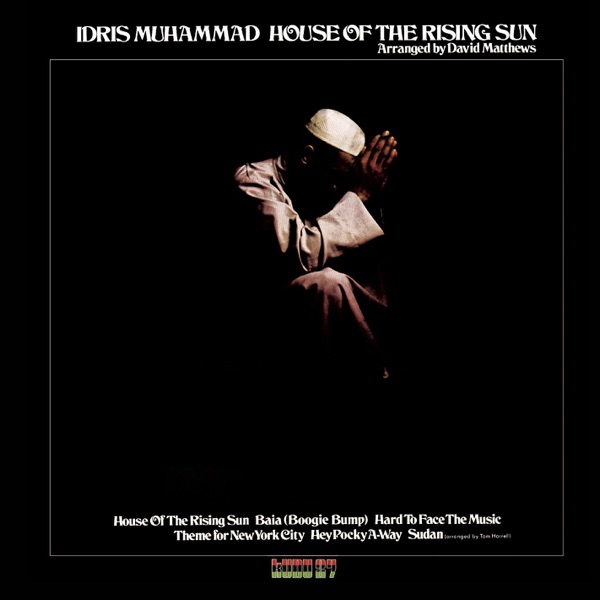
As a leader on Kudu and Prestige in the 1970s he leaned harder into funk and disco-adjacent grooves, records like Power of Soul (1974) and House of the Rising Sun (1976) that sound dated to some ears now but were built on a drummer's deep understanding of what makes people move. Later he'd get sampled constantly by hip-hop producers, which is its own kind of compliment, proof that the pocket he was playing in the 70s never really went out of style.
What I'd tell a friend who's never heard him: don't go looking for pyrotechnics. Go looking for feel. Put on a Lou Donaldson soul jazz date or that Pharoah Sanders record and just listen to how he sits in the groove, slightly behind the beat, patient, letting the music breathe. That's the whole lesson of Idris Muhammad. Drumming doesn't have to announce itself to be essential.
He kept working right up through the 2000s, still touring, still recording, a working musician's working musician. He died in 2014, and if you ask drummers who came up admiring him, they'll tell you the same thing: he made the hard thing, playing with total relaxation, look like nothing at all.