Where do you listen?
Choose your streaming service
inside the sleeve
Loading…
inside the sleeveITS
⌕
Read About
Saxophone & Flute - United States - Spiritual Jazz

Yusef
Lateef

1920 - 2013, United States

Yusef Lateef played saxophone like a hard bop veteran and flute like he'd learned it somewhere far from Detroit, which in a way he had, at least in his head. He spent decades folding oboe, bassoon, and instruments most jazz musicians couldn't name into his records, long before 'world music' was a section in the record store.

Hard BopSoul JazzSpiritual JazzPost-Bop
Yusef Lateef

The Reedman Who Looked Elsewhere

Yusef Lateef came up through the same Detroit scene that produced a stack of great hard bop players, and for a while he sounded like one of them — a tenor man with a thick, vocal tone who could hold his own in any blowing session. But Lateef got restless with the standard toolkit early. By the mid-1950s he was showing up on records playing flute and oboe, and not as a novelty. He treated those instruments as seriously as his horn, which was unusual for the time.

The thing that separates Lateef from other multi-instrumentalists is where he went looking for ideas. He studied scales and instruments from the Middle East, Africa, and Asia, and he didn't treat them as exotic color to sprinkle over a blues. He actually tried to absorb the logic of those musics into how he improvised. Eastern Sounds (1961) is the record to hear this clearly — it's a quiet, almost meditative album, built around unusual timbres, and it doesn't sound like anyone else's jazz record from that era.

He wasn't a radical in the free jazz sense. Lateef kept one foot firmly in the tradition — he could play a soulful blues or a straight-ahead ballad with total conviction, and he did plenty of that, including stretches with Cannonball Adderley's group and later recordings alongside Charles Mingus. What made him different was his refusal to accept that jazz had to stay inside its own borders. He converted to Islam and took the name Yusef Lateef in the 1950s, and that shift in identity seemed to run parallel with his musical curiosity — both were about looking past what he'd been handed and deciding for himself what fit.

Later in life Lateef pushed back against the word 'jazz' altogether, preferring to call what he did 'autophysiopsychic music' — sound that comes from the physical, mental, and spiritual self. That's a mouthful, and it's easy to roll your eyes at it, but if you've actually heard his records, the term makes a strange kind of sense. He also became a serious academic, earning a doctorate and teaching for years, which isn't the typical arc for a working jazz musician.

If you're coming to Lateef fresh, don't expect fireworks. His records reward patience — they're more about texture and mood than flash. Start with Eastern Sounds (1961), then go back to his harder-swinging Detroit-era work to hear where he came from. The distance between those two records tells you most of what you need to know about him.

Facts
BornOctober 9, 1920, Chattanooga, Tennessee
DiedDecember 23, 2013, Shutesbury, Massachusetts
InstrumentTenor saxophone, flute, oboe, and various world instruments
Active1940s - 2013
Known forBringing non-Western instruments and scales into jazz improvisation
Connections
Cannonball AdderleyBandleader, New York
→
Charles MingusCollaborator, New York
→
Dizzy GillespieEarly employer, New York
→
Read more

Discography

35 records
Jazz Mood
Jazz Mood
1957
Prayer to the East
Prayer to the East
1957
Before Dawn
Before Dawn
1957
Jazz and the Sounds of Nature
1958
♫
Jazz for the Thinker
1958
Other Sounds
Other Sounds
1959
The Centaur and the Phoenix
1960
Cry! — Tender
Cry! — Tender
1960
Soulnik
Soulnik
1960
The Three Faces of Yusef Lateef
1960
Eastern Sounds
Eastern Sounds
1961
Cry ! - Tender
Cry ! - Tender
1961
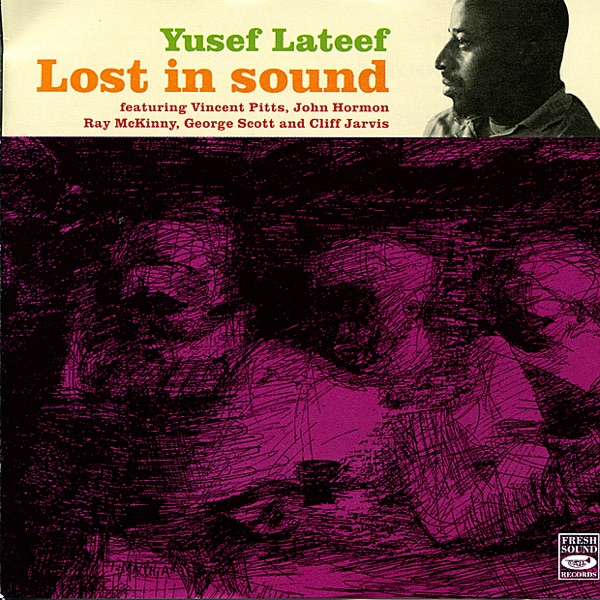
Lost in Sound
Lost in Sound
1962
Into Something
Into Something
1962
Jazz ’Round the World
1964
Yusef
Yusef
1965
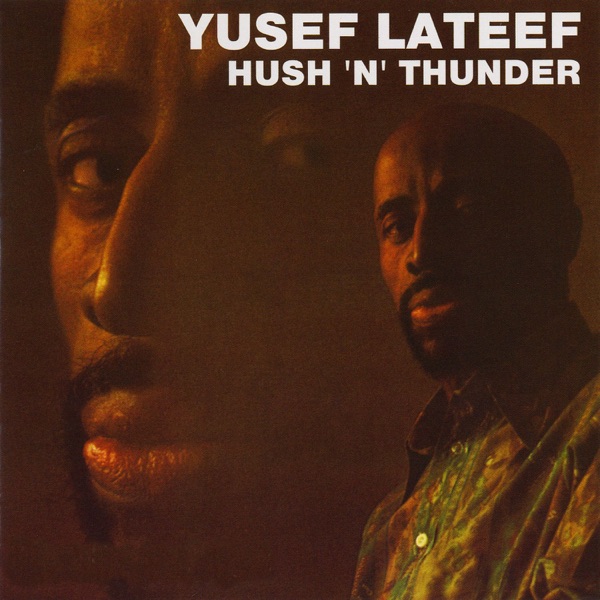
Hush 'n' Thunder
Hush 'n' Thunder
1965
Live at Pep’s
Live at Pep’s
1965
1984
1984
1966
Psychicemotus
Psychicemotus
1966
♫
A flat, G flat and C
1966
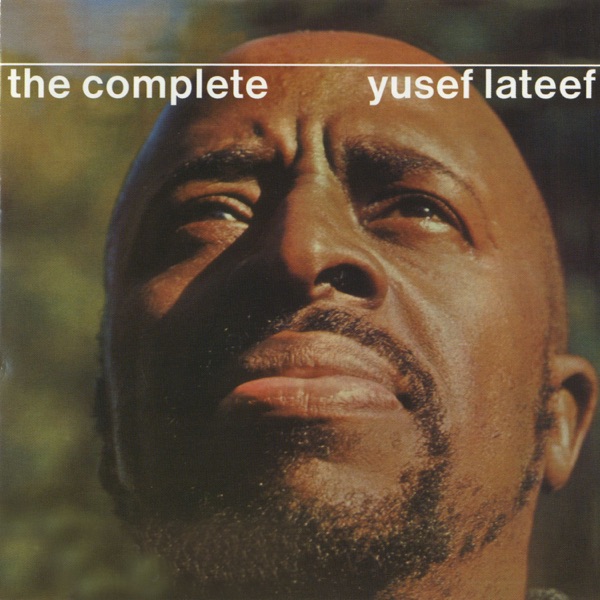
The Complete Yusef Lateef
1968
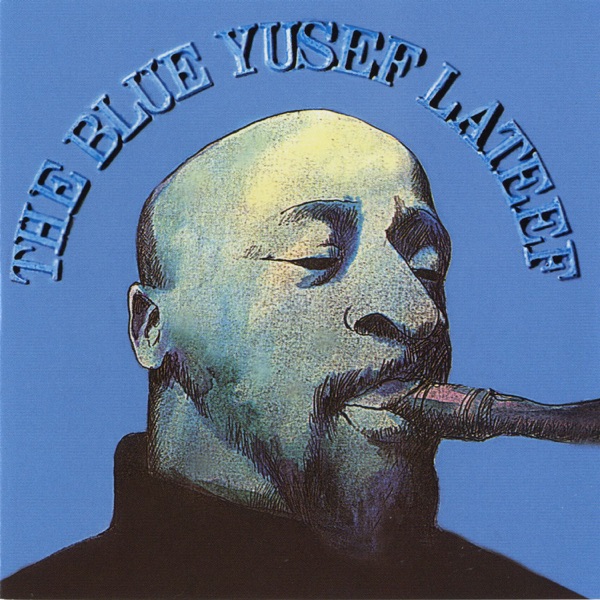
The Blue Yusef Lateef
1968
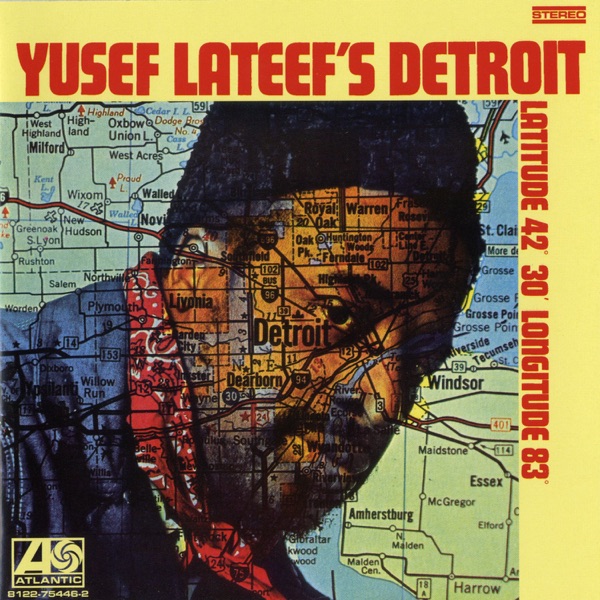
Yusef Lateef’s Detroit Latitude 42° 30′ Longitude 83°
1969
Suite 16
Suite 16
1970
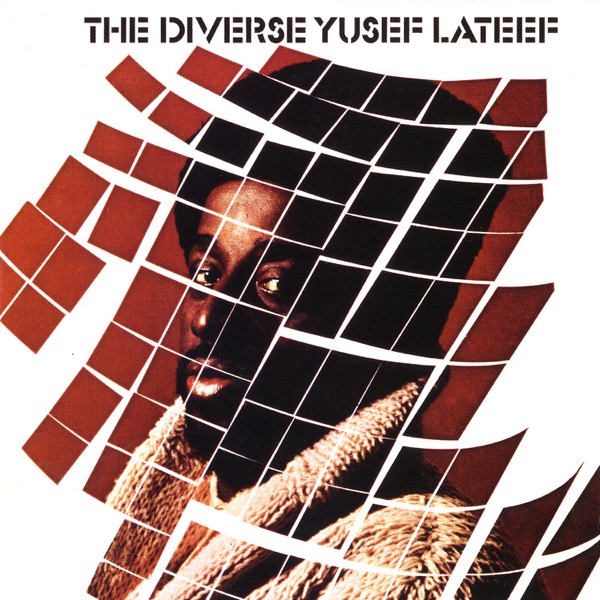
The Diverse Yusef Lateef
1970
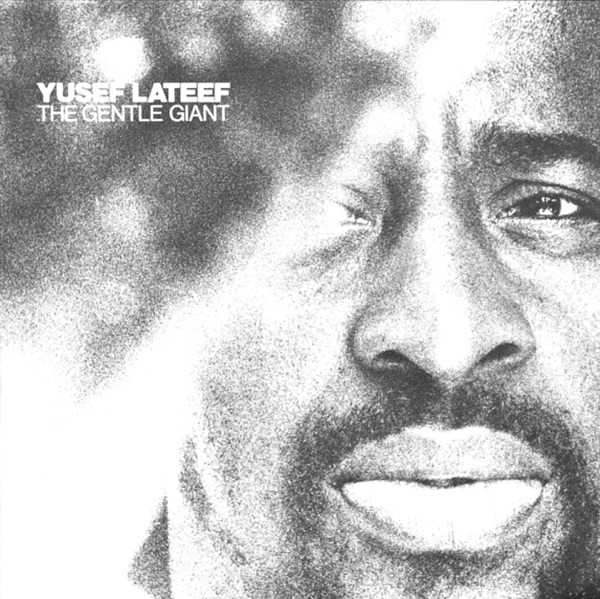
The Gentle Giant
The Gentle Giant
1972
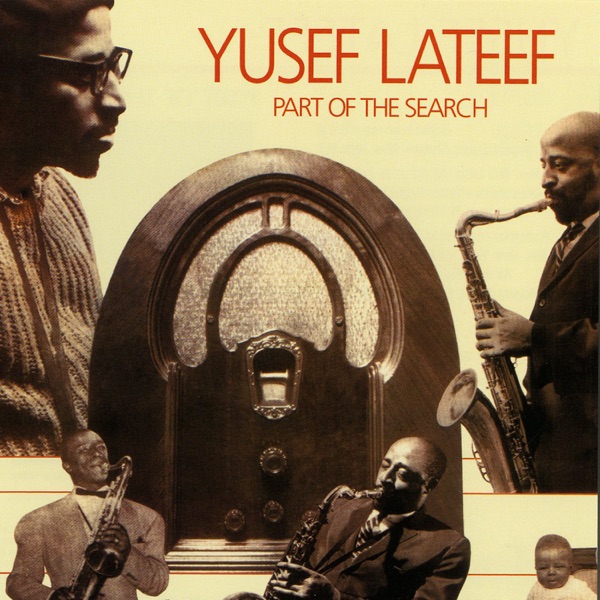
Part of the Search
Part of the Search
1974
♫
10 Years Hence
1975
The Doctor Is In ...And Out
1976
Yusef Lateef
Yusef Lateef
1977
♫
Hikima - Creativity
1983
♫
In Nigeria
1985
Yusef Lateef's Little Symphony
1987
Concerto For Yusef Lateef
1988

Collaborations

Live on Youtube

Explore Further

Selected connections
Multi-instrumentalist, United States
Rahsaan Roland Kirk
Another reedman unwilling to stick to one horn, with a similarly restless, searching sound.
Explore →
Album, 1961
Eastern Sounds
The clearest entry point into Lateef's blend of hard bop discipline and non-Western texture.
Explore →
Bassist, United States
Charles Mingus
Hear Lateef inside a different, more combustible musical personality on their later collaborations.
Explore →

Who's playing
Listen next
Recording Info
Track listing
Musicians
Further Reading
Read more

Where next?

More by this artist

Albums with the same musicians

From the same era

Similar artists

inside the sleeve
Growing
Jazz, explained without pretension.
Read · Follow the connections · Press play
Right now: 7,100+ albums · 440+ artists
Start here
New to jazz? These artists are good places to start.
Loading…
Explore
Nine records worth getting lost in.
Born today
Album of the day
A landmark record, every day.
Read
  • Loading…
Article archive →
Recently added
Purpose
Inside the Sleeve is your companion on a journey through jazz — not a textbook, but something closer to a knowledgeable friend sitting next to you while you listen. Read about an artist, press play, follow a connection, discover an album you didn't know you needed.
Suggestions
Read

Articles

Essays, guides, and lists about jazz and the records that matter.

Loading…

Genre

Key Artists
Further Reading

Essential Albums

Related Genres

In This Genre

About

Inside the Sleeve

Work in progress

Inside the Sleeve grows continuously — new artists and albums are added, essays refined, as visitors explore and our editors follow up on what they find. Content, features, and design are still evolving; use the Report error button on any page to flag something that seems off.

Content

Every artist, album, and release date on Inside the Sleeve is real — verified against trusted sources including MusicBrainz and Wikipedia. We don't invent discographies or fabricate records. AI compiles that verified information into readable prose — essays on artists, albums, and the music itself. We can't manually review every essay before publishing, but every reported error is checked by a human editor.

Inside the Sleeve is not a review site. We're not here to rate or rank — we're here to guide you in. Where an album stands out, we'll say so. Where an artist changed everything, you'll know why. But we won't tear anything down. Jazz history is complex and sources sometimes disagree — if you spot something that seems off, please report it.

Streaming

Inside the Sleeve links to Spotify and Apple Music so you can listen while you read. These are not affiliate links. For Spotify, links open a search on open.spotify.com — we do not have direct links to specific recordings. For Apple Music, direct links are used where available, otherwise a search is opened.

Your choice of streaming service is stored locally in your browser only. It is never sent to our servers.

We're working on deeper Spotify integration, including direct links to specific recordings.

Privacy

Inside the Sleeve does not collect personal data and does not use cookies. We count page visits anonymously using a self-hosted analytics tool — no personal identifiers are stored, and the data never leaves our own server. The only preference stored on your device is your streaming service choice, saved locally in your browser and never transmitted.

When you submit a suggestion or error report, the text you write is stored in our database. No name or email is required or collected unless you choose to provide one.

Third-party services

Spotify and Apple Music are independent services with their own terms of use and privacy policies. Inside the Sleeve is not affiliated with or endorsed by either company.

Support

Inside the Sleeve is free and ad-free. If you enjoy it, a coffee helps cover server costs and keeps the project going.

Amazon

Some book recommendations on Inside the Sleeve link to Amazon. Buying through these links costs you nothing extra — but Amazon pays us a small commission, which goes directly towards keeping the site running. It's a simple way to support the project if you were going to buy the book anyway.

As an Amazon Associate, Inside the Sleeve earns from qualifying purchases.

Questions or feedback? Use the suggestion box on the front page.

Inside the Sleeve — A guide for those who want to go beyond the obvious About & Privacy