1969 · Album
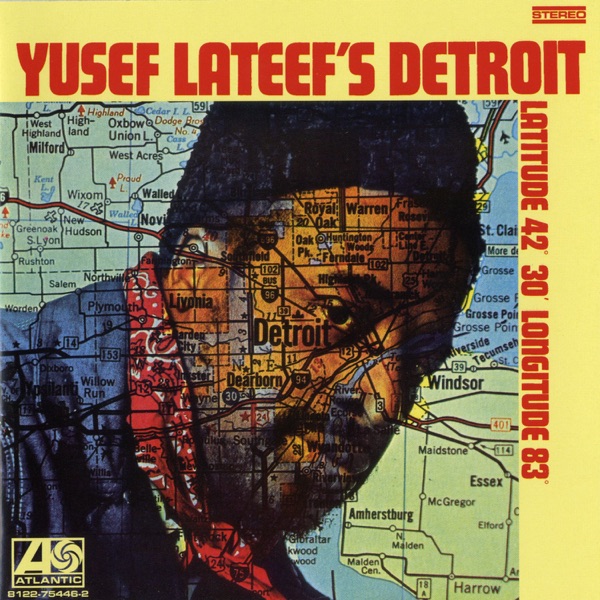
Yusef Lateef’s Detroit Latitude 42° 30′ Longitude 83°
Recorded 1969 · Atlantic
A Misunderstood Detroit Prayer in 1969
One of Lateef's most misunderstood recordings, yet his most honest statement about home.
Yusef Lateef recorded Detroit (1969) in his native city, returning to the place that shaped him as a musician and a man. The session brought together local talent and Lateef's own restless curiosity about what jazz could sound like when it stopped trying to impress New York or Los Angeles and instead spoke plainly about where it came from. This was not a record designed to fit neatly into anyone's idea of what Lateef should be doing by the end of the 1960s.
The album moves between spiritual searching and street-level observation, Lateef's flutes and saxophones floating over arrangements that refuse easy categorization. There is funk here, and soul, and genuine prayer music, often in the same song. Tracks have a patient quality—they breathe, they loop, they return to simple themes and worry them like a dog with a bone. AllMusic reviewer Thom Jurek's observation that it remains one of Lateef's most misunderstood recordings rings true; listeners expecting the kind of modal sophistication or swing energy he'd delivered elsewhere found something stranger and more local instead.
This is a late-period album by an artist who'd already done significant work, which means it sits slightly apart from Lateef's main catalog—not essential to understanding his arc, but essential if you want to know what he sounded like when speaking to and about Detroit rather than to the jazz establishment. It deserves more attention than it has received.