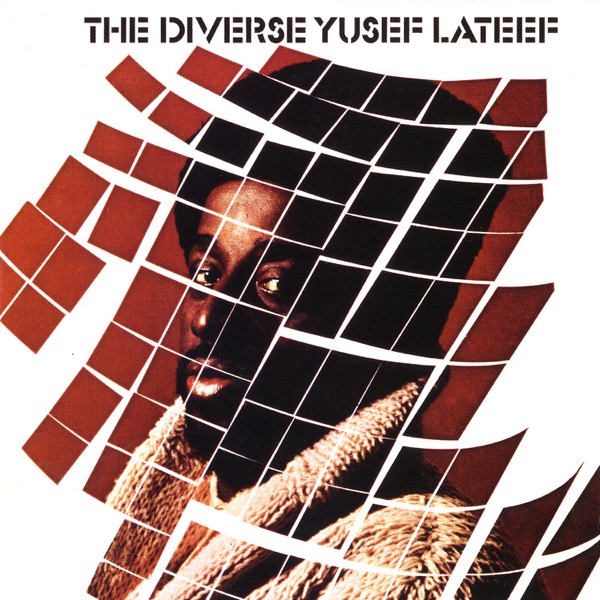
Lateef at Sixty: Strings and Grooves Collide
Lateef proves he can swing over funky rhythms without abandoning the classical textures that define his sound.
Yusef Lateef recorded this album at fifty years old, well into a career that had already explored flute, oboe, bassoon, and every corner of the jazz tradition. The Diverse Yusef Lateef is not a reinvention—it is Lateef insisting on his breadth. The strings section, anchored by Kermit Moore on cello and Selwart Clarke and Jesse James Tryon on violins, sits alongside Bernard Purdie's drums and Ray Barretto and Roy Brooks on congas. This is not fusion in the loud electric sense. Richard Tee plays acoustic piano. Cecil McBee and Chuck Rainey share bass duties, and the arrangements respect both the swing tradition and the classical weight Lateef had always wanted in his recordings.
What distinguishes this session is its refusal to apologize for mixing idioms. Lateef's tenor saxophone speaks over string voicings that would sit comfortably in a chamber setting, but the rhythm section—Purdie especially—keeps everything grounded in a groove. There is no conflict here, only clarity. The album works because Lateef had spent decades proving he could code-switch without losing himself. By 1970, he had earned the right to put strings and congas in the same room and let them find each other.
This is a solid record, not a peak, but a testament to Lateef's refusal to settle into a single lane as he aged. The arrangements are clean, the musicianship is secure, and the concept holds. It sits comfortably alongside his other late-career statements, useful for anyone wanting to hear Lateef working with orchestral texture without the academic pretension.
Who's playing
Cecil McBeebass
Chuck Raineyelectric bass guitar
Richard Teepiano
Yusef Lateeftenor saxophone
Bernard “Pretty” Purdiedrums
Ray Barrettocongas
Roy Brookscongas
Hugh Lawsonbell
Alfred Brownviola
Selwart Clarkeviolin
Kermit Moorecello
Jesse James Tryonviolin
Where next?
More by Yusef Lateef

Eastern Sounds 1961

The Centaur and the Phoenix 1960
Yusef Lateef’s Detroit Latitude 42° 30′ Longitude 83° 1969

The Three Faces of Yusef Lateef 1960
The musicians on this record
Their own records, close in time


